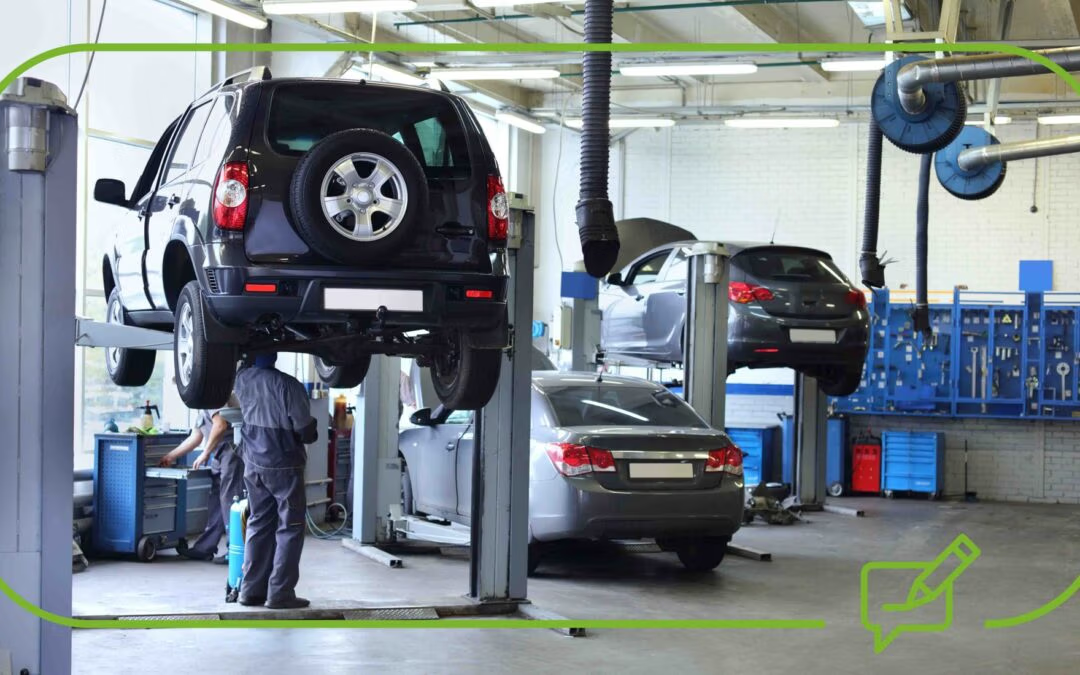
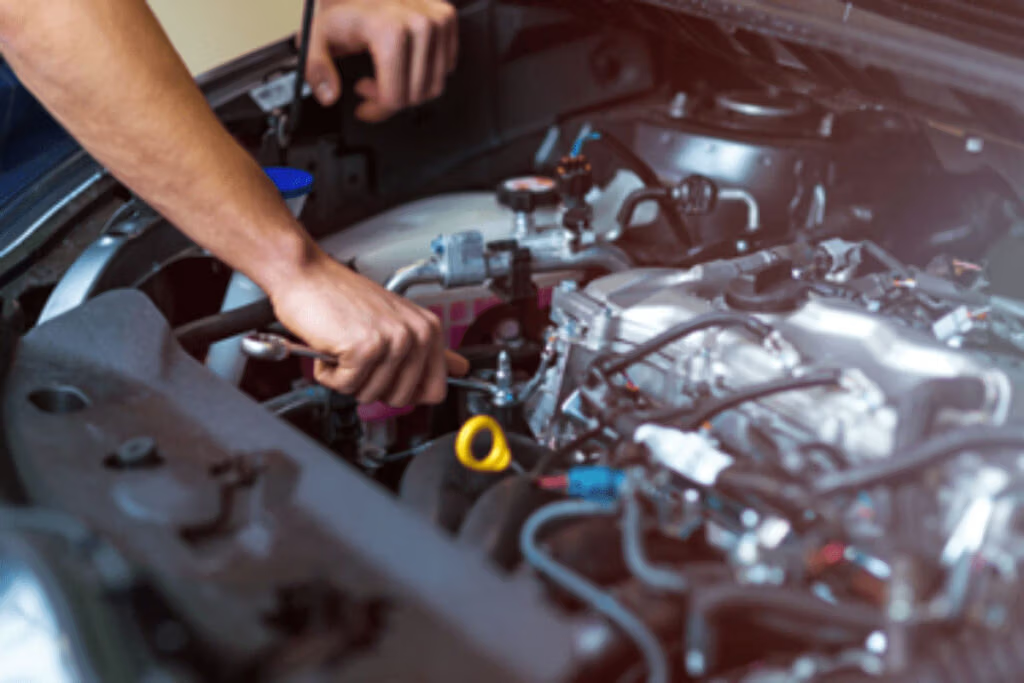
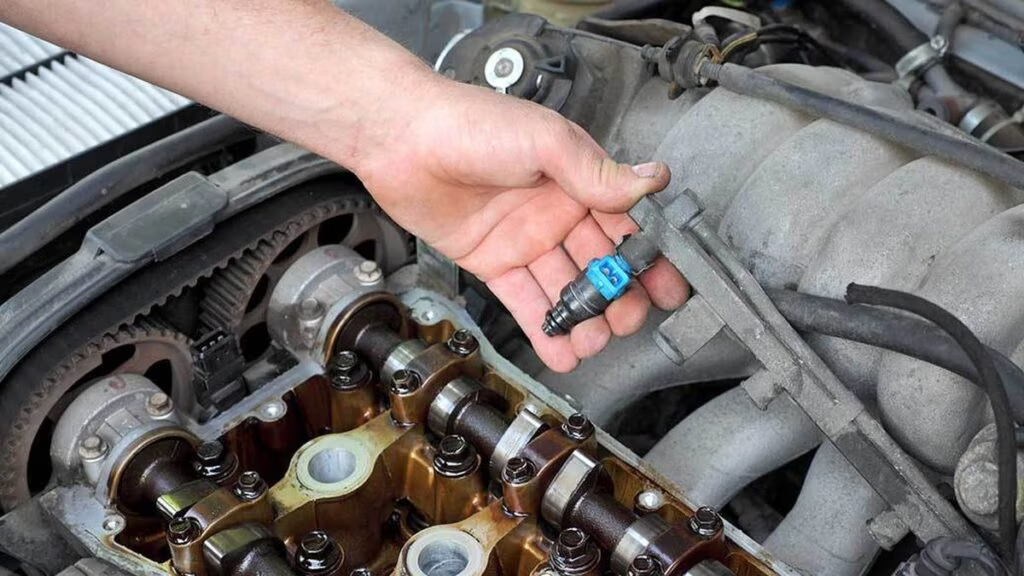
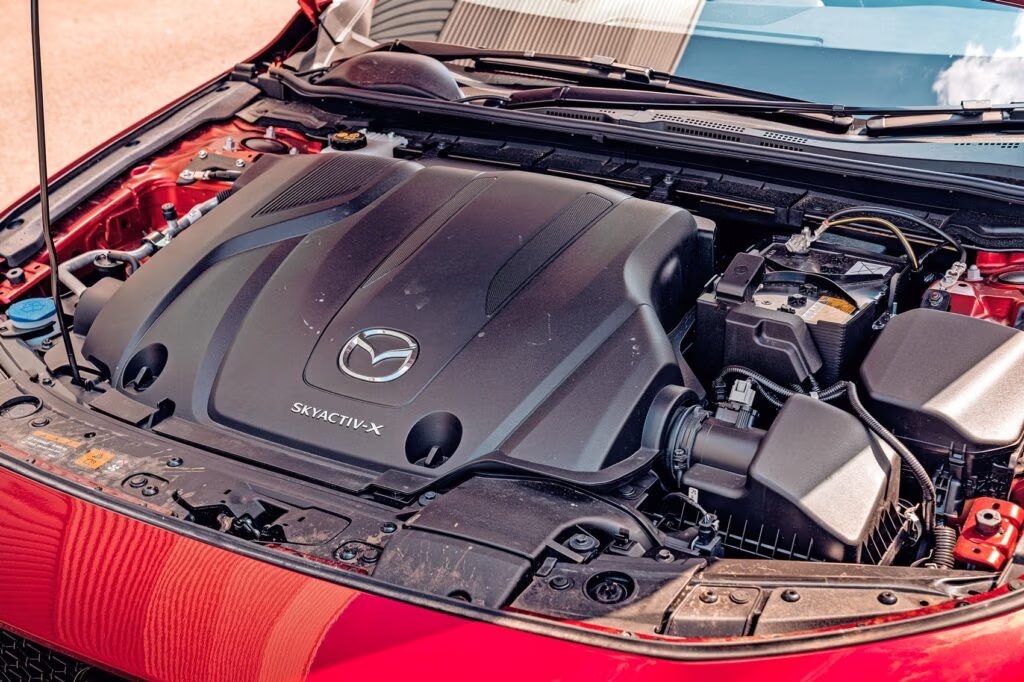
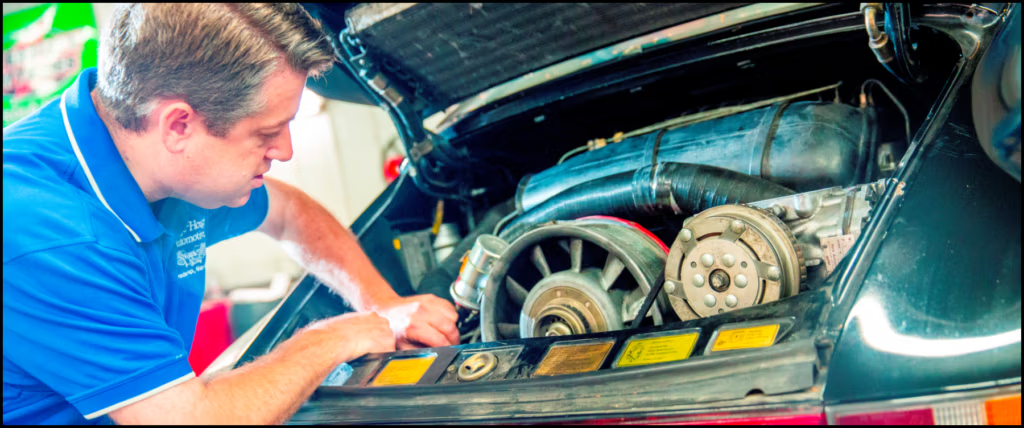
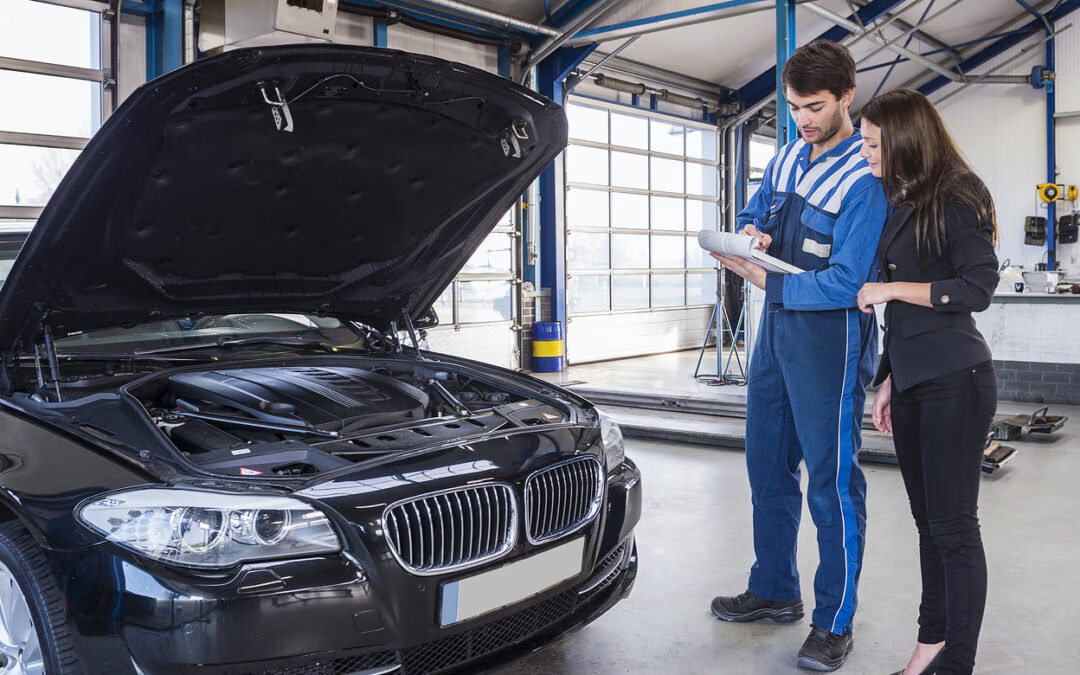
Tips on Choosing the Right Automobile Service Technician You might be wondering whether or not you should go to an automobile service technician to perform maintenance on your car.
While it might be tempting to save money by taking your vehicle to a local mechanic, there are a few things you should keep in mind to help you choose the right mechanic for the job.
Detecting common vehicle problems by using your senses
Many people don’t know that detecting common vehicle problems using your five senses is not all that difficult. In fact, you may be able to detect a problem before it gets worse. This can save you both time and money, especially if you have to take your car in for repair. These tips should help you identify a problem and solve it before it becomes bigger.
The best part is, you don’t need years of experience to figure it out. You can even use your senses to isolate the cause of the problem and get the job done. A quick test drive can reveal what is causing the problem and let you know what to do to prevent it from happening again.
Some of the more obvious ones include a burning smell inside the car, a wet puddle under the hood, and the presence of odd fluids. For instance, you may have noticed that your air-conditioner has condensed water droplets on its vents. To remedy the problem, simply unclog the vents, clean out the sludge, and check for leaks.
Tips On Choosing The Right Automobile Service Technician
Choosing The Best Automotive Technician
While you are at it, check the oil level. If your meter is showing less than the recommended amount, you may want to consider changing it before it breaks. Similarly, if your wipers have a hard time clearing the windshield, you will want to take them in for repair.
The best thing about using your five senses is that you are able to identify problems before they become too big for you to handle. After all, you don’t want to be stuck in the middle of a major roadblock, and you don’t want to have to spend hundreds of dollars on a car repair.
There are other things to look for, however. For example, a strange clicking sound, a creaking noise, or a buzzing fan are all signs of trouble. Also, if you’ve noticed a clunking or squeaking noise, you may have a bent rotor or brake pad on your hands.
Using your five senses to detect the common vehicle problems is a great way to save money. But, if you find that you are having problems with your car on a frequent basis, it may be time to find a new ride.
Obtaining A Vehicle Service Technician’s Credentials
Auto mechanics are trained to diagnose, repair, and maintain vehicles. Automotive technology is constantly evolving, so it is important to keep up with this change.
For technicians looking for a career in auto repair, certification is one way to demonstrate proficiency. It can also make a person more desirable for jobs. The National Institute for Automotive Service Excellence (ASE) offers over 40 certification exams that cover all aspects of the automotive industry.
ASE certification consists of eight core areas that are taught through theory and application. These areas include engine diagnosis, electrical/electronic systems, brakes, suspension, steering, and heating and air conditioning. A technician can also pursue additional certifications.
Tips On Choosing The Right Automobile Service Technician
An ASE certification increases a technician’s credentials and credibility, and helps in job searches. To be considered for certification, a mechanic must have at least two years of relevant work experience and pass an examination. ASE tests take place twice a year at over 700 locations across the United States.
Many employers are willing to hire applicants with ASE certifications. This is especially true if a technician has a certain manufacturer’s certification. As a result, a technician may have a more in-depth knowledge of the brand of automobile he is working on.
We Check References
Auto manufacturers generally require technicians to have specific training and testing before they can become certified. This can include work experience, an exam, and factory training documents.
Several schools offer certificates or degree programs in auto technology. Most training options prepare students for entry-level positions in the field. There are also specialty positions, including brake, front end, and engine performance specialists. Some colleges even offer a bachelor’s degree in automotive technology.
An ASE certificate can be used to gain employment as a mechanic in a variety of settings, from automotive dealerships to independent service garages. Having an ASE certification can improve a technician’s chances of landing higher pay.
ASE certificates are valid for five years. Technicians can renew their certifications with the help of the ASE Renewal App. Each question answered correctly delivers 1 credit toward the ASE credential. Another option is to attend a refresher course.
If you want to stay on top of your car repair bills, getting a repair order for your automobile is a must. The repair order is a document prepared by the desk clerk at the service station. It details upcoming services and repairs. It also lists parts and labor costs.
In order to obtain a repair order, you may be required to sign a contract. These are generally regulated by state laws. Fortunately, the Motor Vehicle Repair Act protects you. You have the right to return your vehicle for correction of problems within the warranty period.
One of the most important steps in obtaining a repair order is to get a written estimate of your costs. Usually, this is done via a flat rate for labor, which is based on the manufacturer’s estimated time for completion. A competent mechanic should be able to anticipate your needs and provide you with a more detailed estimate.
When attempting to get a repair order, you should try to use a shop that uses digital forms of communication. Some shops, such as those at auto dealerships, only use paper forms.
The repair order is a great way to establish communication between the service manager and the customer. By asking a few questions, you can find out what you need to know to get your vehicle back in working order. After all, you don’t want to end up wasting time and money with a service shop that isn’t able to deliver on its promises.
As you can see, a repair order can make or break a relationship with your local repair shop. Take the time to learn more about your options and you will be rewarded with a smoother experience. With the right amount of diligence, you will be able to reap the rewards of having your car maintained in tip top shape.
Avoid auto repair shops that charge too-good-to-be-true prices
If you are a car owner, you know that you need to make sure you get what you pay for. That is why you should avoid auto repair shops that charge too-good-to-be-true prices.
Some repair shops will tell you that your car has been inspected, but when you pick up your car, you find out that it has not been fixed. The repair shop may have installed substandard parts, or it may have used used parts. This is an example of a scam, and it can ruin your investment.
A good way to avoid auto repair shops that charge too-good-to-be-true pricing is to shop around and get a written quote. This will guarantee that you are getting the best deal.
Another smart tactic to avoid being taken in is to keep all your records. Keep them in a safe place, and keep them organized. By keeping all your records, you can increase the resale value of your car.
If you aren’t happy with the work, ask for a refund. Make sure that you get a written quote, so that you can compare it to the final invoice.
It is also a good idea to check out local consumer protection agencies. They will have information on the warranty and dispute resolution programs. You can also contact your state Attorney General’s office.
Be aware that insurance fraud is illegal
Mechanics will often claim that special oil or other items are needed to keep your vehicle running. These are actually extra expenses, and they will often add on to the bill if you don’t want to pay for them.
If you are a car owner, you have the right to inspect your vehicle before you pay for repairs. However, you may not have access to the area where your car is being inspected.
If you are unsure about whether the repairs were authorized, you can report the shop to the police or DMV. In some cases, the DMV will take action against the shop, such as suspending or revocation of its registration.
Choosing a repair shop that has good customer reviews is another way to avoid auto repair shops that charge too-good-to-be-true rates. Look for a shop that uses ASE certified mechanics, and get a second opinion from a friend or family member.
Conclusion
In conclusion, selecting the right automobile service technician is crucial for ensuring the longevity and performance of your vehicle. Consider factors such as qualifications, experience, and customer reviews
when making your choice. Establishing a good relationship with a trusted technician can lead to better maintenance and repairs over time. By taking the time to find a reliable professional, you can drive with confidence, knowing your automobile is in capable hands.
Keep Your Vehicle Running Smoothly With Regular Car Maintenance Car Servicing Can Extend the Life of Your Vehicle and Keep it Running Smoothly To keep your car in good shape, it’s essential to have regular car servicing. This can add many extra years to your vehicle’s life and save you a significant amount of money on repairs in the long run.
Owning a vehicle requires investment.
Owning a vehicle represents a significant investment, and like any investment, it requires proper care and maintenance to ensure longevity and optimal performance.
Regular car servicing is one of the most effective ways to extend the life of your vehicle and maintain a smooth driving experience. In this article, we will examine the benefits of routine maintenance, the types of services available, and how these practices contribute to the overall health of your vehicle.
How Regular Car Servicing Can Extend the Life of Your Vehicle and Keep it Running Smoothly If you want to keep your car running for as long as possible, then you need to know when and how to replace your spark plugs. Whether you drive your vehicle on the road or off, spark plugs play a crucial role in igniting the fuel mixture, preventing carbon fouling, and reducing air pollution.
There are different types of spark plugs, including those with platinum-tipped and iridium-tipped electrodes. The life expectancy of the plugs is determined by the kind of plug and the frequency of use. Spark plugs should be replaced every 30,000 to 40,000 miles for a conventional plug or every 80,000 to 100,000 miles for a high-performance, long-life spark plug.
How Regular Car Servicing Can Extend the Life of Your Vehicle and Keep it Running Smoothly?
You should also change your spark plugs if you notice that they are cracked or that the insulators are broken. This is a sign that the cylinder is getting hot. Moreover, if your spark plug is not functioning correctly, it can cause your engine to misfire, resulting in stalls, rough idling, and poor fuel efficiency.
Besides replacing your spark plugs, you should also check and replace your coil packs if required . Soot is a common culprit that clogs up the electrodes of your spark plugs and coil packs. As a result, it becomes hard to generate a spark. also Performing regular oil changes helps prevent this problem from happening
Changing your spark plugs regularly will also improve your car’s performance. They reduce emissions by up to 30%. Additionally, they will ensure the combustion process in your cylinders is correct.
If you have an older car or truck, it is recommended that you replace your spark plugs at least once every 20,000 to 30,000 miles. If you have a newer vehicle, you may need to change your plugs more frequently.
If you’re unsure whether you need to change your spark plugs, it’s best to consult your owner’s manual for guidance. It will provide you with specifications for optimal performance and help you decide whether to change your plugs.
You can also get the help of an auto service centre if you are not confident about replacing your spark plugs on your own. When you bring your vehicle to Sun Devil Auto, you can have the spark plugs installed quickly and efficiently.
The importance of regular car servicing cannot be understated. Not only can it keep your vehicle running smoothly, but it can also help you get more mileage out of it. However, many service contracts do not include items such as shock absorbers and struts.
Shocks and struts are a vital part of your vehicle. They help you absorb impact and bounce, and they also provide structural support for your suspension.
If your shocks or struts are not working properly, you may experience a bumpy ride. Having a properly functioning suspension system will improve your overall driving experience.
In addition, your tyres will last longer if you regularly rotate them. Changing them at the recommended intervals will not only help you keep your tyres in good shape, but it can also prevent vibrations from taking place.
Other parts of your car should be inspected periodically. Spark plugs and antifreeze are examples of things that should be replaced frequently. Additionally, your exhaust system should be repaired if it makes a noise. Depending on the age of your car, you might want to take it to a professional for a more comprehensive assessment.
Another part of your car that you should check regularly is the top strut mount. Top strut mounts are crucial for your steering system and handling, as they serve as a pivot point for the steering wheel. Wear on this part can lead to problems with the rest of your steering and suspension systems.
Struts and shock absorbers are important to your vehicle’s performance, and they should be inspected periodically. However, the best way to ensure they are in tip-top shape is to schedule an appointment with an ASE-certified mechanic.
A car with worn shocks will feel shaky and even dangerous in inclement weather. Typically, you’ll notice wear on your vehicle after approximately 75,000 miles.
Maintaining your air conditioning system with regular car servicing can save you time and money, and prevent future problems. A working AC unit will boost your performance and comfort. Plus, a properly maintained HVAC system can last a decade or more without major component replacement.
The most important part of an air conditioning system is the compressor. It is a crucial part of the system, and a failure can lead to expensive repairs. You can keep your compressor in good shape by having it tuned up every two years.
Another part of the system that needs attention is the condenser. This component can be found in most cases, sits in front of the cooling system radiator, and this component is susceptible to being damaged by stones and debris from the highway
Other components to check are the hoses and the belts. If the belt is frayed or a hose is loose, it is a sign that something is wrong. Additionally, the refrigerant levels in the system should be checked, as low levels can cause premature compressor failure.
As with any vehicle, it is wise to understand how an air conditioning system works. You can check out your owner’s manual for a quick reference. Additionally, it is advisable to seek the assistance of a professional mechanic. They can help determine if there are any leaks and offer suggestions on how to fix them.
Checking the Car Air Conditioning Compressor
Checking The Condensate drain is also a good idea. If it becomes clogged, the moisture will get trapped and can form slime. To remedy this, you will need to either unclog the obstruction or contact your local AC company.
Maintaining a checklist of items like these can help ensure that your HVAC system operates smoothly. It can also help you estimate the cost of repairing your system.
While you might not be able to change the filters yourself, a quick cleaning and replacement of the air filter is a good way to maintain the system.
Regular car servicing is essential for maintaining the health and longevity of your vehicle.
By staying on top of routine maintenance, such as oil changes, fluid checks, and brake inspections, you can identify potential issues before they become major problems.
This proactive approach not only saves you money on costly repairs but also enhances the overall performance and safety of your car. Investing time and resources into regular servicing ensures that your vehicle remains reliable and efficient, allowing you to enjoy a smooth driving experience for years to come.
Ultimately, taking care of your car is an investment in both your safety and the vehicle’s lifespan.
If you’re looking for some tips on how to take care of your vehicle, then look no further. This article contains information on the signs that your car needs to be serviced, how you can find a great place for a professional service, and the difference between interim and full service.
If you are a proud owner of a new or used ride you know you have to keep it on the road. A proper maintenance schedule will keep your ride in tip top shape. You may have to shell out a few bucks for a good tune up, but you will be in good company with other happy customers. Best of all, you can get your car serviced in a single day or less.
The Benifits
This means you have more time to actually have fun! The key to this is having a reputable and honest mechanic. After all, you don’t want to find out that your teetering under the bonnet is actually a tad on the fritz.
Whether you have a new car or have owned one for a while, you should know about the different types of car servicing and maintenance. This will help you keep your vehicle safe and reliable.
It can also help you avoid costly surprises. The best way to maintain your vehicle is to ensure it is in good working order and to follow the manufacturer’s guidelines.
A full service is the most comprehensive type of Serviceservice available. This includes all of the checks that an interim service offers, as well as many more. However, there are other factors to consider before deciding which type of car service to use we call this a 52 Point Check List
A full service will include a complete inspection of your vehicle’s engine, brakes, suspension and electronics. It will also check all the fluids, including engine oil, brake fluid, transmission fluid, air and fuel filters, coolant and antifreeze.
In addition, your mechanic will check for leaks in the radiator and coolant hoses. They will also inspect the wheel bearings and other mechanical systems.
Interim services
Interim Services Are designed for vehicles that travel a short distance or are used less frequently, Unlike a full service, however, this service does not go into as much detail. You should have this done at least every six months. Depending on the make and model of your car
It can take an hour and a half to three hours. If you have a relatively simple vehicle, your mechanic might be able to do it in one day.
Full Car Services are mainly carried out on vehicles that are used for long trips. These cars need to have a service performed every 12,000 miles. This is due after 12 months of regular usage. During this time, the mechanic will perform more than 80 checks to your vehicle. Some of these checks include a change of engine oil and filter, as well as an inspection of all brakes, shock absorbers and steering.
Interim services are mainly for people who drive more than a short distance. They will do a visual inspection of your tyres and brakes, as well as checking your lights, engine oil, and battery. Also, your mechanic will swap out your oil filter and replace it with a new one.
While a full service may seem like a more thorough process, it is not always necessary. Many drivers prefer the benefits of an interim service. This is because it can provide more insight into the condition of your vehicle. If any problems are found, your mechanic will have a plan of action in mind to fix them before they become larger issues.
Interim and full services are both important for keeping your car in good working condition, But Not having a full service when it is due can lead to major damage or expensive repairs. When determining which type of service to use, think about the type of vehicle that you have, the amount of mileage you’ve driven, and your last service carried out.
If you have an old or new Nissan in your possession, it’s important to know where to turn for professional car servicing and maintenance. A Nissan dealership has a great deal to offer, ranging from tire rotation and oil change to a free multi-point inspection. Whether you need to schedule a service appointment or have questions about your vehicle’s performance, you can count on the staff at Nalley Nissan of Cumming to provide you with the best customer experience.
The Bernifits of Purchasing a Nissain
One of the more impressive parts of owning a Nissan is the range of warranties it comes with. The good news is that the warranty is not affected by maintenance performed by you or a third party. When your vehicle is repaired at an authorized Nissan dealership, you can be assured that the quality of the work is second to none. Taking care of your car on a regular basis is the best way to extend the life of your vehicle.
The Nissan Dealership in Reading Berkshire,for example, can help you maintain your car’s optimal performance. The friendly staff will let you know what’s required to keep your Nissan in top condition. Having your brakes inspected is a good idea, as is keeping the tires inflated to the manufacturer’s recommended pressure. This will ensure your safety on the road.
Engine Diagnostics
It’s no secret that the check engine light is a common source of confusion. A well-trained mechanic will be able to tell you why you have the light on, and what you can do to fix it. In addition to catching the problem in time, you may need to consider replacing the engine. While Nissan does not issue recalls for this particular issue, it’s a good idea to be prepared.
The smallest possible detonation in the wheel-alignment department is the obvious, but you can’t get there without the proper equipment. With a wheel alignment, your wheels are aligned, caster angles are adjusted, and toe angles are tamped. Not only does this improve the ride, but it will also make your vehicle safer to drive.
There are many Nissan service centers in your area, and each of them will likely be able to handle your automotive needs. From brakes to oil changes, you can rest assured that the service center at your local Nissan dealer has the tools, skills, and knowledge to tackle the job. Choosing the right place for your auto repair needs can save you time, hassle, and money.
When you take your car in for servicing or repairs, it is important to ensure your safety. You do not want to get into an accident due to an unanticipated problem with your vehicle. So, there are a few things you can do to make sure your safety is taken care of when you have your car in the shop.
If you’re taking your car in for service or repairs, make sure you check for moisture in tires. Moisture can corrode the metal components of your tire. This can lead to a problem with your vehicle’s performance.
Moisture can also cause your tires to lose air pressure. Using a proper gauge, check the pressure of your tires regularly. The pressure should be even across the tread and consistent on both sides of the vehicle.
Your local mechanic can check for alignment problems and other mechanical issues. They can also inspect your tires for deep scratches, tears, and bulges. You may also want to have your tires checked before winter weather starts.
How to Ensure Your Safety When Taking Your Car in for Servicing Or Repairs
Moisture is one of the main causes of corrosion in tires. It tends to build up and can cause a snowball effect. Water vapor expands in hot temperatures. When it does, it makes the tire lose traction and increases the risk of hydroplaning.
Taking your vehicle in for a regular check of the tire’s pressure can help to avoid the snowball effect. Having a properly inflated tire allows you to reduce drag and increase your fuel economy.
Nitrogen is a dry gas that can help prevent moisture from building up in your tire. While nitrogen can reduce the risk of moisture buildup, it still requires a periodic pressure check.
Nitrogen is not as affected by changes in temperature as air is. Nitrogen molecules are larger than oxygen molecules, which helps reduce the amount of air seeping through the walls of your tire.
Check your tire pressure at least once a month. If you’re not sure what the right amount of pressure is, your local mechanic can help you.
Suspension and seatbelt wear can cause a safety inspection
If you’re taking your car to a service station for servicing or repairs, your mechanic might check your suspension and seatbelt wear for you. This is one of the most important safety features in your car, and can save your life in the event of an accident.
The mechanic will do a quick check on your suspension and seatbelt to make sure that they are in good condition. They’ll inspect the lugs and tires, as well as the brakes and steering system. Your mechanic might also test the brakes and parking brake function, and check the braking distance.
A more thorough inspection will also include checking the brakes, steering column, wheel bearings, and tire size. You might also see your airbags deployed, or your seat belts tested for functionality. Whether or not you need to replace the brakes or seatbelts, you can save money by making the repairs before the inspection.
You’ll also want to be sure to check your car’s mirrors. They are vital for ensuring a safe ride, and should be free of cracks and broken pieces. Without a mirror, you can’t see what’s coming up behind you. And if you can’t see what’s ahead, you’ll be hard-pressed to know when to change lanes or get out of the way.
The “Click It or Ticket” campaign is an attempt to promote seat belt use. It’s a collaborative effort between local law enforcement agencies and the National Highway Traffic Safety Administration. Among other things, the campaign includes a toolkit for African American and Hispanic drivers. Hopefully, this will encourage drivers to buckle up, and help prevent the more than 48,000 people who die in car crashes each year.
If your vehicle is showing signs of trouble, it’s time to stop and take it to a mechanic. Taking your car to a qualified mechanic for an assessment can help you avoid a check engine light and save money.
If your vehicle has a flashing check engine light, it is a sign of serious problems. It’s important to fix the problem as soon as possible to prevent further damage.
The check engine light is part of the onboard diagnostics system. This system uses input signals from sensors to help the computer generate control signals for the ignition, transmission, and fuel delivery systems. When one of these components fails, it’s not unusual to see the light come on.
The light can be solid or flashing, and a variety of common problems can trigger it. For example, a loose gas cap can cause it to turn on. A faulty oxygen sensor can also result in a check engine light.
Whether your check engine light comes on or not, a misfired engine can be a serious issue. It can lead to damaged spark plugs and catalytic converters.
The best way to prevent a check engine light from coming on is to keep your vehicle properly maintained. This will help you avoid breakdowns and a lot of stress.
You can also keep your engine running smoothly by avoiding sudden acceleration and shifting gears. If you do have a check engine light, you should keep your speed down and take a break whenever possible. Your engine will be much less stressed when it’s not under heavy pressure.
If your check engine light stays on for more than three days, you may need to reset it manually. Once you’ve reset the code, the vehicle sensors will know that the problem has been fixed.
Authorization to tow, inspect, test drive, diagnose, or disassemble a part of your car
If you need your car towed, or want to have some work done on it, you need to get some sort of authorization. The process varies from state to state, but it all starts with a request for a quote. This will generally involve the towing company asking for a few pieces of information, including your name and address. Oftentimes, you will also be asked for a copy of an incident report.
You may also be required to sign an Authorization to tow, inspect, test drive, diagnose, or disassemble a part of your car. While you are at it, you might also consider getting the Consumer Bill of Rights Regarding Towing. Having a written agreement can prevent any surprises down the road.
One thing you might want to ask is whether the towing company will use your two major credit cards to pay for the service. Depending on the size of the vehicle, this can mean the difference between paying for it all, or getting stuck with a huge bill.
The best part is, you can use a free online tool to find the best company. Aside from getting the right price for the work you need, you’ll also be able to keep track of how your car is being treated by your towing company.
Lastly, you should be sure to sign the Authorization to tow, inspect, test, or disassemble a part of your vehicle in a way that you can remember. Not only is this a good idea, it’s also a requirement of the law.
Whether you own a new car or a used vehicle, having a checklist of essential maintenance tasks will help you to keep your car in a good condition. Having your car serviced by an expert can also prevent expensive repairs down the road. Listed below are some of the best tips to follow to keep your vehicle in a good condition.
Check the lights on your vehicle
If you’re getting expert car servicing, you should know what each light means. If you don’t, you could end up in a sticky situation. Not only is that dangerous, but it can also cost you more money in the long run.
There are many different dashboard lights, but some are more important than others. One of the most important is the Check Engine Light (CEL), which is a warning system for your vehicle. It’s designed to alert you to a problem with your vehicle’s emissions.
The light will display a code that is stored in the car’s computer. This code will help you figure out the best way to repair the problem. Several factors can cause the light to flash, such as low gas cap, a faulty ignition timing system, and an overdue oil change. When you see the warning light, you should pull over immediately and call AAA Emergency Roadside Assistance.
You should also check your brakes and turn signals. These are easy to spot if they’re not working. Also, check your engine bay for obvious oil leaks. For a more comprehensive view, try checking your OBD (On Board Diagnostics). This is your vehicle’s “brain” and will tell you more about the specific issue.
Some vehicles may even have multiple warning lights. For example, you might get a separate CEL for Maintenance Due, Service Engine, and an Oil Change.
Check the balance of the tires and wheels
If you’re getting expert car servicing in your vehicle, you may want to check the balance of the tires and wheels. This is important because imbalanced tires and wheels can lead to problems with handling, suspension, and fuel economy.
The most common cause of imbalance is uneven tire wear. Wheels also have varying weights that can lead to imbalance. Getting the tires and wheels balanced will reduce wear, improve the comfort of your vehicle, and increase fuel efficiency.
You can easily test the balance of your tires and wheels. Usually, you will need to have a technician spin the wheels on a balancing machine. Your technician will then be able to tell if the weight is spread evenly or not.
Tires and wheels should be checked every 4,000 to 6,000 miles. It is especially important to have them checked during poor road conditions. In some European vehicles, all four tires must be tested.
Wheels that are not balanced can lead to damage to shocks and wheel bearings. Vibration from unbalanced tires also affects the gas mileage of your vehicle.
Checking the balance of the tires and wheels on your vehicle will also save you money on repairs. A professional can check for uneven tire wear, steering wheel vibration, and other issues. These services can be very inexpensive, and some even offer lifetime service.
Tires should always be balanced to avoid early tire failure. The process requires spinning the wheels and removing some of the wheel weights.
Check the fluids in your car
There are a variety of fluids that keep your car running and functioning well. Keeping them in proper levels is important for longevity. Some of these include oil, coolant, and brake fluid. Each of these can help prevent costly repairs.
Fortunately, it isn’t too difficult to check the fluids in your car. You may need to make a few adjustments to your schedule to ensure that these essentials are taken care of.
One of the most important fluids to check is the transmission. This keeps the gears lubricated and allows your vehicle to run smoothly. Checking the level of this fluid is a good idea at least once a year. If the transmission fluid is low, it could indicate a leak. It’s best to take your car to an automotive professional for a diagnosis.
If you’re unsure about checking the transmission, it’s best to call a mechanic. Depending on the age of your car, you may need to consult a service manual.
The power steering is another fluid that should be checked periodically. Having enough of it can improve your steering. Typically, this fluid is located near the windshield base.
While many vehicles have a dipstick for checking the transmission, other cars might not. In these cases, you might need to use a flashlight to check the coolant.
Another great way to get a sense of how much your car’s fluids are depleted is by checking the tire pressure. Most car owners know that they need to change the oil every few months. However, it’s also a good idea to look at the tread of your tires.
Check the brakes on your car
Brakes are a critical part of any car. If they don’t work correctly, it can lead to a crash, putting the driver and other passengers at risk. It can also put unnecessary stress on wheel bearings and steering racks. That is why it is essential to get professional car service to check them out.
During the inspection, technicians will look at brake pads, calipers, and wheels. They will make notes of any abnormal noises or smells. Also, they will test the system to see if there are leaks or damage. The brake self-adjusting mechanism will be checked.
Some cars have built-in wear indicators. These sensors scrape the brake disc, creating a slight squeal when pressed. However, they do not work on all vehicles.
Depending on the vehicle, experts should also check the caliper assemblies for leaks and damage. In addition, the master cylinder and brake lines should be inspected for signs of cracks or leaks.
In addition, drivers should listen for squealing, grinding, and shaking when applying the brakes. This noise can indicate worn brake pads or rotors. Moreover, it can also mean that the braking surface is uneven. An uneven braking surface can cause the steering wheel to shake and the car to pull to the left or right.
If the brakes continue to be noisy, drivers should get professional car service to replace the pads. The material on the pads should be at least seven millimeters thick.
Check the air pressure in your tires
If you want to keep your car safe, it’s important to check the air pressure in your tires periodically. This helps to reduce the risk of flat tires, tire blowouts, and other problems. Aside from that, a well-maintained tire can increase the fuel economy of your vehicle. It also improves the handling of your vehicle.
In order to properly inflate your tires, you should always follow the manufacturer’s recommended pressure. Most car manufacturers put a sticker on the doorjamb that tells you what the recommended air pressure is for your tire.
To check the air pressure in your tires, you can use an air pressure gauge. This device is available at gas stations, auto supply stores, or even for your own home.
When checking the air pressure in your tires, you’ll need to park your car on a level surface in the shade. Also, your car will need to cool off for a few hours so that the air will be easier to read.
The best time to test the pressure in your tires is first thing in the morning, or right after you have driven your car for an extended period. You’ll need to leave your car parked for 30 minutes to three hours to ensure that the air in your tire can be accurately measured.
You can purchase an air pressure gauge for a couple of dollars or less. Some people opt for digital gauges, which are also inexpensive.
Check the suspension on your car
The vehicle suspension system helps protect your ride and make for a comfortable driving experience. It is designed to absorb the shock of bumps on the road and keep your wheels safely positioned on the roadway. However, the parts can wear out over time, and your suspension system needs to be regularly inspected.
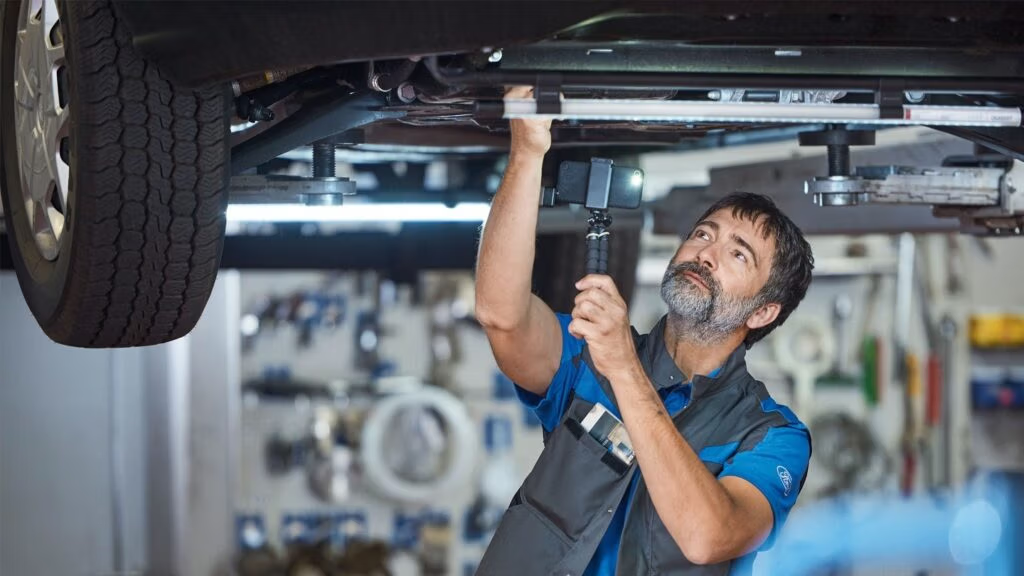
There are a few different ways you can check the suspension on your car when getting expert car servicing. One of the most obvious ways is to jack the vehicle up. If you do this properly, it will be a lot easier to inspect the rear end of the vehicle.
You can also inspect the front end of the vehicle. This is much easier than the rear, but you will need a friend to help. When examining the front end of the vehicle, you should be looking for the signs of a broken suspension spring or worn out shock absorbers.
Other signs of a faulty suspension system include a swaying vehicle or a car that leans slightly when turning. Also, if you notice uneven tread on the tires, that is a definite sign of a suspension failure.
While a faulty suspension is not necessarily a danger to the driver, it can be quite a nuisance. Suspension components can also be noisy. In addition to clunking, you may hear grinding and squeaking.
Another squeaky wheel is the vehicle’s anti-sway bar. Ball joints are used to connect the control arm of the front suspension to the steering knuckle. A good ball joint should provide a smooth ride. If you detect any noises, consider having it lubricated by a mechanic.
To provide the best experiences, we use technologies like cookies to store and/or access device information. Consenting to these technologies will allow us to process data such as browsing behavior or unique IDs on this site. Not consenting or withdrawing consent, may adversely affect certain features and functions.
Functional
Always active
The technical storage or access is strictly necessary for the legitimate purpose of enabling the use of a specific service explicitly requested by the subscriber or user, or for the sole purpose of carrying out the transmission of a communication over an electronic communications network.
Preferences
The technical storage or access is necessary for the legitimate purpose of storing preferences that are not requested by the subscriber or user.
Statistics
The technical storage or access that is used exclusively for statistical purposes.The technical storage or access that is used exclusively for anonymous statistical purposes. Without a subpoena, voluntary compliance on the part of your Internet Service Provider, or additional records from a third party, information stored or retrieved for this purpose alone cannot usually be used to identify you.
Marketing
The technical storage or access is required to create user profiles to send advertising, or to track the user on a website or across several websites for similar marketing purposes.