If you’re interested in making the most out of your vehicle, you might be wondering about the benefits of scheduled car maintenance. Preventative maintenance is a great way to make sure that you’re taking care of your car and that it’s operating at its maximum efficiency. It also saves you money and can help you get the most out of your vehicle.
Preventative maintenance is one of the most important things to do when you have a car. It can save you money, help you avoid major repairs, and prevent your vehicle from becoming a burden. Performing routine maintenance is also essential to the safety of your vehicle.
You can keep your vehicle running for years by performing routine maintenance. Regular maintenance can include changing spark plugs, examining internal wiring, and checking brake pads. These tasks can ensure your car is working properly, and can even increase its performance.
Maintaining your vehicle can also save you time. For example, if you need to park your car overnight, you don’t want to leave it sitting in a garage for too long. Also, check your battery. If it’s old and drained, it may need to be replaced.
When establishing a preventative maintenance schedule, it’s important to plan ahead. Make sure you have the proper resources to perform the maintenance on time. Getting the right equipment will help you minimize your downtime. Additionally, you need to take into account your local weather conditions, site conditions, and any special circumstances that might arise.
A comprehensive and well-thought-out preventative maintenance program will improve the overall performance of your vehicle. Preventive maintenance will also improve your fuel economy, allowing you to reduce your expenses. This will also lead to a better return on investment for your asset.
Getting trained personnel to perform regular maintenance
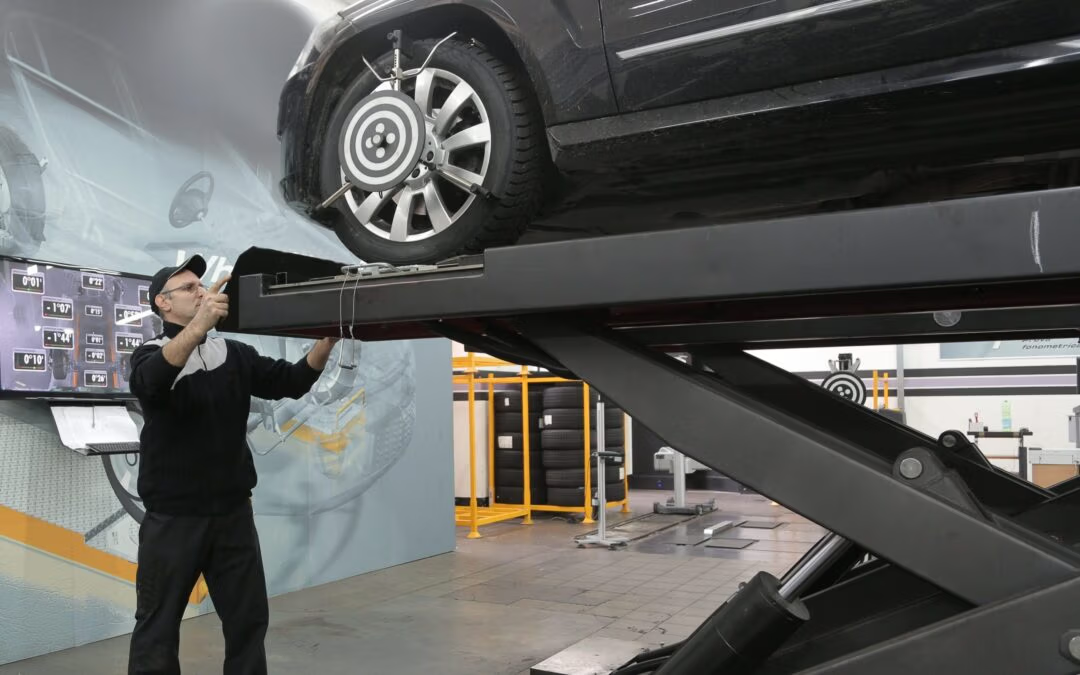
Getting qualified Technicians to work on your vehicle can help you stay on top of the job. Even a simple task like wheel alignment can improve your driving experience.
When establishing a preventive maintenance schedule, make sure you set benchmarks for your vehicle. These can be things like the number of hours it has been parked or the kilometers it has traveled. Then, you can track your progress against those benchmarks.
In addition, you should record all work performed and repairs. This will keep your records organized and help you see your maintenance compliance rate.
Having a preventative maintenance plan will ensure that your vehicles are ready for the road at all times. Moreover, it will decrease your risk of a breakdown and reduce the need for emergency repair.
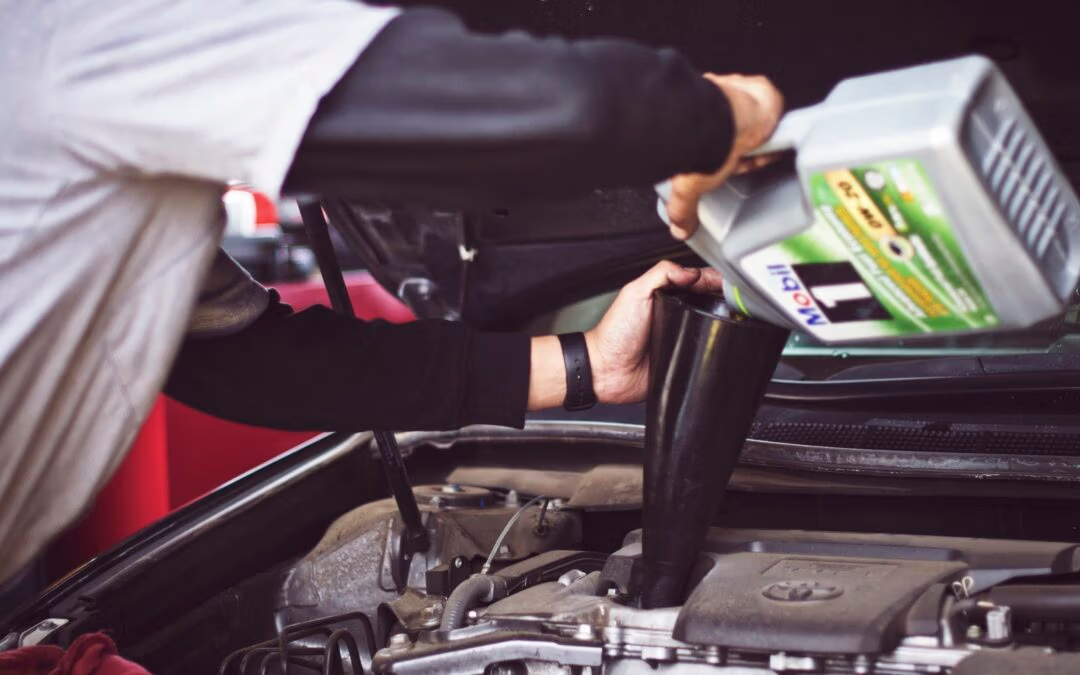
Scheduled car maintenance is the key to getting the most out of your automobile for many years to come. The latest models are built to last, and keeping up with routine maintenance is key to extending the life of your ride. This includes maintaining the proper fluid levels, changing oil, and making sure all of the components work as they should.
You can’t expect your car to last forever, but there are ways to increase its lifespan without breaking the bank. One such tactic is to find a qualified auto mechanic to perform maintenance on your vehicle. A reputable mechanic can spot problems before they become a big deal. They may also be able to save you from spending big bucks on unnecessary repairs.
Another option is to get an extended warranty. Many companies offer this type of plan, and they are usually fairly affordable. With an extended warranty in hand, you can drive with confidence. Most importantly, you can rest easy knowing that you are not on the hook for huge repair bills down the road.
Finally, make sure you take the time to read up on car maintenance and the best way to keep it running in top condition. By following a simple, but comprehensive schedule, you’ll be able to avoid major repairs down the road. And the best part is that doing this will help your vehicle keep its value. If you’re planning to sell your vehicle, you’ll have the peace of mind that you’ll be getting the most for your hard earned cash.
There’s no denying that cars are one of the most important possessions to own. So be sure to do your homework and take your vehicle for a test drive to see how much you’ll love it for the long haul. Make it a point to perform the most minor maintenance tasks on a regular basis, and you’ll be well on your way to enjoying your new ride for the next few years. Keeping up with the maintenance plan will also protect you from costly accidents.
Having your vehicle serviced on a regular basis is an excellent way to ensure that it stays in top working condition. It is also an excellent way to avoid costly repairs or replacements. A car that is in good working order will be safer to drive and will give you better fuel economy. Regular maintenance will also allow you to enjoy the benefits of many additional features that your vehicle has to offer. If you are looking to get the best possible performance from your vehicle, be sure to schedule a maintenance session as soon as possible.
Typically, maintenance intervals are outlined in the owner’s manual. Those who drive short distances should follow a severe service schedule, while those who drive long distances will benefit from longer intervals. When performing scheduled car maintenance, it is important to keep a check on a number of things, including oil, radiator coolant, air filters, fluid levels, and tire pressure. Also, make sure that your brake pads are in good working order. Keeping your brakes in good condition will help reduce the amount of wear and tear on your brakes and will ensure that they are ready for the next time you hit the road.
Conclusion
In conclusion, scheduled car maintenance is essential for ensuring the longevity and efficiency of your vehicle. By adhering to a regular maintenance schedule, you not only enhance performance and safety but also save money in the long run by preventing costly repairs. Routine checks and services, such as oil changes, tire rotations, and brake inspections, contribute significantly to a smoother driving experience.
Additionally, keeping your vehicle in optimal condition helps maintain its resale value. Overall, investing time and resources into scheduled maintenance is a smart decision that pays off in numerous ways.
Important Questions You Should Ask Before Hiring an Automobile Service. If you’ve just had a breakdown or you’re looking for a good auto repair service, it’s important to ask yourself some questions first. You’ll want to know whether you’ll be charged a fee, how long it’ll take to get your vehicle fixed, and what kind of warranty you can expect.
If you’re considering an automobile service to fix your car, you’ll want to consider how much you’ll have to pay. There are several variables, including the nature of your vehicle and the quality of the repairs, so it’s best to shop around before committing to a specific company. Some companies will charge a fee for an estimate, while others will happily provide one for free.
The best estimate you can get will come from a qualified mechanic. They’ll also want to know your preferences regarding repairs and your budget before giving you a written estimate. Similarly, a mechanic will likely ask for more money if they detect more problems than initially anticipated. Sometimes, you’ll be expected to pay for a full diagnostic test and repair before they agree to anything.
While you’re at it, make sure you check the warranty and service records beforehand. Having proof of purchase will reassure you if you should have any issues with the service. Another thing to remember is that your mechanic might not be able to do your repair job for you. This could cost you hundreds of dollars in downtime and missed work.
When all is said and done, a good estimate can help you weed out the losers from the winners. You’ll be glad you did. Using the best possible technician for your vehicle will go a long way toward keeping you on the road and out of the repair shop. It’s best to do your research and choose a reliable contractor who’s been in business for a while. After all, you’ll rely on them to perform a task you’ll depend on for the rest of your life.
Getting ASE certified is a good way to let customers know you are an expert in the mechanics trade. This can help you secure an automotive repair job.
In order to qualify for ASE certification, you must have a two-year degree in auto repair and a year or more of on-the-job experience. The rigorous tests are designed to ensure you’ve got all the skills you need to be a good mechanic.
When you have ASE certification, you’ll stand out from the crowd of mechanics, and you’ll have the peace of mind that comes with knowing you’re working with someone who knows what they’re doing. As cars become more complex, finding qualified mechanics is harder than ever.
ASE certification is a good way to attract top talent and expand your business. As more consumers trust ASE-certified mechanics, you can expect increased demand for your services.
If you want to become ASE certified, you can start by completing the application process. It requires a lot of work and training, and it can be expensive. Depending on your level of expertise, you may even need to take classes. However, you can often receive financial assistance from grants.
After you’ve completed the application, you’ll have to go through the testing process. You’ll need to pass a series of tests, each requiring a different level of expertise.
Once you’ve completed all necessary tests, you’ll be awarded a Master Technician Certificate. You’ll need to renew your certificate every few years.
ASE certification gives you peace of mind, and it can help you attract other automotive professionals. However, ASE isn’t a guarantee that you’ll get hired.
Do you have a written warranty?
A written warranty can offer great protection for a relatively fair price. However, many warranties can be confusing and contain unnecessary limitations. So, it’s important to understand what a warranty is and ask questions to make sure that you get what you want from your purchase.
A warranty is a promise from the manufacturer that a product will work properly and be free of substantial defects. It also indicates that the manufacturer will be there for you when your product fails. Typically, it lasts about four years, but some exceptions exist. Depending on the type of product, the manufacturer may extend the warranty or provide an alternate way for you to get it repaired.
There are two basic types of warranties: express and implied. An express warranty is one that is made explicitly during a sales transaction, while an implied warranty is a promise based on a common law principle.
The Consumer Protection Act is a federal law that protects consumers from certain warranties. For instance, it prohibits a seller from denying or modifying an implied warranty. It also makes it easier for buyers to sue for breach of warranty in court.
Most new products are sold with a written warranty. However, some manufacturers choose not to offer one, and some retailers are not obligated to provide one.
One way to ensure you receive a written warranty is to ask for it before buying. Usually, a warranty will be attached to a new television, computer, or other electronic device. Having a written warranty will give you peace of mind, knowing that your product will be covered in the event of an issue.
How long does it take to repair a vehicle?
There are many factors that can affect how long it takes to repair a car. The most important factor is the nature of the damage. More severe damage can take months to fix. If your car is in an accident, you’ll need to work with your insurance company to get the repairs done in a timely manner.
An example of a more complicated repair would be a rebuilt transmission or an alternator. These tasks require more hands-on time. You might also need to purchase specialty parts for your vehicle.
Another factor that can add to a repair’s overall cost is the time it takes to receive replacement parts. This could take from a day to a week. Your car’s model year may also have an impact. Newer models have a greater number of parts available. On the other hand, older vehicles may need to be repaired with special parts.
During the repairs, your car will be disassembled to identify the damage. Broken items will be replaced and scratches will be removed. After the work is completed, your vehicle is reassembled and detailed.
Depending on the type of repairs, your car may be off the road for several weeks. Some simple fixes, such as changing the oil, can be done in a few hours. However, larger jobs such as repairing air conditioning or an engine can take a week or more to complete.
The time it takes to fix your car depends on the type of repair, the severity of the damage, and the type of auto shop you choose. An auto body shop typically completes a job in two to five days.
Understanding the Different Types of Auto Parts and Their Functions is important when maintaining and repairing your car. The parts are designed to work together to ensure that your vehicle runs as efficiently as possible. Understanding the various components of your car will help you determine which are the most essential and necessary to keep running. You’ll also be able to make more informed decisions regarding repairing your vehicle, such as whether or not to replace a particular part.
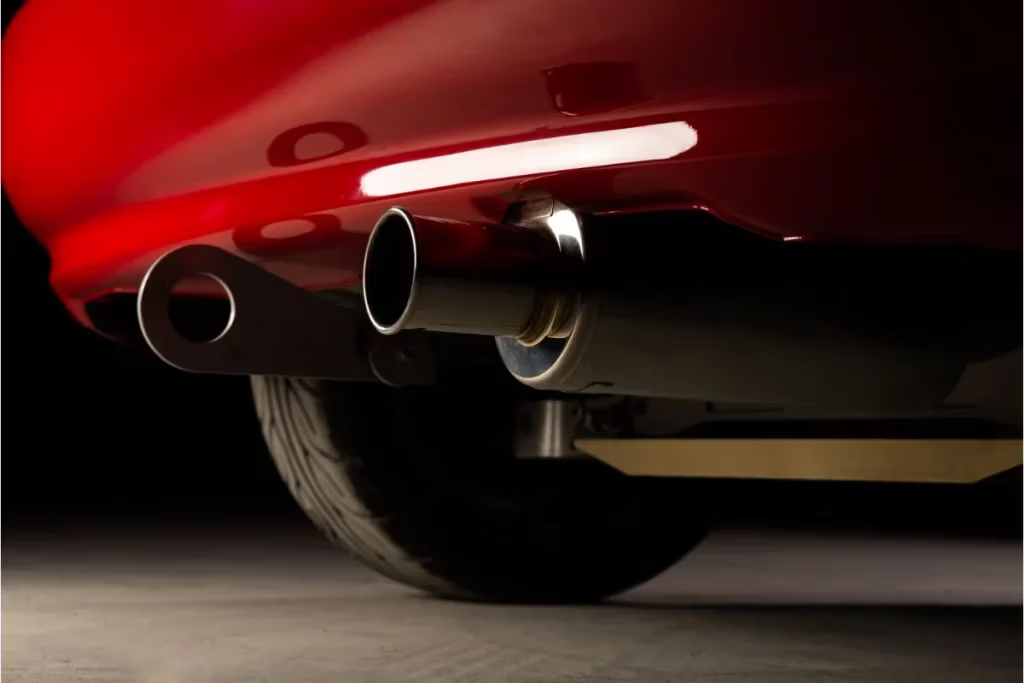
Mufflers are a key part of your exhaust system. They are designed to reduce engine noise and improve overall performance. These mufflers also act as a barrier against harmful emissions and can even help improve the look of your vehicle. They are made of steel, aluminum, or other materials and are used in vehicles with an internal combustion engine.
A muffler is a metal device installed on a vehicle’s rear. It consists of one or more tailpipes, a backbox, and a chamber located at the rear of the muffler. In addition, it is often coated with aluminum to protect it from chemicals in the exhaust system.
A muffler’s design can vary, and it can affect the amount of noise it produces. Some mufflers are designed to create growling sounds, while others are designed to be silent. If you are looking for a muffler, consider the type that best matches your vehicle. The type of muffler that will most effectively reduce the amount of noise your vehicle produces will depend on several factors.
The first way a muffler can control engine noise is through the use of a resonator. This resonator is a type of echo chamber that helps to cancel out unwanted sound frequencies. Sound waves enter the resonator chamber and then travel to the center. Once they reach the center, they are diverted through another hole and then into the muffler.
Another way a muffler can decrease engine noise is by lowering the pressure pulses created when the engine’s valves are open. By forcing the gases through smaller passages, the muffler can reduce the pressure pulses, which lowers the noise. Several manufacturers offer mufflers that can produce the greatest reduction in noise.
Mufflers can also be designed to reflect sounds. Mufflers with a reflector system consist of a series of tubes with holes. These tubes are designed to reflect the sound waves that enter the muffler, and the exhaust gases will then be absorbed into the tubes, rather than escaping through the pipes.
The third way a muffler can prevent noise from entering is through the use of perforations. These perforations are metal tubes installed inside the muffler. Sound waves are then directed through the muffler, and the energy from the sound wave is dissipated through the perforations.
Another way that a muffler can be designed to make the noise less powerful is to cut out the resonator. Some people do this to eliminate a lot of the noise in their car, but others do it to make the exhaust note sound more powerful.
The chassis frame is a crucial component of the vehicle body. It supports the weight of the vehicle’s body and passengers and bears stresses in both static and dynamic conditions. These forces help the car run smoothly and efficiently.
Chassis frames are made of various materials, typically steel. Most manufacturers prefer lightweight materials, which help diminish the overall weight of the vehicle. However, heavy vehicles need a more rigid structure.
Depending on the car’s model, the chassis may include several different parts. Some of these components include wheels, axles, suspension, and brakes. They are all essential parts of the vehicle. Knowing their roles and functions is important for a better understanding of the various components of the chassis.
The engine, transmission, and braking system are all installed on the chassis. Brackets support the body and allow the installation of suspension springs and brakes. Using the right materials is critical to the chassis’s proper functioning.
As with most other automobile components, the chassis must be built to withstand a large amount of stress. The frame must also be able to withstand the effects of rough road surfaces and other conditions. If it is not constructed properly, an accident can cause it to break down.
The chassis includes the engine and transmission, as well as the wheels. These components absorb vibrations on the road, converting them to rotational energy that is used for power. Several kinds of tires are available. Aside from the wheels, the chassis is made of pressed steel, which helps isolate the engine from the shocks created by the road.
Cross Member of The Chassis
Another important part of the chassis is the cross members. They are connected to the longitudinal members and the horizontal members. Although the cross members look like simple metal frames, they play an important role in the vehicle’s chassis.
Another crucial part of the frame is the rod. Frame rods offer proper toughness to the structure. They can be either rectangular or a U-shaped channel section. Both are designed to handle torsion well.
The frame’s ability to withstand sudden braking is vital for automotive safety. Sudden braking can cause a frame to collapse. Fortunately, a damaged part of the frame is easy to replace. Depending on the damage, the repair may or may not be possible.
The braking system is a critical component of the car, along with the frame. A good braking system allows the car to stop quickly, but without it, the car will lose control and be susceptible to accidents. Car manufacturers are constantly striving to make their vehicles safer.
Automobile suspension is an important component in any car. It helps the driver steer and prevents the vehicle from rolling over potholes, uneven surfaces, or other road irregularities. As a result, it is imperative for drivers to understand the different components of a good suspension system. A well-tuned vehicle will ensure a comfortable and safe ride.
There are several types of suspension systems, each with its own benefits and drawbacks. Some are simpler to manufacture and require less maintenance. Others require complex and expensive engineering to achieve optimal performance. For instance, a high-end car might use a dual-leaf spring type of suspension.
A typical automotive suspension system consists of three main components: tires, bars, and shock absorbers. Although the suspension system might seem like an afterthought, it is actually a crucial part of the vehicle. Besides being vital for safe driving, the quality of the ride is essential for the comfort of the passengers.
you might not be familiar with the many components that go into a modern vehicle. Most people know about brakes, steering, and tires, but they are unaware of everything that makes a good suspension.
A proper suspension system will prevent your vehicle from rolling over bumps or, worse, from being damaged by road debris. It will also help your ride feel level and even, meaning you’ll enjoy better handling and ride quality.
In terms of performance, the primary functions of a suspension system are dampening shock, maximizing tire contact with the road, and providing steering stability. These functions are aided by the fact that the car’s tires need to stop and turn simultaneously.
One of the car’s most impressive features is its ability to negate most road forces.
This is achieved by using springs, shock absorbers, and bushings, each with its own purpose. The shock absorbers are especially useful when the tires travel at high speeds. Unlike a typical air suspension, a shock absorber is velocity-sensitive, which means it will perform a smoother roll over small bumps and a more impressive bounce over big bumps.
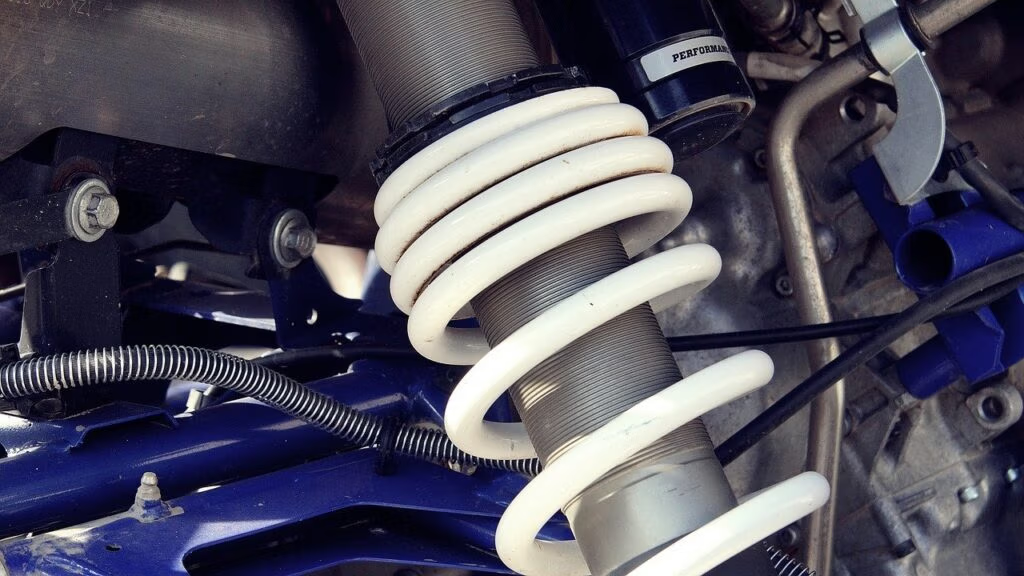
The main functions of the shock absorber in a car’s suspension system are to dampen road shock and force the springs to compress. Another is to store energy and control the dissipation of kinetic energy. An example of a good shock absorber is the MacPherson Strut System, which became popular in domestic autos before downsizing to meet the demands of smaller cars.
Lastly, the car’s suspension consists of several parts, including upper and lower arms, knuckles, and ball joints. While not all suspension systems have these, it is still a good idea to be familiar with all these elements.
Tips for Choosing a Reliable Automobile Service Provider for Your Car. When you have a car, you would want to make sure that it is well taken care of. That means that you should do your homework before hiring a vehicle repair shop.
If you want to ensure that you get the best service for your money, follow these tips for choosing the right automobile service provider.
If you’re searching for an auto repair shop, it’s important to check out their Yelp reviews first.
Yelp is one of the most influential review sites in the world. Consumers trust online reviews more than personal recommendations, and a good number of reviews can influence your decision.
In fact, 85 per cent of consumers read online reviews, and 66 per cent of people who visit an auto repair business also purchase within seven days. Keeping your Yelp profile up to date and managing your business’s reputation are crucial if you want to keep your customer base happy.
Besides boosting your visibility, good Yelp reviews can help your car repair business get higher Google search results. But how can you make your Yelp page effective?
The easiest way to get online reviews is by providing great service. When you show that you can solve customer problems quickly and professionally, you’re rewarded with excellent reviews.
Tips for Choosing a Reliable Automobile Service Provider for Your Car
Another good way to get positive reviews is by allowing new customers to leave comments on your Yelp profile. This will create a buzz around your business and will allow you to highlight the best parts of your business.
It’s also a good idea to let your super fans shine. Let them share their own experiences with you, and encourage them to leave a glowing review after they’ve had their car repaired.
You can also give people who have left negative reviews a reason to change their opinion. For example, if a disgruntled customer says that you didn’t fix their car correctly, you can respond with a solution. Rather than retaliating with an angry response, you could offer to correct the problem for free or for a certain amount of money.
A final tip is to avoid letting a single negative review overwhelm your profile. Even if it’s one star, it can damage your business’s reputation. Instead, try to focus on making customers happy and keeping them coming back.
Lastly, if you’re a small business owner, don’t let your Yelp profile fall into the hands of untrustworthy individuals. Yelp has a filtering system to remove reviews that don’t meet its standards.
If you are looking for an automobile service provider, you need to make sure that they are reliable. This is because leaving car issues unchecked may cause premature breakdowns. The most reliable automobile service providers are reputable and provide a guarantee for their services. When you are choosing an automobile service provider, you need to look into the credentials of the mechanics and their experience. You also need to judge the behaviour of the staff. A good automobile service provider will treat you with respect. However, if you see that the staff is rude, it is best to leave the place and find another one.
Before the mechanic gets started on your service or repair, ask for a written quote and make sure it includes parts, labour and VAT. Check that the garage will use approved parts, so you don’t invalidate any remaining warranty on your car. You may like to enquire about a courtesy car for the duration of the work, but be wary of steep insurance excesses on such vehicles.
In conclusion, choosing a reliable automobile service provider is essential for maintaining the longevity and performance of your vehicle. By conducting thorough research, seeking recommendations, and evaluating service quality and customer support, you can make an informed decision.
Look for certified technicians and transparent pricing to ensure you receive the best care for your car.
Regularly maintaining your vehicle with a trusted provider not only enhances safety but can also save you money in the long run through preventive care. Always remember to prioritise service providers who demonstrate integrity, expertise, and a commitment to customer satisfaction.
In order to prepare your car for professional auto service and maintenance, there are several things you can do to get it ready. These include checking the tires, brakes, shocks and struts, antifreeze, transmission fluid, and differential.
Check brakes
The brakes in your car are one of the most important safety components. A good system will help you stop your car in a timely manner, while an unreliable system could leave you at risk of a serious accident. When you check the brakes on your vehicle, you’ll be able to avoid expensive repairs.
The brakes should be tested regularly, especially if you travel long distances or drive in remote areas. If you notice a problem, it is best to get it taken care of right away.
One common sign of a failing braking system is a noisy brake pedal. This can be caused by air in the hydraulic system or a leak.
Another common indicator is a mushy brake pedal. This indicates that your brake pads are worn out and that there is a leak in the braking system.
Changing your brake fluid is an inexpensive and effective way to keep your brakes performing properly. Checking the fluid level in your brakes is easy and can be done in your own home.
You may also need to replace your calipers and rotors. You should do this every 50,000 miles.
While you’re checking the brakes in your car, you should also check the lights. Make sure that the headlights and the turn signals are in good shape. Also, have a friend stand behind your vehicle and look for any issues.
Another thing to check for is a brake warning light. This is a system that is part of your anti-lock brakes and can alert you when there is a problem with the braking system.
Check transmission fluid
Before you take your car to the mechanic, it is a good idea to check the transmission fluid. If you notice a change in the color of the transmission fluid, or a smoky smell, you need to replace the fluid. Then, you will be able to catch a problem before it gets worse.
A dipstick can be used to check the transmission fluid. Usually, a dipstick is found underneath the hood of your vehicle. There should be a gear-shaped symbol on the end of the dipstick.
You will need to pour a small amount of automatic transmission fluid down the dipstick tube. Adding more fluid can make your transmission sluggish, or it can cause it to break down. When you add too much, you can damage the seals on the transmission, which will prevent it from functioning properly.
Once you have finished pouring the fluid down the dipstick, you should place the tube in a funnel. Use a lint-free cloth to clean the tip of the dipstick.
After adding the fluid, check the level on the dipstick. If the transmission fluid is too low, it is a sign of a more serious problem. Also, if the fluid looks foamy, you may have added too much.
Transmission fluid is a vital part of your vehicle’s performance. It helps to lubricate moving parts, and prevents them from wearing out. Depending on your car model, you may need to check the transmission fluid more often than usual.
Check differential
When you need professional auto service and maintenance for your vehicle, make sure you check your differential first. Failing to do so can lead to a whole host of problems. A bad differential can lead to damage to the driveshaft, axle, or transmission. Keeping your differential in good condition can help extend the life of your vehicle.
Differentials are part of a drivetrain, and they split torque among the wheels. This allows the wheels to turn at different speeds and helps the car stay on track. They contain interlacing gears and bearings, and they rely on lubrication to keep them running smoothly.
It is a good idea to check your differential before getting your car repaired, especially if you drive on the road a lot. This way you can avoid costly repairs down the road.
Differentials can be noisy, and this can be a sign that they need to be serviced. Getting the differential checked will also let you know if there is a problem with the internal gears.
If you notice a leak in your differential, be sure to have it repaired right away. In some cases, you may need to remove the housing cover or replace a seal.
It is also important to change the fluid. The differential fluid contains gear oil, which keeps your gear from heat damage. Change the fluid when the manufacturer recommends it.
You can find the type of fluid that you need for your vehicle in your owner’s manual. Differentials have a fill hole, and you may see a rubber plug. Pull out the cover gently and check for any leaks.
Check Shocks And Struts
A car’s suspension system is an important part of driving safety. It helps to keep your vehicle from moving off the road when driving over bumps or rough terrain. If the system is not working properly, it can lead to accidents.
While many drivers take shocks and struts for granted, they are an essential component of a vehicle. A faulty strut or shock can cause an increased braking distance, a rough ride, and a loss of control.
Fortunately, there are some easy ways to tell if your car’s shocks and struts are in good shape. First, check your tires. Prematurely worn tires can be an indication of a problem with a strut or shock.
Next, check your steering wheel. Vibration can indicate a faulty strut or shock, which can affect your steering and stability. You may notice a shaking steering wheel, especially if your car has been in a collision.
The vehicle’s suspension system also consists of a number of other components. For example, the brakes, tie rods, and control arm bushings are also part of the suspension. These parts are important and can wear out over time. Therefore, it’s a good idea to get them checked on a regular basis.
In addition to checking the tires, struts, and other components, you’ll want to perform a thorough inspection of your vehicle’s suspension system. This is because the failure of any of these components can be hazardous to your safety and the safety of others on the road.
Check antifreeze
Antifreeze is an important part of your car’s performance. It helps keep your engine from freezing up in cold weather, and it provides anti-corrosion properties.
Checking your car’s antifreeze level is a cheap and easy way to protect your car from problems. You should check it before the start of the winter and before the summer heat. Failing to do so can cause serious problems.
In addition to protecting your car from freezing, antifreeze also contains additives that deliver anti-rust and anti-corrosion capabilities. These additives can break down over time, reducing the effectiveness of the coolant.
When your car needs a new coolant, you should contact a professional. Some auto repair shops have experts on staff who can do the job for you. If you do it yourself, take care to use extreme caution.
If you own a high-mileage car, you may need to change the coolant more often. The owner’s manual can help you determine the recommended maintenance schedule for your vehicle.
Your car’s cooling system should be checked every year or so. A hydrometer can be used to check the condition of the coolant.
If your antifreeze starts to get brown, you should flush the radiator out and replace it with a fresh supply. This will keep your radiator from corroding. Also, the smell of burnt coolant can be dangerous.
Changing the coolant can be an easy task, but if you aren’t sure what to do, you can consult a mechanic. They can tell you how much antifreeze you need, and they will fill it with the correct mixture for your vehicle.
Check Tyres
When it comes to auto service and maintenance, one of the most important things to check is your tires. A well-maintained set of tires is crucial to a safe and fuel-efficient ride.
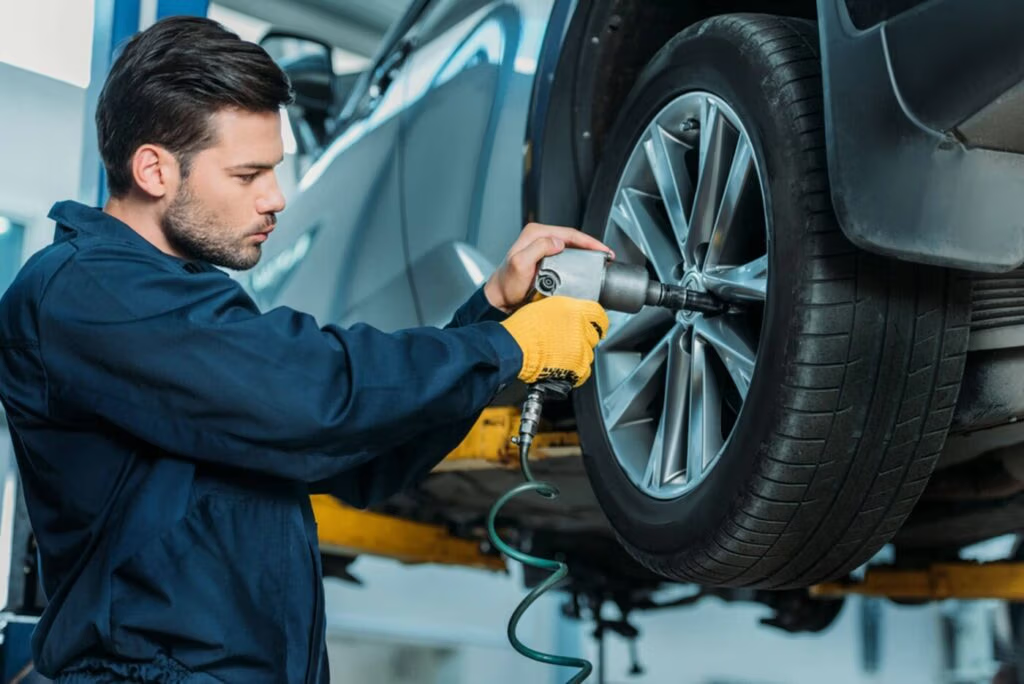
To keep your wheels in tip-top shape, it’s a good idea to rotate your tires every 5,000 miles or so. This will help them to wear evenly, which will extend their life. It will also help to prevent vibrations and noise.
If you have a spare tire, make sure to change it regularly. You can use a tire pressure gauge to do so. The pressure should be at 32 to 35 psi.
Another thing to check is the tread on your tire. Ideally, the tread should be 2/32 inches.
There are several ways to measure the tread on your tire. One way is to place a penny upside down into the tread. The head of the penny should go into the grooves in the tread, and the space above it indicates how much tread is left.
A reputable car repair shop will be able to tell you the best way to check your tire’s tread. Depending on your vehicle, you may have to remove a small portion of the tire to gain a thorough look at it.
Besides checking your tire’s tread, you should take the time to check your lights. These are easy to notice if they’re not working. Also, look for signs of damage to your windshield and taillights.
To provide the best experiences, we use technologies like cookies to store and/or access device information. Consenting to these technologies will allow us to process data such as browsing behavior or unique IDs on this site. Not consenting or withdrawing consent, may adversely affect certain features and functions.
Functional
Always active
The technical storage or access is strictly necessary for the legitimate purpose of enabling the use of a specific service explicitly requested by the subscriber or user, or for the sole purpose of carrying out the transmission of a communication over an electronic communications network.
Preferences
The technical storage or access is necessary for the legitimate purpose of storing preferences that are not requested by the subscriber or user.
Statistics
The technical storage or access that is used exclusively for statistical purposes.The technical storage or access that is used exclusively for anonymous statistical purposes. Without a subpoena, voluntary compliance on the part of your Internet Service Provider, or additional records from a third party, information stored or retrieved for this purpose alone cannot usually be used to identify you.
Marketing
The technical storage or access is required to create user profiles to send advertising, or to track the user on a website or across several websites for similar marketing purposes.