google7e56936e3b638e6b (4)
EV Specific Tyres An Outlook of the Future

EV Specific Tyres An Outlook of the Future

EV Specific Tyres An Outlook of the Future and which tyres to fit Discover everything you need to know on suitable tyres for electric vehicles, and how they contribute to the range, energy consumption and the overall driving experiance

EV Specific tyres are gaining popularity worldwide, but which one is suitable for your car? Apollo Tyres has confirmed that it will launch EV Specific tyres for passenger cars on August 1. This will be the first time a tyre manufacturer has made EV-specific tyres in India. Apollo Tyres says these tyres will be available in both two-wheelers and passenger cars.

Hankook EV Specific tyres

The company is working on EV Specific tyres that can be fitted to leading vehicle manufacturers. These include Porsche, BMW and Audi. The Ventus S1 Evo 3 EV has a reduction of rolling resistance of 13%. Many EV Specific tyres from Hankook include their exclusive Sealguard technology, which seals up to five millimetres of punctures without needing a spare wheel.

The Ventus S1 evo3 EV is Hankook’s flagship EV Specific tyre, fitted to the Porsche Taycan. The Ventus S1 evo3 EV is a high-performance tyre that maximises battery range. It is also built to deliver grip and ride comfort and improved high-speed handling. These characteristics make it ideal for EVs. The Ventus S1 evo3 EV also features a high proportion of natural resin and oil in the tread compound. Using natural oils in the tyre compound reduces environmental impact and improves its mileage.
EV Specific Tyres An Outlook of the Future

EV Specific Tyres An Outlook of the Future

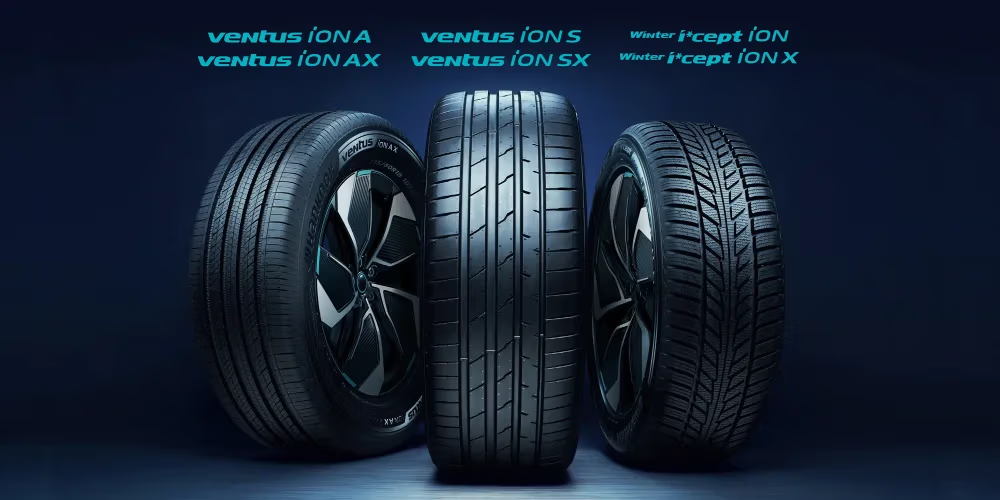
The Ventus iON S is an award-winning model incorporating innovative aerodynamics to decrease air resistance and noise. The Ventus iON S is designed to be as quiet as possible, reducing internal combustion engine noise. As a bonus, the company has integrated a Sound Absorber(tm) to reduce noise levels inside the vehicle. You’ll be able to enjoy quiet travel with Hankook EV Specific tyres.

As EVs become increasingly popular, manufacturers are creating EV Specific tyres to meet the demands of these vehicles. Unlike standard tyres, these products are designed to last many years, even in winter. Many of these tyres even feature four-wheel drive and sky-high horsepower. They are also available in 18-22 inch sizes.

Nexen EV Specific tyres

The Nexen EV Specific tyre products manufacturers understand the demands of electric vehicle (EVs) drivers. Most EVs weigh around twenty per cent more than a conventional Vehicle so it is important to fit the correct tyres as the sidewalls are Reinforced Due to the weight of the EV

Electric Motors Produce Maximum Torque At A standstill And Are Much Heavier

Additionally, the extra weight heavily strains the tyres, causing them to bulge. This extra weight reduces rolling resistance, decreasing range and energy consumption.

The EV-specific tyres are similar to the standard tread pattern and sidewall design versions. They have OE codes that supplement the information on the sidewall.

These tyres are manufactured by Michelin, the tyre manufacturer that has provided tyres for Formula E vehicles for the past six seasons. These tyres also have reinforced sidewalls that help them retain shape and stiffness.

Specific Tyres For Electric Vehicles

Since electric vehicles are becoming more popular and governments are offering incentives to buy them, manufacturers have been racing to be the go-to tyre provider. While most premium brands have developed EV-specific tyres that are simply labelled “EV”, these are expensive options for discerning buyers. However, mid-range offerings are slowly hitting the market. For now, Nexen is developing a series of EV Specific tyres that will be fitted to several EV models, including the Kia EV6 and the Hyundai Motor Group’s E-GMP.

As the weight of electric vehicles increases, so make the demand for EV tires. A good tire will help compensate for the increased weight and increase the vehicle’s braking distance. The Nexen EV Specific tire is designed to be durable and low noise. Whether the vehicle is a traditional internal combustion or electric drive, a good set of tyres will make all the difference.

Goodyear EV Specific Tyres

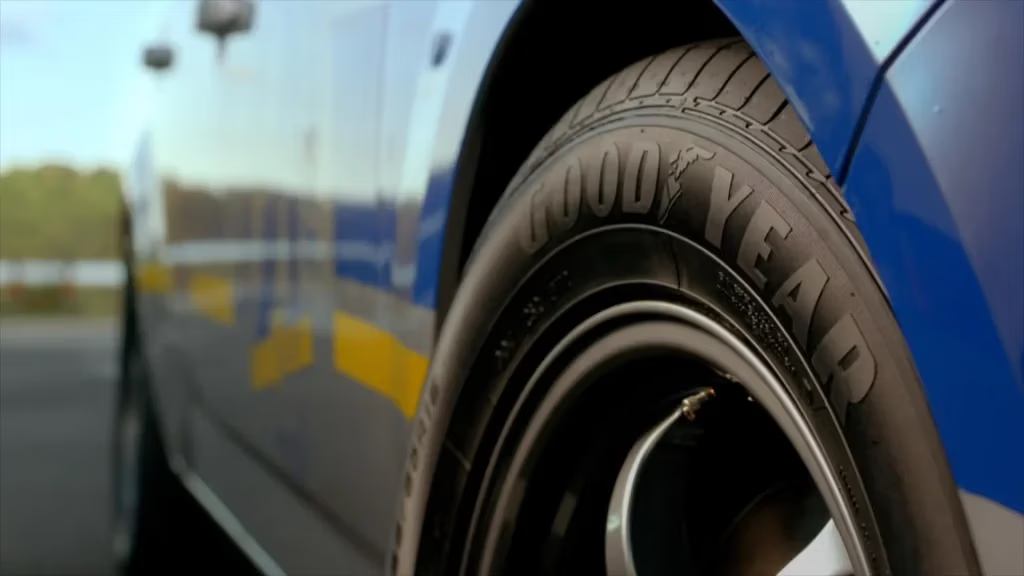
With a new electric vehicle (EV) gaining popularity, Goodyear is expanding its line of EV-specific tyres. While the EV segment is still small in terms of sales, Goodyear has recognised the potential of this new market and has designed an EV-specific tire. It is an evolving market that presents its requirements, and Goodyear has responded by developing leading technologies to meet these needs.

Developed for EVs, the ElectricDrive GT is Goodyear’s first EV-specific tyre. Featuring a unique asymmetric tread pattern, the Goodyear ElectricDrive GT is scheduled to launch in 2022. The size of the tire, 255/45R19 104W XL, is equivalent to the tyre size of a Tesla Model 3 or Model Y. It is also expected to fit other EVs.

The electric drive GT is the first high-performance all-season tire for electric vehicles designed specifically for them. Its tread pattern and material compound help ensure long-lasting tread wear and quiet driving for drivers of electric vehicles. The tire also contains SoundComfort Technology, a physical barrier that reduces sound and ensures a quiet ride. Moreover, the ElectricDrive GT has a specialized tread compound.

ElectricDrive GT tyres are suited for Tesla Model Y and Model 3. They are currently available in the 255/45R19 size, the factory size for the Tesla Model Y and Model 3 (the best-selling high-performance EV). In addition, Goodyear plans to expand the ElectricDrive product line after 2022. There are plans to offer the same EV-specific tyres for GM’s future electric cars.

Hankook e-tyres

As one of the first manufacturers to create EV-specific tyres, Korean manufacturer Hankook is a pioneer in this area. Its dedicated EV tyres feature pioneering construction methods, special compounds, and unique tread patterns. These tyres are fitted to all three companies’ latest concept cars and flagship production models. Listed below are some of the critical features of Hankook’s EV Specific tyres.

iON tires answer Hankook’s growing demand for premium electric vehicles. The company plans to launch three designs, including an all-season version for the North American market. The company will also introduce a performance all-season version of the Hankook Ventus iON in May 2022.

The iON family of tires is designed to provide low rolling resistance and low rolling noise characteristics and is made from natural resin and a high proportion of natural oils. Hankook’s Ventus iOS S summer tire will be available in Europe in 2022.

Ion EV Tyres

The iON EV tyres are designed to combat the weight of large battery packs. The tires also feature ultra-resistant aramid fibres, which counter deformation forces caused by high torque delivered by the electric motors. The iON EV tyres are also designed with a high proportion of natural resin, ensuring durability, reduced wear, and sustainability.

In May 2022, Hankook plans to launch its first family of EV-specific tyres called iON. These will be specially developed for electric vehicles requiring lower rolling resistance, low noise, and low rolling resistance. They will be specially designed for electric cars’ high torques. The first of these tyres is the Ventus iON S summer tyre, launched in Europe in May 2022. A winter version, the Winter i*cept iON, will be launched in North America in September 2022.

The Best Ways to Keep Your Car Safe During the Holidays.

The Best Ways to Keep Your Car Safe During the Holidays.

The Best Ways to Keep Your Car Safe During the Holidays well You’ve probably heard that the most common month for vehicle theft is January. Even though many newer and upmarket cars have added security, older and cheaper models can still fall victim to thieves. As you’re busy shopping and preparing for the holidays, it’s easy to get distracted. To avoid putting your car at risk, here are some tips:

Avoid leaving valuables in plain view

Leaving items in plain sight in your car is a common cause of theft. When leaving your car, move any valuables to the trunk or store them inconspicuously elsewhere. The trunk is an obvious target for thieves, but SUVs have no trunks. Instead, thieves will check the glove compartment, behind the seats, and under the seats to see if there is anything valuable stored there.

Leaving tiny amounts of money in your cup holders may attract thieves. Permanently remove coins before leaving the car, or put them in the center console. You shouldn’t leave any valuables unprotected in your car, but it’s always best to invest in a car safe. Not only will you avoid smash-and-grab theft, but you’ll also avoid letting thieves know you have valuables in your car.

Place valuable items out of sight when driving. This is important for valuables like GPS units, credit cards, money, packages, etc. Place these items in the trunk or the glove compartment, or secure them in the trunk. Leaving them visible will give thieves an idea of what you have in your car. Some thieves will even break a window or a door lock to get what they want.

Always lock your vehicle when parking. This is because leaving valuables exposed attracts thieves. Leaving valuables in plain sight will encourage thieves to break into your car and steal your items. You should also make sure you use your garage if you have one, as parked vehicles are much easier targets. In case your garage has a lock, use it! If you have a garage, lock it at night. Even if you park in a public parking lot, it is riskier to leave your car unattended, as thieves can use this information to sell stolen cars.

Locking your car

It is vital to lock your car when you leave it unattended. Even if you don’t want to lose it, thieves can still steal your car if you leave the doors unlocked. To protect yourself against these thieves, you can install cameras or doorbell cams in your car. Steering wheel locks will further increase the security of your vehicle. And remember, your car isn’t just a tool – it is a valuable possession.

One of the best ways to secure your car is to park it in a garage. Parking on the street puts it at high risk of theft. The door will automatically lock as you drive, so no one will have to open it. Also, parking your car in a garage is safer than on the street. It is much more difficult for thieves to get into your car in a garage. In addition to keeping your car safe, you’ll also be protecting your vehicle from damage caused by burglars.

The most obvious way to protect your car is to lock the doors and windows. Remember, if you’re in a hurry, leaving your car running is an invitation to thieves. And if they know that you leave the door open, they’ll be less likely to take it. However, if you leave the ignition key inside the car, it may be an indication to them that you’re not home. Leaving the keys inside will only make your car easier to steal, so it’s better to make them difficult to get at.

Lastly, installing a steering wheel lock is a great way to keep your car safe. It makes it almost impossible for someone to drive your car away. These will prevent thieves from using the steering wheel as a compass. And if that’s not enough, you can always fit a steering wheel lock on the diagnostic port. Tracker devices will send alerts if your car isn’t where you expect it to be. They can also help you track stolen cars with GPS.

Using an immobilizer system

A car immobilizer prevents your vehicle from starting and allows you to turn it off in a pinch. However, thieves can still steal your car by using flatbed tow trucks. If you have an immobilizer installed in your vehicle, you should remember that if you remove it, the car will not start and will cause a loud alarm to sound. Immobilizers have been proven to decrease car theft. Car theft in the U.S. dropped significantly in the late nineties and early 2000s when they became widely used.

Modern immobilizers have multiple functions that will prevent the theft of your car. Immobilizers will prevent hot-wiring when a car starts without the correct key. Immobilizer systems will reduce car theft by as much as 40%. Immobilizers are integrated into the modern car keys, called key fobs, with buttons to start, lock, and unlock the vehicle. Some smart keys will even start the car remotely.

The Way a Car or Vehicles Immobilizer Will Work

The key will transmit a digital token to the immobilizer. This digital token will unlock the car’s ignition and create a new security code, which only a genuine key has. Without a genuine key, the car will not start. While the immobilizer is an effective way to keep your car safe, some loopholes can allow thieves to bypass the immobilizer system and steal your vehicle.

The key fob is the most common source of immobilizer malfunctions. In most cases, this problem results from the essential fob battery. While the system may be functional in other cases, it rarely fails due to a corroded wire. The battery in a key fob drops when the power to the critical transponder is low, causing the transponder chip to stop sending a signal to the engine immobilizer.

The Best Ways to Keep Your Car Safe During the Summer Holidays

Immobilizers can protect your car against mechanical theft as well. Immobilizers are usually effective against mechanical car thieves, but some criminals may attempt to bypass these devices using other techniques. Immobilizers are not infallible, and a skilled carjack can bypass them without breaking the code. You can take steps to increase the security of your car and prevent a thief’s joyride by installing a steering wheel lock or additional alarm.

Parking in a garage

Parking your vehicle in a garage offers many benefits. A garage protects it from extreme temperatures and UV rays, which can damage your vehicle over time. It also protects you from these elements, reducing the risk of vandalism and theft. Furthermore, parking in a garage eliminates the temptation for thieves to steal your car. You can use a parking display to help you keep track of how close you are to a garage wall.

When parking your car, you should always wash it thoroughly to avoid rust and paint damage. It is advisable to purchase rust protection, especially if you live prone to rust. Additionally, if you leave your car for extended periods, you can put a car cover on it to prevent dirt from damaging the paintwork. Moreover, excess moisture can also accelerate the rusting process, so ensure you keep the car covered while not using it.

A garage is also a great place to store your car. In addition to the added safety benefits, parking in a garage can extend the life of your vehicle and maximize its resale value. You can lock the door to keep thieves out if you have a garage. Even modern auto alarm systems won’t prevent theft if you leave your car outside. Thieves will steal the paint job, contents, and other valuables from your car, and you’ll lose a great deal of money. Moreover, some insurance providers will even give discounts if you park your car in a garage.

Lastly, a parking garage will protect your car from hurricanes. It may provide shelter from the rain, but it is not as secure as a garage. Hurricanes can cause significant damage to your car. If possible, park your car somewhere else, such as a garage, but remember not to park it in a hurricane’s path. This way, you’ll be safer in your car and prevent further damage to your car.

The Future of the UK Car Market – Dissecting the Details

The Future of the UK Car Market – Dissecting the Details

With the UK car market set to suffer from the EV revolution and record-high fuel prices, many manufacturers are scrambling to keep pace. This month, we explore the challenges faced by the BLMC and Nissan Qashqai. We also look at the impact of the recent shortage on private sales.

So, what is the future of the UK car market? This article examines the latest trends and developments in the industry, as well as how the automotive sector can address its current challenges.

BLMC’s struggle to modernise

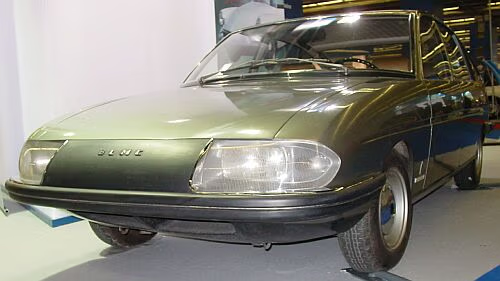
During the 1970s, the British Leyland Motor Company (BLMC) was the dominant player in the UK car market. However, it suffered from a decline in model appeal and lost 40% of the market in 1971.

Instead of providing colourful models, the company offered cars with blander styles and duller colours. As a result, the company’s profits were hit, and investment plans were put on hold.

The Barber boom had hit British Leyland’s automotive industry. Production at the Cowley factory was halted in 1971. Production at Longbridge moved to another plant, whereas production of the ADO16 began at Cowley.

Eventually, production at Cowley was discontinued and replaced by the Morris Marina. The Mini’s demand meant that a new factory was needed, and BLMC was unable to make enough of them.

British Govt Invested Funds In BLMC

The British government supported BLMC with funds to modernize its car manufacturing plants. The company produced a variety of cars, engines, transmissions, and parts.

At the time, the company owned fourteen marques, some familiar to owners, while others have faded into automotive history. Among these brands are Alvis, Austin Healey, Daimler, Jaguar, Lanchester, Land Rover, Morris, Standard, and Vanden Plas.

In December 1974, BLMC sought government assistance to revive its business. Despite BLMC’s precarious financial situation, the company continued to sell Minis at a steady pace. The company celebrated its three million Mini sales in October 1972.

Its personality compensated for its shortcomings, and the Mini became one of the few BLMC products to sell in significant quantities for a long time.

Global Financial Crisis 2008

The global financial crisis of 2008 had a profoundly detrimental impact on the UK’s car manufacturing industry. As a result, domestic firms could not compete in the market and were hollowed out. Even though foreign firms acquired Jaguar and Land Rover in 2008, they were unable to modernise the car market. Ultimately, BLMC has failed to modernise the UK car market.

The UK car industry has suffered several setbacks since the launch of the Mini in 1959. The car industry had suffered a dismal year for years, and the Honda factory in Swindon closed last July, removing a significant chunk of the country’s output.

Modernised manufacturing and streamlined production processes are crucial to the automotive industry’s survival. The current situation has made it more challenging to meet demand.

During the 1980s, foreign car manufacturers continued to gain a share in the UK car market. In particular, Fiat, Volvo, and Renault continued to become popular in the UK. BLMC also lost out to continental rivals, such as Volkswagen and Fiat.

However, despite the difficulties, a few cars managed to reach the top of the world’s sales charts. And a decade later, the company would be left with a bleak future.

EV revolution

Although the EV revolution has been a slow start in the UK, it is now showing signs of a resurgence. In early 2015, there were 8,000 electric cars in Greater London alone—8% fewer than the target set by the former mayor six years prior.

The UK is also a leader in electromobility in Europe, leading the way in developing fast-charging infrastructure and supplying the best-selling EV, the Nissan Leaf. In 2011, the government introduced the plug-in car grant, which gave owners of the vehicles up to EUR6,000 each and exempted them from the congestion charge in London.

The UK government has committed to speeding up the EV revolution in the car market by investing in charging infrastructure and creating incentives to encourage people to buy EVs. In March alone, battery electric vehicles sold more than 40,000 units in the UK, surpassing the sales of any other month.

This figure exceeds the number of new cars sold in the past 24 years. This trend is likely to continue, with the government working with stakeholders to accelerate demand and create the conditions that will encourage EVs to compete in the car market.

The advantages of EVs over petrol cars are apparent.

Aside from being cleaner, an electric car is quieter, has sharper braking, and accelerates much faster. Some drivers even describe their EVs as ‘blisteringly fast – and that’s saying something. However, while the benefits of an EV are apparent, it remains challenging to convince everyone of the advantages of owning an electric vehicle.

The UK is on the brink of falling behind European countries with more attractive incentive schemes for buying electric vehicles. While the incentives are encouraging, a lack of public charging infrastructure could stall the growth of the EV market.

The availability of charging infrastructure and the affordability of a public network is essential to ensuring that more drivers switch to electric vehicles. The SMMT has called for an independent regulator to oversee the rapid expansion of the UK’s charging infrastructure.

Another major factor is a ban on selling new petrol and diesel cars in the UK. As part of a government initiative to combat climate change, the government has set a deadline of 2030 for phasing out conventional petrol and diesel cars from the road.

In the short to medium term, the government could introduce a national road pricing scheme to offset the lost revenue from road taxes. As the 2030 deadline draws closer, the EV revolution in the UK car market will continue.

With the government’s target of zero emissions by 2050, electric vehicles will play a crucial role in achieving this goal. While the road to complete electrification is long, 2020 marks a significant leap for the industry. The year 2021 is set to be an even bigger game.

In the UK, sales of pure petrol and diesel vehicles are expected to be down by over half a million units. It will be interesting to see how this industry grows over the coming years.

Nissan Qashqai

The Nissan Qashqai is a compact crossover launched in the UK in 2006. It is manufactured in the Sunderland plant of Nissan Motor Manufacturing UK in Tyne and Wear, United Kingdom.

Its design was developed by Nissan Design Europe in London, with Nissan Technical Centre Europe in Cranfield, Bedfordshire, providing its engineering team with the expertise to produce a car with a distinctive look.

As of June, the company had sold more than 10,000 new cars in Europe, with the UK accounting for 2,763. Despite a global chip shortage, Nissan remains confident that this demand is sustainable, as the new Qashqai is expected to be available in Europe by summer 2021.

Sales of the new Qashqai in the UK fell 32 per cent in the first quarter of 2018, with the car accounting for just under half of the new Nissans sold that month. This is a good start for the car manufacturer, now in sixth place in the UK’s segment.

In the UK, the Nissan Qashqai has become the best-selling car and is one of the best-selling SUVs in the country. More than seventy per cent of Nissan Qashqai vehicles are exported to Europe. Nissan is also proud that its British workforce has grown and can now produce an excellent quality car.

Nissan Motor (GB) managing director Andrew Humberstone said that the Qashqai is a “vote of confidence” for the UK car market.

The Nissan Qashqai is a world car initially designed in the UK. It is a crossover that was sold worldwide, primarily focusing on the SUV market. Initially, the Qashqai felt industrial, but this changed with the release of the new model.

Additionally, the Qashqai is well-equipped. I bought a Nissan Qashqai test car with a mild hybrid engine, 17-inch alloy wheels, dual-zone automatic air conditioning, and an eight-inch Nissan Connect display.

The Nissan Qashqai is a family car, crossover, and executive model. The Qashqai boasts several innovative features that make it an excellent choice for buyers seeking a high-quality vehicle. It even features autonomous driving and wireless CarPlay capabilities.

The Qashqai is now the best-selling car in the UK. Other top sellers include the Ford Puma and the Mini hatchback. The Vauxhall Corsa is another good option, although it may not be the best choice in India.

The Nissan Qashqai is Nissan’s first car in the UK car market and is now the most popular compact family SUV on sale in the UK. It features a higher ride height, more space, and green powertrains.

Nissan also has a factory in Sunderland that is currently producing the Qashqai. It has a top speed of 128mph. It has been in production since 2007 and is expected to hit showrooms in the summer.

Verified by MonsterInsights