
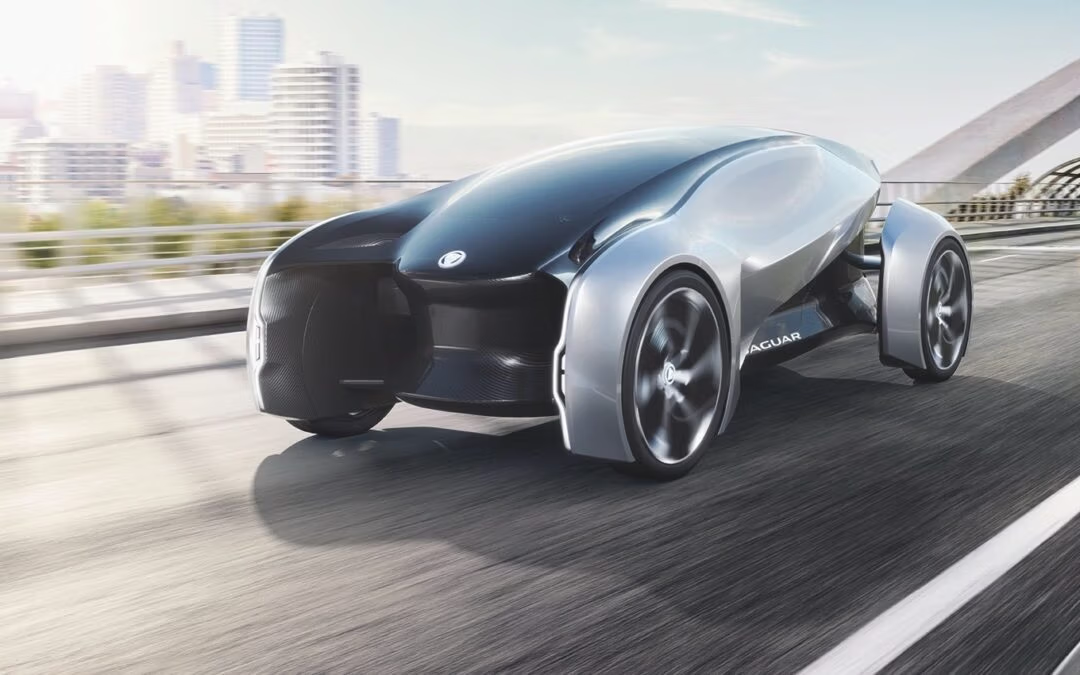
The UK car market is now worth £42.5 billion a year, and there are around 40 million cars on our roads. Most of them are diesel or petrol-powered. And because most modern cars last for over 20 years, it is estimated that many of them will still be in use in 2030.
Electric sports cars
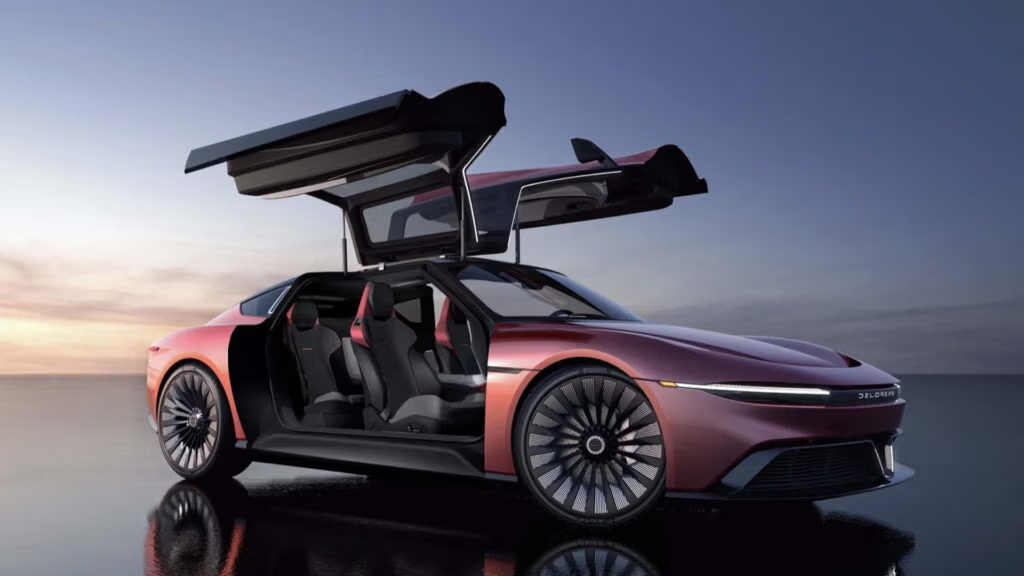
A new electric sports car has been created in under 12 months by a consortium based in the UK. The Aura is a roofless, two-seat road car that was developed to answer the question, “Are electric sports cars the future of the automobile?”. The new concept car could feature four electric motors and a charging time of just five minutes.
One of the most desirable characteristics of a sports car is its neutral front-to-rear weight balance. A new car from Porsche called the Taycan has a front-to-rear weight balance that is perfect for desirable sports car handling. In addition, the car is lightweight – it is only five tons – making it perfect for UK roads.
As the UK transitions to a zero-emission society, more electric cars are coming to the market. The Toyota Prius hybrid and the Nissan Leaf are both electric cars. The new technology has made it possible to create electric motors that are incredibly powerful. These electric motors are much more powerful than petrol engines and provide incredible acceleration. However, it is important to note that these cars are heavier than petrol equivalents.
Toyota is also developing an electric sports car, called the GR Sports EV concept. However, the company has been tight-lipped about details of the vehicle, which may be a sensible successor to the Lexus LFA. Other manufacturers are working on a similar electric sports car concept, including Maserati and Porsche.
Among the electric cars on the market, the Tesla Taycan is the top of the line. It can go from 0-62mph in less than two seconds. And it can cover as much as 283 miles between charges. Its EV battery is so advanced that it can be used for long trips as well as for racing.
Plug-in hybrids
For over a decade, plug-in hybrids have been a popular option for new cars. They combine a petrol engine and an electric battery. The latter can be recharged by an external power source. However, in recent years, the market for electric cars has surpassed plug-in hybrids. Today, battery and hybrid-electric vehicles account for half of new car sales in the UK. Moreover, the number of fully electric cars has increased by 70% in the last year.
In the UK, plug-in hybrids have been viewed as a stepping-stone to electric cars. However, they are no longer being seen as the ideal car for most drivers. A recent survey suggests that British car buyers are increasingly turning away from hybrids in favour of fully electric models.
The government has recently announced a plan to reduce CO2 emissions in the UK. The aim is to reduce CO2 emissions by increasing the number of hybrid and electric cars on the road. The plan includes a ban on non-hybrid petrol and diesel cars by 2030.
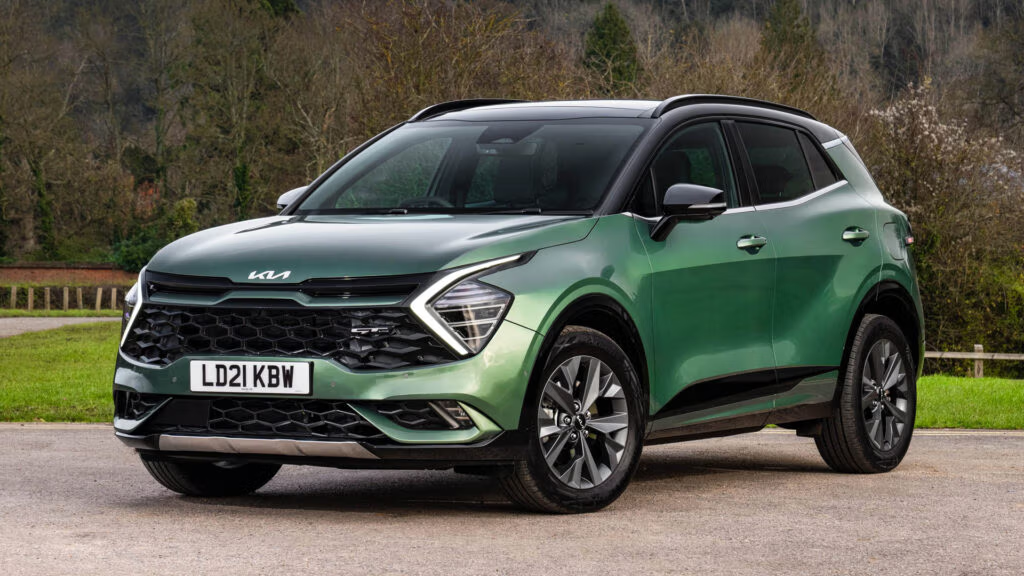
Plug-in hybrids are a great choice for green city driving. They offer better range than a gasoline car and can be safer. But if your commute is too far from a charging station, you might want to consider buying a PHEV. Plug-in hybrids can also be a good option for people who live in rural areas.
The government plans to ban petrol and diesel cars by 2030, but hybrids have been given a five-year reprieve. The government’s decision has largely driven the interest in electric cars. And the government has also given plug-in hybrid cars a chance to be on UK roads by 2030.
For now, the only plug-in hybrid car in the UK is the Ford Kuga. The car is a small SUV with an electric motor. It produces 222bhp and offers an electric range of up to 35 miles. The interior fit-in hybrid has a slightly low-rent feel and is prone to a choppy ride. However, despite this, the Kuga is a very good buy and should be well received.
Unlike conventional hybrid cars, plug-in hybrid cars are battery-powered. While they can only drive a few miles on batteries, they are ideal for city driving. Hybrid cars also tend to have smaller batteries, which makes them cheaper to manufacture and lighter in weight.
Self-driving cars
The Lords’ AV Inquiry identifies several issues with the current state of self-driving cars. This includes the difficulty of defining liability for insurance purposes and the lack of technical skills in the UK. These issues must be investigated further. But for now, the Lords’ Inquiry makes some positive comments about the future of autonomous vehicles.
In Japan, the first self-driving cars are already on the roads. The technology can keep the vehicle in a lane on a freeway and take control of steering when the driver is not around to help. The driver can take their hands off the wheel and leave them to the car when necessary, but this isn’t yet possible in many parts of the UK, including suburbs and London boroughs. The British Transport Minister has welcomed this development as a big step towards safe self-driving cars in the U.K. Nevertheless, he said that the automotive industry is at the lower end of a steep learning curve.
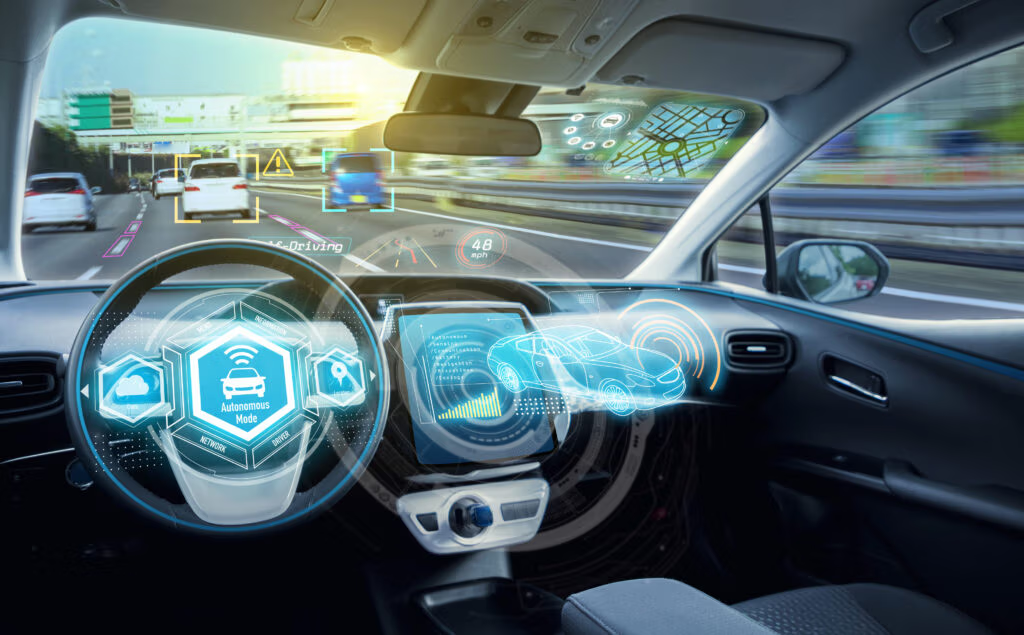
The government wants to lead the way in developing autonomous driving technology. The transport ministry estimates that by 2035, around 40% of new cars in the UK could have self-driving capabilities, creating up to 38,000 new skilled jobs. While the auto industry welcomes the move, insurance companies are cautious and warn that self-driving cars could have unintended consequences.
The UK government has invested PS100 million to speed up the development of the technology and ensure the safety of road users. The new legislation will allow the UK to take advantage of the burgeoning industry and create thousands of new jobs. The government also plans to invest PS34 million in research and development to ensure the safest self-driving cars possible.
Self-driving cars could increase efficiency, improve safety, and make transport systems more cost-efficient. The UK government has recognized the importance of this technology and aims to make the country the world’s premier autonomous vehicle testing site. With widespread adoption, technology could be a catalyst for change that affects our everyday lives.
The government plans to introduce new laws for self-driving cars in the UK by 2025. The new legislation will focus on road safety and build on existing motoring legislation. It will be the manufacturer’s responsibility to ensure that self-driving cars are safe, while human drivers would not be held accountable for accidents that occurred while the vehicle was driving itself.
Battery manufacturing capacity
A UK battery factory would be able to meet the demand for batteries and help the country to reduce carbon emissions. It would also boost the UK chemical industry, as batteries could be assembled locally and sold throughout Europe. The decision comes at a time when many countries are pushing for more local production and supply chains. However, localization cannot happen without state support.
There are already several UK battery manufacturing projects in the pipeline. One such facility is the Nissan plant in Sunderland, which will produce batteries for 50,000 40kWh Nissan Leaf models every year. Another battery plant, Britishvolt, is planning to build a 38GWh battery plant in Blyth, which could eventually produce more than 25GWh of lithium-ion batteries a year.
Developing UK battery manufacturing capacity is vital to the UK car industry’s future. In the coming decades, electric vehicles are likely to dominate the car market, and the UK must scale up its battery manufacturing capacity to be competitive. In order to do this, the UK must establish gigafactories. These factories would provide skilled labor and help the UK attract inward investment. They would also demonstrate to global battery manufacturers that the UK is serious about battery manufacturing.

In the near future, the UK will be a world leader in battery manufacturing capacity, despite its relatively small size. With the right investment, battery manufacturing in the UK could be a major driver of the UK car’s future. By the year 2025, Britain could become the second largest lithium producer, after the US.
Currently, the UK government is in talks with several companies to set up gigafactories, which would ensure there’s sufficient capacity to meet the demand for UK electric vehicles. The UK government has already promised to phase out petrol and diesel cars by 2030, so it’s crucial to create gigafactories now to ensure there will be enough power to meet the demand for electric vehicles.
The British government recently announced PS1 billion in funding for the construction of an electric vehicle battery factory in Northumberland. The project will create thousands of jobs in the local area and more than 5,000 jobs in the wider supply chain. Construction of the plant will begin in September 2021. With the new investment, Britishvolt is on track to build Britain’s first large-scale gigafactory near Blyth.
