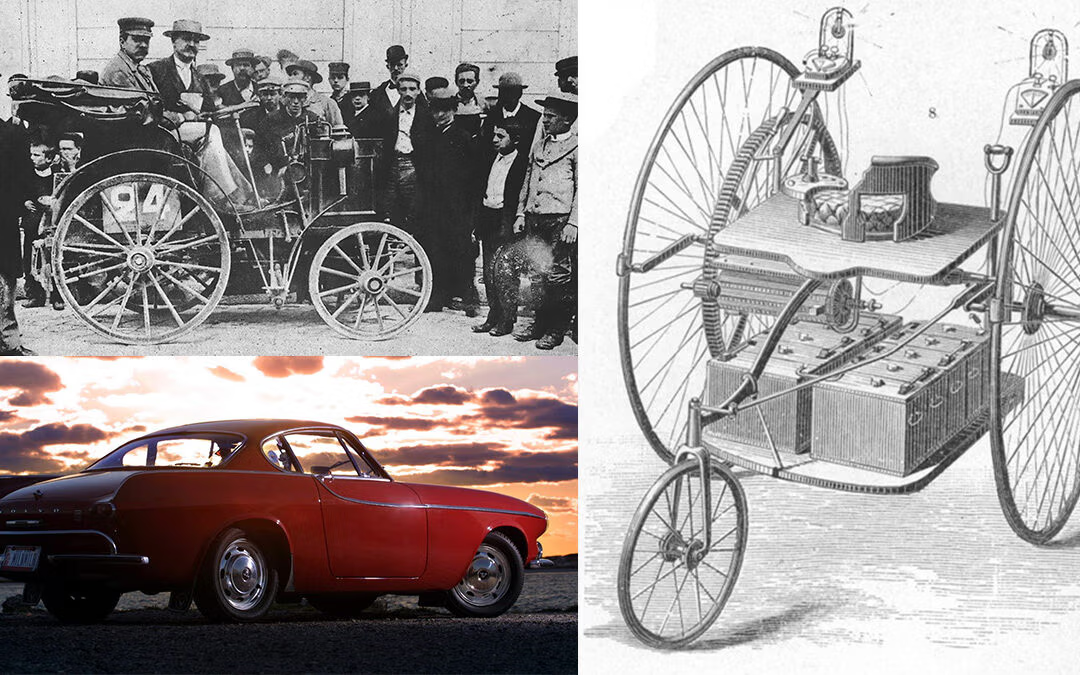
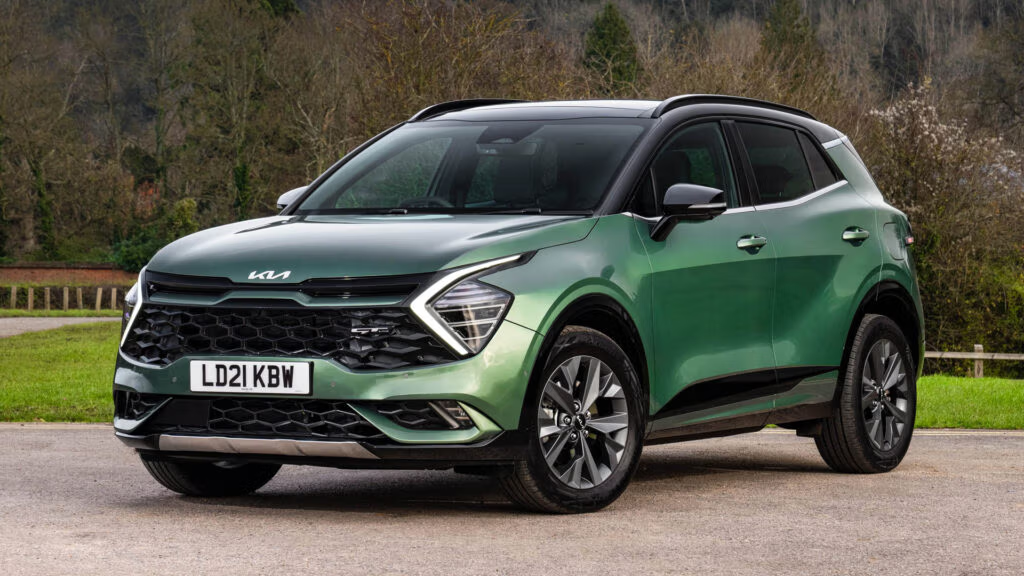
Interesting Car Facts you may not know Cars are wheeled motor vehicles used for transportation. According to most definitions, they are powered by gasoline and run on roads. Cars have four wheels and typically seat one to eight people. Although cars are mostly used for transportation, they also have other uses. Listed below are some interesting facts about cars that you might not know. You may be surprised to learn about many different and interesting facts about the cars!
Airbags are a safety feature found in many cars, and their deployment can reduce the risk of serious injuries and fatalities in automobile accidents. However, not all airbags are created equal. Many people experience injuries or death because of faulty airbags. In fact, millions of vehicles have been recalled due to defective air bags.
In the United States, the combination of an air bag and a seat belt reduces the risk of death by 61 percent. And, the use of frontal air bags has been linked to the saving of 44,869 lives between 1987 and 2015, with 2,756 in 2016. Lynne McChristian, a Florida insurance salesman, was the driver in a crash in 1999, and believes that her air bag saved her life.
According to the National Highway Traffic Safety Administration, frontal airbags have prevented at least 50,000 deaths in auto crashes. Although they do cause injuries, the statistics show that they significantly reduce the severity of injuries in major crashes.
Nevertheless, airbags have their downsides. According to the NHTSA, there have been 175 reported fatalities caused by airbag deployment in vehicles from 1990 to 2000. Of these, 104 were children. Most of the others were shorter female adults. And, as the researchers point out, most of these deaths occurred in low-speed accidents.
Another way airbags save lives is by reducing the forces involved in a car accident. In low-speed collisions, airbags inflate more slowly, so they reduce the force involved. In addition, airbags can prevent injuries to children and other smaller passengers in the front seat.
The best way to protect yourself from airbags is to wear seat belts and remain seated. Also, try to keep your feet off the dashboard. Remember, the first two inches of an airbag’s deployment are the most powerful. If you’re shorter than that, it’s a good idea to sit in the backseat.
The invention of airbags has been attributed to the work of American inventor, John W. Hetrick. Hetrick was a Pennsylvanian who was driving on a highway in 1952. He was traveling at 60 mph when he encountered a jackknifed tractor-trailer in front of him. The tractor-trailer spun across all lanes, leaving him little time to react. The airbag impact burnt his arms, but luckily, her seat belt had cinched her in place.
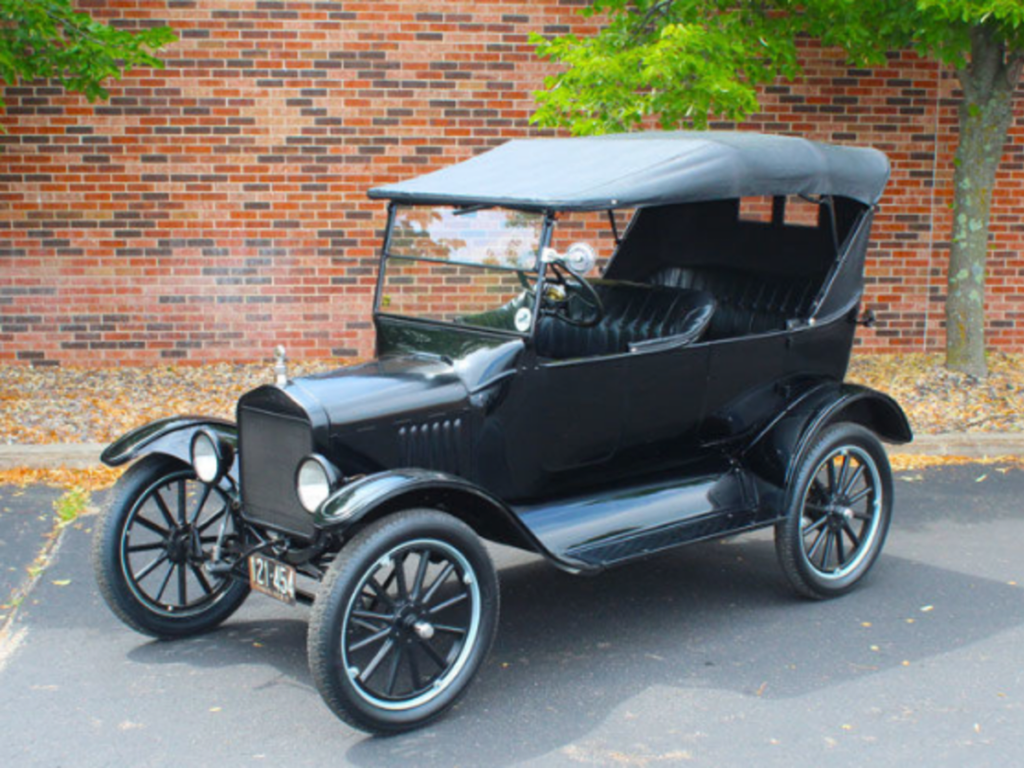
Although the Model T came in a variety of colors in its early years, only black was offered in the second year of production. This move was inspired by Henry Ford, who was constantly looking for ways to increase production efficiencies.
He believed that if cars could be built more quickly, the price would come down, thus making them more affordable for the public. The Model T was the first mass-produced car and also the first horseless carriage. Ford designed the Model T to be big enough to transport a family but small enough to be used by an individual. As such, he kept the price low.
The Model T used kerosene, which was a common fuel for farm tractors at the time. It also used home-grown alcohol, known as ethanol, as a fuel substitute. It was popular before 1919, but later became unavailable due to the Prohibition era, which forbid human drinking and Fords to consume alcohol. Fuel was stored in a 10-gallon tank underneath the front bench seat.
The Model T’s design was changed many times over the years. As a result, it went through more than 20 different design iterations. The production process was changed as well. In 1913, Ford began using a moving assembly line in their Highland Park Ford Plant. This allowed them to produce 2.1 million Model Ts annually. By the end of the 19-year cycle, over 15 million Model Ts were produced.
The Model T was a revolutionary car. It changed the way cars were made, and revolutionized the American economy. In fact, the Model T helped to establish the eight-hour workday and the minimum wage.
In addition, it created a mass-production process that paved the way for modern mass production. It also created many jobs for immigrants, women, and minorities. Various suppliers and manufacturers developed accessories and parts for the Model T.
Ford Model T
The Ford Model T was the first mass-produced car. At the time, it cost $825. Later, it became available with an enclosed van-style body. At this time, it was marketed as Tin Lizzie. Afterwards, the Model T was available with an electric starter, though the price was higher.
A modified Volkswagen Beetle has become the world’s fastest motorvehicle . t has been tuned to reach speeds of up to 200mph, thanks to an upgraded turbocharger and new pistons, camshafts, and connecting rods. It has also been fitted with specialized tyres and a limited-slip differential. The vehicle also has a roll cage and five-point harness to protect the driver.
Volkswagen Beetles have a long history of being extremely fast vehicles. The Type 1 Beetle was introduced in 1961, with a 36-hp aluminum alloy four-cylinder engine. In the 1960s, Volkswagen increased the engine capacity to 1300cc, and in the 1970s, the car got an all-new 1600cc engine.
The engine also had a fire suppression system, and it could reach top speeds of 155 mph in just under seven seconds. Volkswagen Beetle models were also fitted with parachutes similar to those found on US Navy aircraft.
The Type 181 was introduced in 1973. Known in Europe as the Trekker, it was based on Type 82, which was a military vehicle. The German military bought it during the NATO era, and its US version was only sold for two years (1973 and 1974).
The Volkswagen Golf GTi is equipped with a lowered suspension and better wheels. It also has a stripped interior and roll cage. The VW Golf GTi produces 543 horsepower and 420 pound-feet of torque. Its high-tech safety features include a roll cage, fire suppression systems, and racing seat harnesses.
While the Bugatti Chiron is considered the world’s fastest Car, the Volkswagen Beetle is far from it. The vehicle has a top speed of 270mph. In comparison, the Bugatti Veyron reaches a top speed of 261mph. In addition, it is powered by an 8.0-liter V10 engine from a 1995 Dodge Viper GTS. This engine weighs 750 pounds and the entire vehicle weighs 1389 pounds.
While the current EV Bug is the world’s fastest Electric Car , it is still a prototype of the future. It has a 22-kWh battery pack and is rechargeable with a CHAdeMO charger hidden behind the VW symbol. The maximum voltage is 800 volts.
If you’re interested in the history of car engines, then this article is for you. It covers topics ranging from the Benz Patent-Motorwagen to the Atkinson cycle, to the modern-day SKYACTIV-X engine. Read on to learn more about the evolution of car engines and how they have changed our lives.
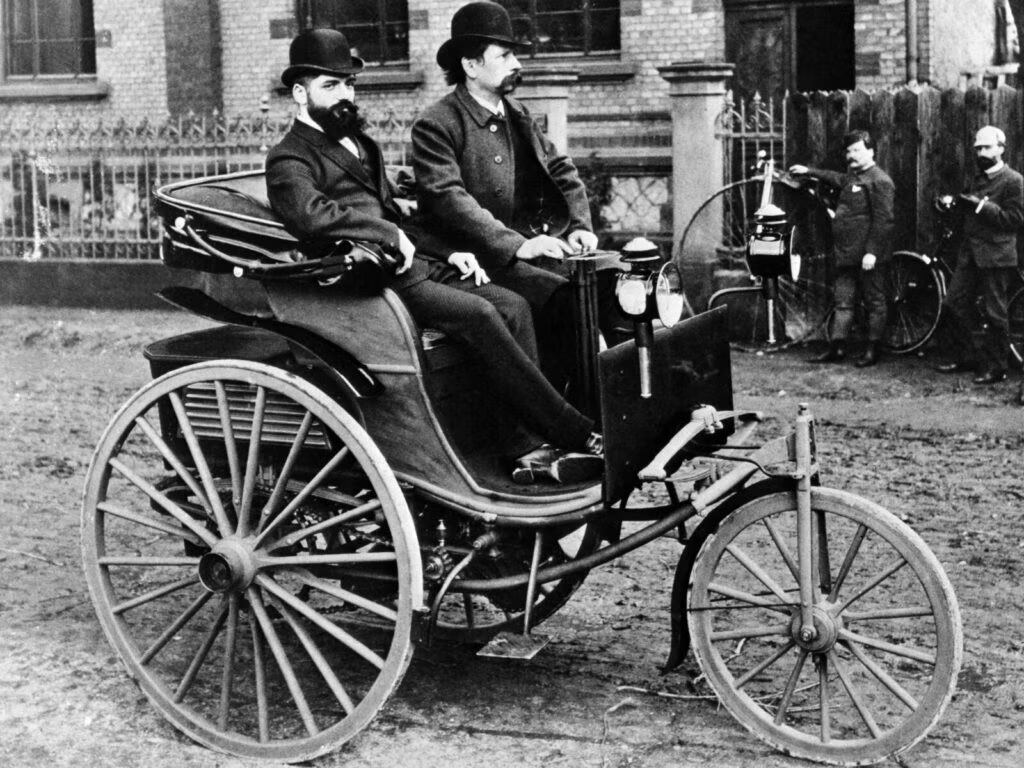
The Benz Patent-Motorwagen is one of the first automobiles, whose engine evolved over time. It was designed by Carl Benz, a German automobile manufacturer, and was first manufactured in 1888. Initially, Benz was reluctant to begin production of his patent motorwagen. Testing was limited to a yard and road around his workshop. Even so, most people assumed that Benz would be the first motorist. But in fact, Bertha Benz was the first to drive a car.
The patent describes the engine, the cooling system, the starting mechanism, and the drive system. A leather belt connected the engine to the pulley, which in turn drove the rear axle via chains. In order to start and stop the engine, a lever had to be pulled.
The engine of the Patentwagen was an ingenious invention, and it has since influenced engine design. It was capable of producing 1.1 kW. A number of different Benz patent motorwagen models were developed over the years. Many of them have been reproduced and exhibited in museums worldwide.
The Benz Patent-Motorwagen was first patented in 1886. It was the first automobile with an internal combustion engine. At the time, it cost about 600 German marks, which is equivalent to about 150 US dollars. Benz focused his attention on the motorized vehicle after developing a gasoline-powered two-stroke piston engine in 1873. However, he also continued his career in stationary engines.
A few years later, a company named Daimler purchased the rights to a Daimler patent, and the Benz Patent-Motorwagen had been developed.
The Atkinson cycle is a common form of combustion that is efficient for many types of cars. This engine design has the advantage of a short compression stroke. This means that the engine will be less likely to experience a loss of energy during the suction process. In addition, the Atkinson cycle does not require a supercharger. In fact, it may save as much as 15-20 percent of fuel.
It is important to note that this engine design uses variable valve timing. This design allows the engine to produce more power without increasing its weight. It also allows it to achieve more power at lower speeds. The Atkinson cycle engine evolved from its ancestor, the Otto cycle. Modern cars are equipped with hybrid engines that use the Atkinson cycle.
In 1882, British scientist James Atkinson invented the first car engine. However, this design was not cost-effective and did not become widely used. The complex mechanical linkages made it difficult to mass produce. Despite its limitations, the Atkinson cycle is now making a comeback thanks to fuel efficiency.
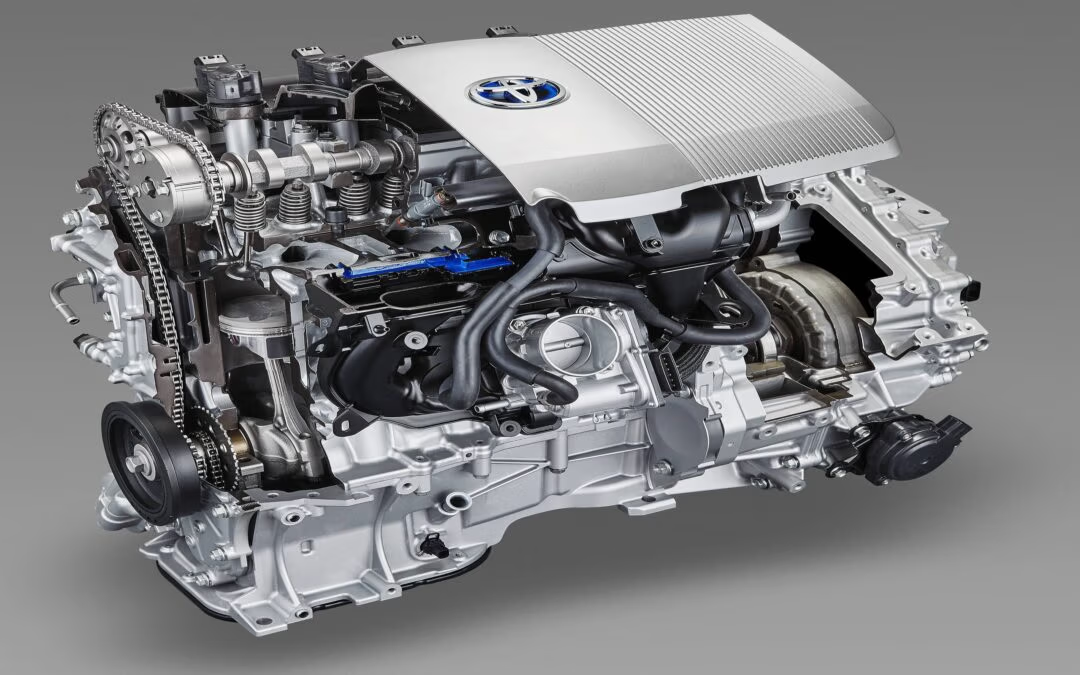
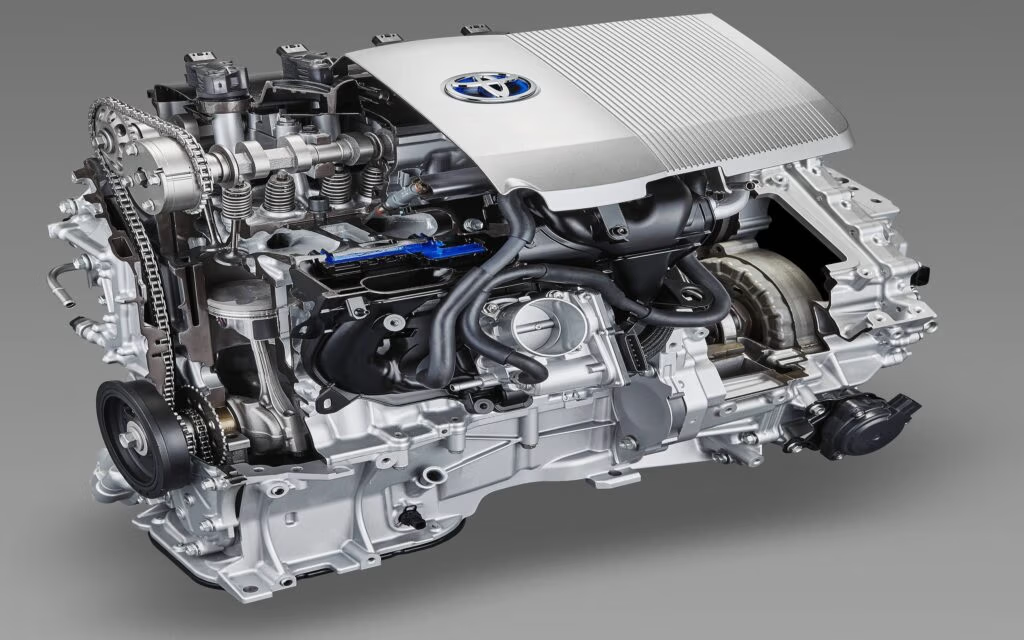
Toyota engineers discovered that the Atkinson cycle engine could save fuel and developed it into a non-mechanical version. This new technology used hydraulics to regulate the position of the camshaft and alter the timing of the intake valves. Toyota’s hybrid models all use this engine in their hybrid versions, ensuring that the engine is fuel-efficient at any speed.
Because of its high compression ratio and increased expansion, the Atkinson cycle engine is great for hybrid vehicles. The electric motor can compensate for the loss of power. Additionally, the Atkinson cycle engine is better for fuel efficiency than its predecessors, which is beneficial for those looking to minimize their environmental impact.
A diesel engine has many advantages over its gasoline counterpart. The compression ratio is higher and it’s much more efficient. It also has less stoichiometric leaning, which means it produces more power under a lean load. Additionally, it has a lower heat loss and less chance of overheating, making it ideal for many applications.
A diesel engine evolved from a steam engine, which was largely dependent on coal. The industrial revolution changed this, and many professions switched from manual labor to mechanical work. This paved the way for many new developments, including the diesel engine. A diesel engine is based on a two-stroke cycle, and is considered the first modern car engine.
Modern diesel engines have an electronic governor that regulates engine speed. Early diesel engines injected fuel using compressed air. The compressed air forced the fuel into the engine through a nozzle. This technique allows for more fuel to be injected and makes the engine quieter and more efficient. However, the mechanically governed fuel injection systems tended to be large and bulky, limiting the power output.
In the 1920s, the first passenger car powered by a diesel engine was introduced. General Motors’ diesel division later became Detroit Diesel. The same year, Clessie Cummins receives a patent for a fuel-feeding and injection apparatus. In addition, the Jacobs Manufacturing Company develops a diesel compression braking system. By the end of the 20th century, diesel engines are responsible for 95% of all medium and large-duty trucks on the road. Their popularity also includes marine applications and the construction industry.
A diesel engine is much more efficient than a gasoline engine. Diesel’s combustion process produces very little carbon monoxide, as it burns fuel in excess of air. However, it does produce black soot from the exhaust. This is the result of unburned carbon compounds in the exhaust. Black soot is often a sign of a worn injector or a faulty engine management system.
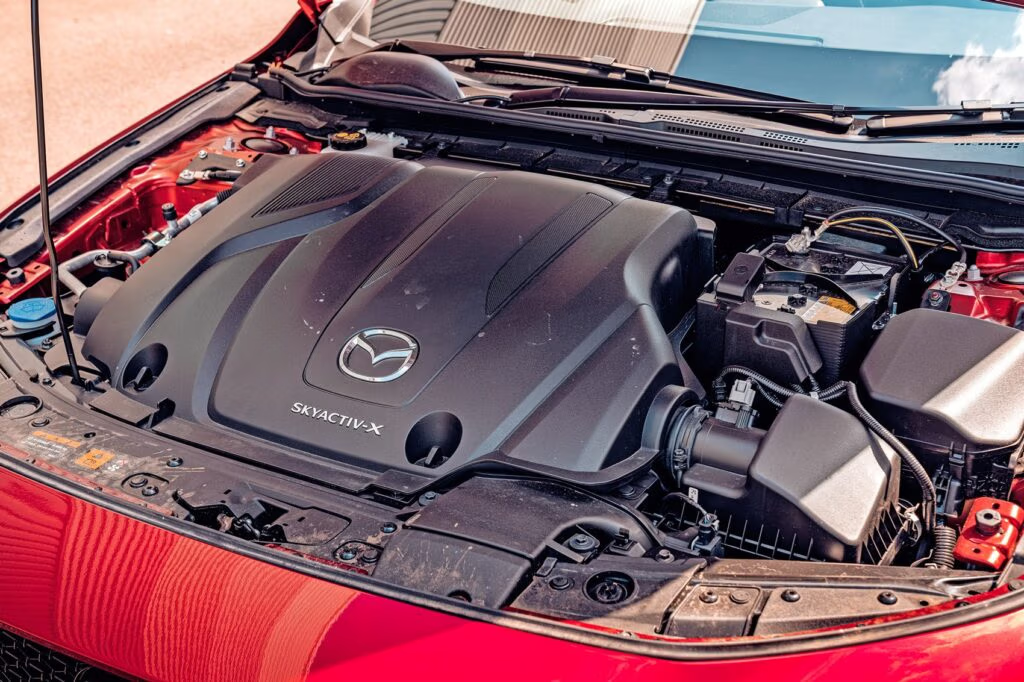
The Mazda SKYACTIV-X car engine is an evolution in car engines. This engine has a super-high compression ratio and uses a lean air-to-fuel mixture. This fuel combustion method works in high-pressure and high-temperature conditions. A spark is used to ignite only a small amount of fuel and it is then combusted under high pressure, much like a diesel engine. The engine also uses a type of combustion process known as homogeneous charge compression ignition.
The Skyactiv-X engine is also designed to work in vehicles with electrification. It will burn petrol more efficiently while emitting less harmful emissions. The new car engine will be available in 2022 or 2023. Mazda is also working on a new large-vehicle architecture to accommodate the larger Skyactiv-X engine.
The SKYACTIV-X engine was developed to combine the advantages of gasoline and diesel engines. It works on the same principle as diesel engines, but uses a new technology called SPCCI. It uses regular gasoline but compresses the air-fuel mixture very tightly, producing a lean mixture. The resulting mixture burns at a much higher temperature and higher pressure than conventional engines.
Mazda says the SKYACTIV-X engine will improve fuel efficiency by 20-30 percent over the existing gasoline engine. It is designed for real-world efficiency and is mated to a six-speed manual transmission. The engine feels similar to a turbodiesel engine, yet revs like a gasoline engine. Moreover, the Mazda SKYACTIV-X engine is easy to drive and does not require drivers to re-learn how to drive a gas-powered vehicle.
The Mazda Skyactiv-X car engine is a hybrid of several technologies developed over the past three decades by Mazda. The Mazda Skyactiv-X engine is one of the first cars to feature a compression-ignition engine. The engine uses a spark plug to start the combustion process and a pressure rise from the flame kernel triggers compression ignition in the rest of the cylinder. This process allows the SKYACTIV-X engine to run at air/fuel ratios exceeding 30:1.
The SKYACTIV-G engine evolution continues as Mazda develops a new turbocharged variant. This new version is able to deliver the same power while offering significantly higher gas mileage. To achieve this, Mazda engineers have gone above and beyond to improve the engine’s efficiency under heavy workloads. One notable feature is the cooled EGR module. This helps maintain cool internal temperatures and prevents fuel enrichment.
Mazda’s next-generation platform was also introduced at a technology forum, and it features the SKYACTIV-X engine that combines the characteristics of a gas and a diesel engine. This technology has been designed to provide drivers with a smoother, more rewarding drive.
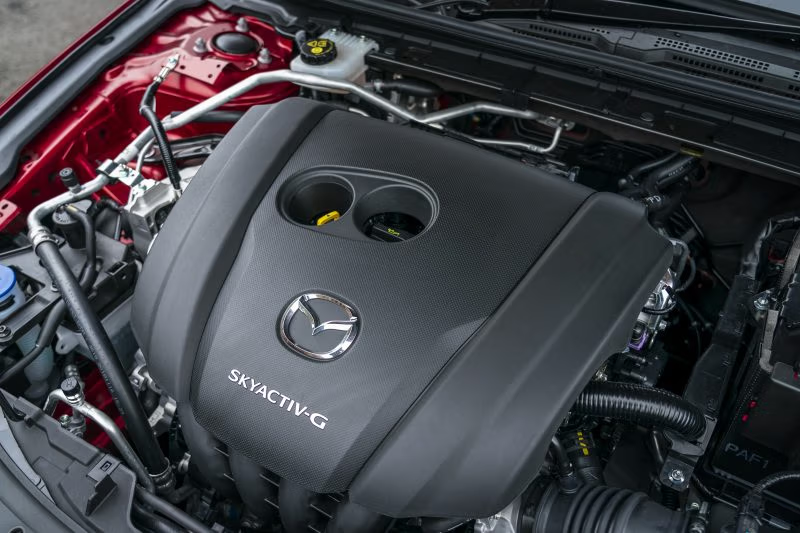
The 2.5 Skyactiv-G features a variable valve timing (VVT) system, as well as a direct fuel injection (DFI) system. The engine is also equipped with a high-pressure fuel pump, which directs air to the pistons. It also features six-hole injector nozzles. The 2.5 Skyactiv-G features a unique compression ratio.
The SKYACTIV-G engine evolution will continue with the introduction of a gasoline-powered variant in the future. Mazda is also working on hybrid systems and plans to introduce more electrified models in North America. By 2030, the company aims to have all its vehicles electrified.
Mazda is working to reduce greenhouse gas emissions by incorporating various technologies that it has developed over the last three decades. It also uses compression ignition to achieve maximum efficiency with light loads. This technology can be used in both gasoline and diesel engines. Mazda’s SKYACTIV-X engine evolution is a testament to this.
The new 2.5 SkyActiv engine features an all-aluminium lineup, chain-driven dual overhead camshafts, VVT, and direct ignition. It replaces the L5-VE engine and shares the same aluminium cylinder block and steel-molybdenum alloy bores. The new engine also has a larger piston stroke.
The question “Do electric vehicles have a future?” has long been debated. There are several reasons why people should consider switching to an electric vehicle. For starters, EVs will be more efficient at converting energy into power. In fact, they will be capable of catering to 99% of drivers’ needs.
EVs will cater for 99% of owners’ needs
EVs have many benefits and are becoming more affordable, and they are already cheaper to run than petrol-powered cars. The cost of electricity can be as low as 2p per mile and servicing costs are minimal. In addition, incentives are available to make EVs even more affordable. For instance, the US Inflation Reduction Act provides incentives for new owners of electric vehicles, and EV owners can even claim tax credits.
By 2050, President Biden and his team believe that half of the cars on the road will be electric. They also believe that EVs will satisfy 99% of the needs of owners and will be capable of meeting 50 percent of commercial needs. In the meantime, automakers are ramping up their EV production. And many new models are expected to hit the market in the coming years. However, it will take a few years for 99% of adults to seriously consider EV ownership.
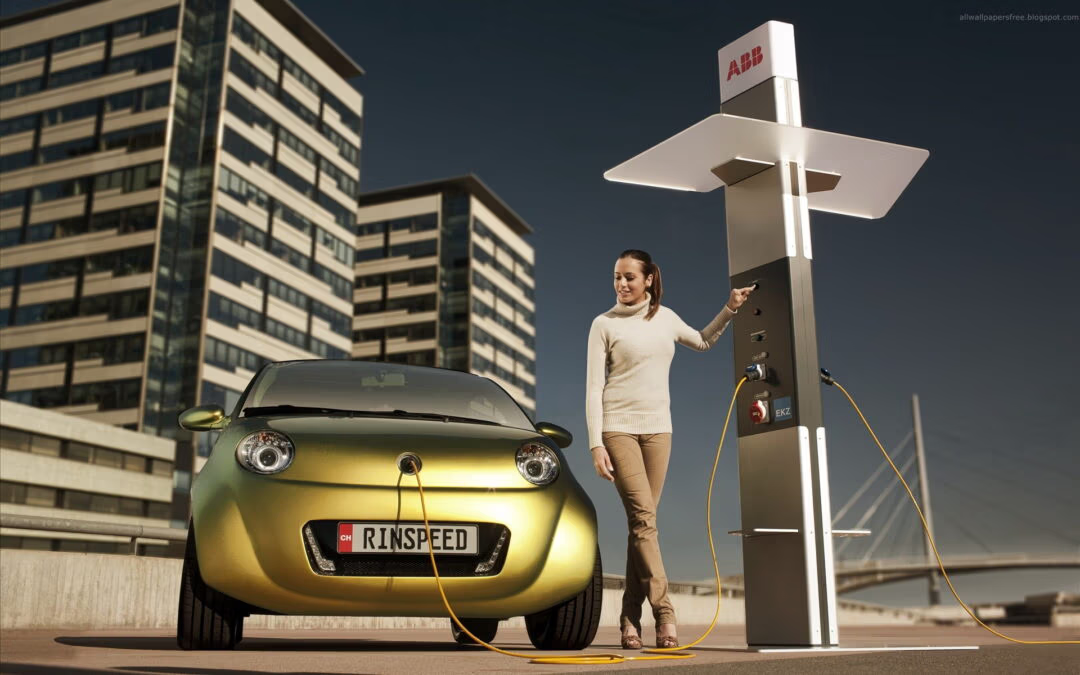
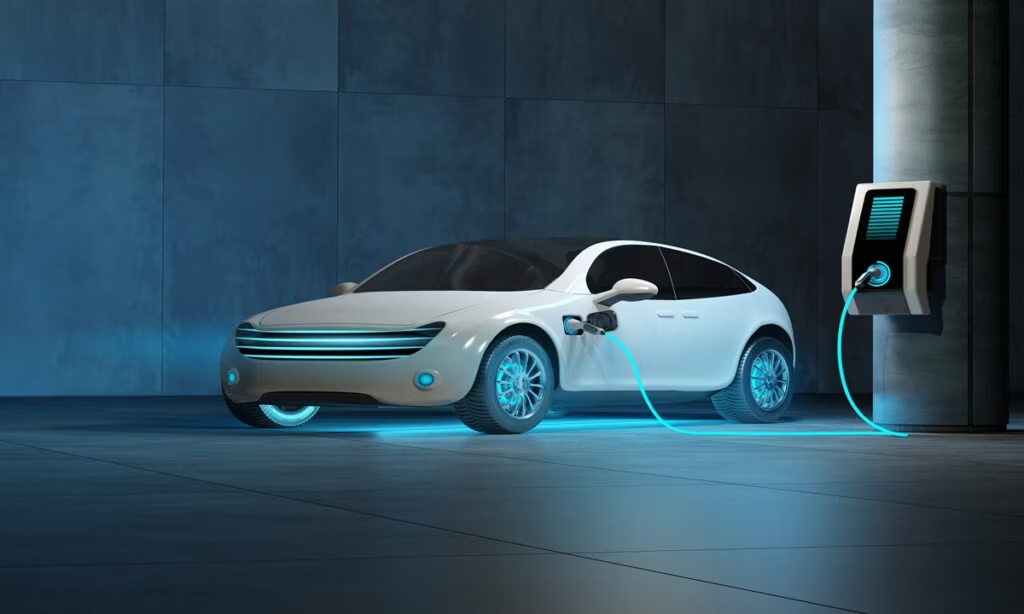
Electric car charging, illustration.
As batteries improve, EVs will be more affordable and more appealing. This will increase demand. Meanwhile, production and infrastructure will improve, making EVs more accessible to the public. By 2022, EV sales in emerging markets will nearly double. Meanwhile, the market for EVs will reach 630 000 units, which is a significant number.
However, EVs aren’t without their challenges. Charging stations will be critical to the functioning of an electric grid. By that time, half of the cars on the road will be powered by electricity. That means 5.4 gigawatts of energy storage will be needed for this demand. Moreover, charging stations in offices will need an additional 4.2 gigawatt.
Currently, the EV market is growing rapidly thanks to numerous factors. This growth will take shape over the next decade and will present both challenges and opportunities for OEMs. This report will provide valuable insight for traditional OEMs to re-prioritize customers and strategies to take advantage of the potential of EVs.
The goal for 2030 is to see at least 50 percent of new car sales be EVs. But the percentage will vary between markets. By 2030, China is expected to account for almost 48 per cent of the domestic market – nearly double that of the United States. In Europe, growth is projected to be a little more modest. However, Northern and Western Europe is expected to grow at a faster pace than Southern and Eastern Europe. This is due in part to richer countries investing in the necessary infrastructure and offering greater cash incentives to encourage EV ownership.
While the overall EV market is growing steadily, some segments are more interested in EVs than others. Automakers may focus their marketing efforts on these segments, which have higher interest in EVs. For example, the UK’s segment G is the most likely to consider an EV.
Deloitte says that the world is on track to sell 31.1 million all-electric vehicles in 2030. This growth is driven by declining adoption barriers and changing consumer sentiment. The company also cites recent tax credits as key factors in fueling the EV market.
These recent developments are encouraging signs that EVs are on the verge of revolutionizing the auto industry. However, additional action is needed to capitalize on the momentum and accelerate adoption. The next decade must be filled with investments in research and development and infrastructure for EVs.
EVs will be more efficient in converting energy to power cars and trucks
EVs are expected to become more efficient in converting energy to power cars, trucks, and other vehicles in the future. Electric vehicles use much less energy to move and are much simpler to maintain. For example, a typical Tesla has 17 moving parts compared to around 200 for a conventional internal combustion engine. This simplicity means fewer parts to maintain, which is good news for EV owners.
EVs will also reduce the emission of noxious gases.
Compared to the emissions from conventional vehicles, an electric car produces no pollutants. While critics of EVs argue that some pollutants are still produced during the production process, EVs are a much cleaner option than fossil fuel cars. Plus, EVs allow drivers to recharge at night, which allows them to use the excess power that would otherwise be discarded.
There are several key factors that drive the electric vehicle movement. One of these is lithium-ion battery technology, which is the main ingredient of EVs. Lithium-ion batteries are highly energy-intensive and are the biggest source of carbon emissions from EVs today. The production of batteries is also highly resource-intensive. For example, lithium-ion battery production requires large-scale facilities that operate on fossil fuels.
infrastructure. Charging stations for EVs can be installed in public spaces like parking lots. These charging stations are usually in front of stores and businesses, making them more attractive to EV owners. EV drivers may even get better parking spots, since they can recharge their batteries while out shopping.
EVs also have the advantage of being more fuel-efficient. In addition to having higher mileage, EVs also produce less carbon dioxide than the average gasoline car. The average EV emits less than a fifth of the emissions of the average new car. When operating on renewable energy sources, EV emissions are significantly reduced.
EVs do emit carbon dioxide
The fact is, EVs do emit carbon dioxide. The majority of emissions, as a result of their operation, are attributed to the fuel cycle. There are exceptions, however, such as France and Norway, where the use of electricity is reduced. The difference in EV emissions between these two countries and the US is relatively small. Even then, the impact of EVs on the climate depends on the country and region in which they are used.
In Europe, EVs have lower lifetime emissions than conventional cars. As countries begin to decarbonize their electricity generation, these emissions will decline even further. The Nissan Leaf EV, for example, has emissions that are three times lower than a conventional vehicle.
While electric vehicles are more expensive than conventional vehicles, their prices will continue to fall as production scale increases and range increases. This increases the demand for lithium, which is used in batteries to store electricity. Other metals that are needed for electric vehicles include copper, silver and rare earths.
Ev Car Servicing In Reading
The automotive industry contributes about 15 to 25 percent of polluting emissions, primarily carbon dioxide. These gases are linked to climate change and can affect health. In addition, they pollute the air in major cities. Even local pollution from the automobile industry can clog the air.
While EVs are great for the environment, we need to do more to reduce our carbon footprint. Taking steps to make our cities more public transit-friendly will help reduce travel demand and reduce GHG emissions. We will have to work with governments and the private sector to reduce the emissions from our transportation sector.
Conclusion
The future of electric vehicles (EVs) is not just bright—it is inevitable. With continuous advancements in battery technology that expand range and drastically reduce charging times, EVs are rapidly becoming the go-to choice for consumers.
The urgent push for sustainability and the need to cut carbon emissions are driving strong demand and solid government backing for electric vehicles.
As innovations surge, charging infrastructure expands, and renewable energy becomes more integrated, electric vehicles will dominate the automotive landscape. The real question is not if electric vehicles have a future; it is how quickly they will reshape our world.
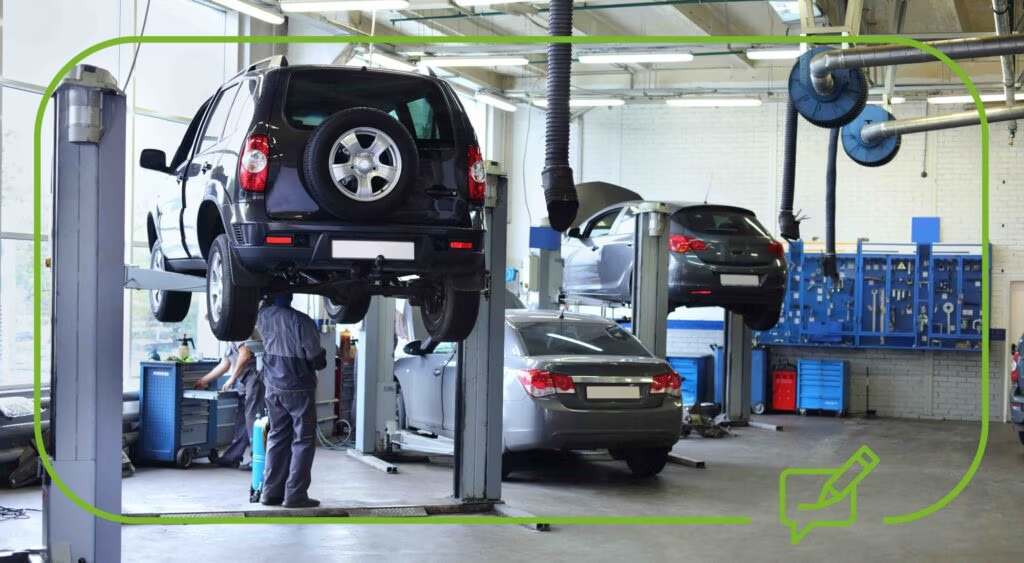
An interim car service is a quick and convenient way to have your car serviced without paying for a full Vehicle service. It will typically cost around £125 to £150 and will include a change of Engine oil and filter, Your car will also be checked over to ensure that everything is functioning correctly and a Quick Inspection of the Vehicles Braking System
Any Faults that require immediate replacement of parts such as Brake Pads or Brake Discs will of course be a Extra Charge for parts and labour to be agreed before work is carried out at your request.
A full service is recommended every two years or approximately 20,000 miles. This service will include the replacement of the engine oil, fuel filter, air filter, microfilters, and all fluids, and they will drain the coolant. It may also include additional checks and procedures based on the manufacturer’s recommendations.
There are many factors that determine the price of a car service, such as the type of car the size of the vehicles Engine and of course the region or City you live in.
For example, prices in London tend to be higher than those in other parts of the UK. However, you can still find some great deals by shopping around in your local area.
An interim car service typically includes an oil change and a general inspection of major parts, but it is less comprehensive than a Full Car Service. An interim car service should be performed every six months or 5,000-6,000 miles, as a regular check is not a replacement for a Full Vehicle Service. However, it will help you to spot potential issues in your car before they become a costly problem.
Long commutes and driving in congested areas can be especially harmful to your car. A regular interim car service usually takes about an hour and a half to complete, but it can go higher if there are any problems.
The average cost of a full car service varies considerably. A full service involves examining all major components of the car and replacing any worn parts. This service can prevent costly failures and ensure that the car is safe to drive. This type of service is ideal for high-mileage drivers who need to keep their vehicle in top condition.
Average car servicing costs vary depending on the car, the make and model, and location. For example, car servicing costs are generally higher in London than in the northern parts of the UK. Additionally, car servicing at a dealership is usually more expensive. While many drivers assume they must take their car to a dealership for a service, it’s a good idea to shop around for the best price in your area. Most large chain car servicing facilities offer competitive pricing, but you’re likely to save more money by doing a little research on local competitors.
Prices for a full car service vary widely by brand, engine size and cylinder count. The labour rates are also an important factor when considering the cost of a car service. The average service takes between 50 minutes and 70 minutes, depending on the type of car.
Major car service costs vary widely throughout the UK. Some areas of the country have higher prices than others, but prices in London are consistently higher than in northern regions. Dealerships are generally more expensive than independent mechanics, so it’s important to shop around and compare prices at local rivals.
A major car service includes an oil change and a range of other checks. It also includes an inspection of your brakes, tyres, wipers, and fluid levels. Some services will include upgrades, but not all. If you’re looking to save a few pounds, you can choose a basic service.
While a major car service is essential to keep your car in good condition, you can also choose to get an interim service at a lower price. An interim service will include a basic oil change and inspection of major parts, which will cost around £125/150.00.
A Major Service will Typically Cost Around £250.00 to £325.00 pounds Depending on the make and Model
These services are aimed at keeping your car in good condition and prevent expensive breakdowns.
The price of a full car service in the UK varies. This is mainly due to the type of car you have and the spec of the engine. Some models may require specialised oil, which will add to the cost. The typical full service cost in the UK is around £185/225.
The price of car servicing varies widely depending on the make and model of the car, where you live, and the type of service you require. For example, car servicing at a dealership is usually more expensive than the same service at an independent garage. Official dealerships often have specialist expertise with the brand and only use approved parts. A basic car service costs around PS69, while a full car service may cost a few hundred pounds. If you have a sports car or 4×4, it may require specialist oil and parts.
The price of a full car service depends on the size of the engine, the number of cylinders, and the brand of fluids and filters. The time required to complete the service is also another factor in the cost. A full service can take 60 to 90 minutes for a Fiat 500, whereas a Land Rover can take up to 120 T0 150 minutes. It also depends on the labour rate Charged By The Dealership
The UK car market is now worth £42.5 billion a year, and there are around 40 million cars on our roads. Most of them are diesel or petrol-powered. And because most modern cars last for over 20 years, it is estimated that many of them will still be in use in 2030.
A new electric sports car has been created in under 12 months by a consortium based in the UK. The Aura is a roofless, two-seat road car that was developed to answer the question, “Are electric sports cars the future of the automobile?”. The new concept car could feature four electric motors and a charging time of just five minutes.
One of the most desirable characteristics of a sports car is its neutral front-to-rear weight balance. A new car from Porsche called the Taycan has a front-to-rear weight balance that is perfect for desirable sports car handling. In addition, the car is lightweight – it is only five tons – making it perfect for UK roads.
As the UK transitions to a zero-emission society, more electric cars are coming to the market. The Toyota Prius hybrid and the Nissan Leaf are both electric cars. The new technology has made it possible to create electric motors that are incredibly powerful. These electric motors are much more powerful than petrol engines and provide incredible acceleration. However, it is important to note that these cars are heavier than petrol equivalents.
Toyota is also developing an electric sports car, called the GR Sports EV concept. However, the company has been tight-lipped about details of the vehicle, which may be a sensible successor to the Lexus LFA. Other manufacturers are working on a similar electric sports car concept, including Maserati and Porsche.
Among the electric cars on the market, the Tesla Taycan is the top of the line. It can go from 0-62mph in less than two seconds. And it can cover as much as 283 miles between charges. Its EV battery is so advanced that it can be used for long trips as well as for racing.
For over a decade, plug-in hybrids have been a popular option for new cars. They combine a petrol engine and an electric battery. The latter can be recharged by an external power source. However, in recent years, the market for electric cars has surpassed plug-in hybrids. Today, battery and hybrid-electric vehicles account for half of new car sales in the UK. Moreover, the number of fully electric cars has increased by 70% in the last year.
In the UK, plug-in hybrids have been viewed as a stepping-stone to electric cars. However, they are no longer being seen as the ideal car for most drivers. A recent survey suggests that British car buyers are increasingly turning away from hybrids in favour of fully electric models.
The government has recently announced a plan to reduce CO2 emissions in the UK. The aim is to reduce CO2 emissions by increasing the number of hybrid and electric cars on the road. The plan includes a ban on non-hybrid petrol and diesel cars by 2030.
Plug-in hybrids are a great choice for green city driving. They offer better range than a gasoline car and can be safer. But if your commute is too far from a charging station, you might want to consider buying a PHEV. Plug-in hybrids can also be a good option for people who live in rural areas.
The government plans to ban petrol and diesel cars by 2030, but hybrids have been given a five-year reprieve. The government’s decision has largely driven the interest in electric cars. And the government has also given plug-in hybrid cars a chance to be on UK roads by 2030.
For now, the only plug-in hybrid car in the UK is the Ford Kuga. The car is a small SUV with an electric motor. It produces 222bhp and offers an electric range of up to 35 miles. The interior fit-in hybrid has a slightly low-rent feel and is prone to a choppy ride. However, despite this, the Kuga is a very good buy and should be well received.
Unlike conventional hybrid cars, plug-in hybrid cars are battery-powered. While they can only drive a few miles on batteries, they are ideal for city driving. Hybrid cars also tend to have smaller batteries, which makes them cheaper to manufacture and lighter in weight.
The Lords’ AV Inquiry identifies several issues with the current state of self-driving cars. This includes the difficulty of defining liability for insurance purposes and the lack of technical skills in the UK. These issues must be investigated further. But for now, the Lords’ Inquiry makes some positive comments about the future of autonomous vehicles.
In Japan, the first self-driving cars are already on the roads. The technology can keep the vehicle in a lane on a freeway and take control of steering when the driver is not around to help. The driver can take their hands off the wheel and leave them to the car when necessary, but this isn’t yet possible in many parts of the UK, including suburbs and London boroughs. The British Transport Minister has welcomed this development as a big step towards safe self-driving cars in the U.K. Nevertheless, he said that the automotive industry is at the lower end of a steep learning curve.
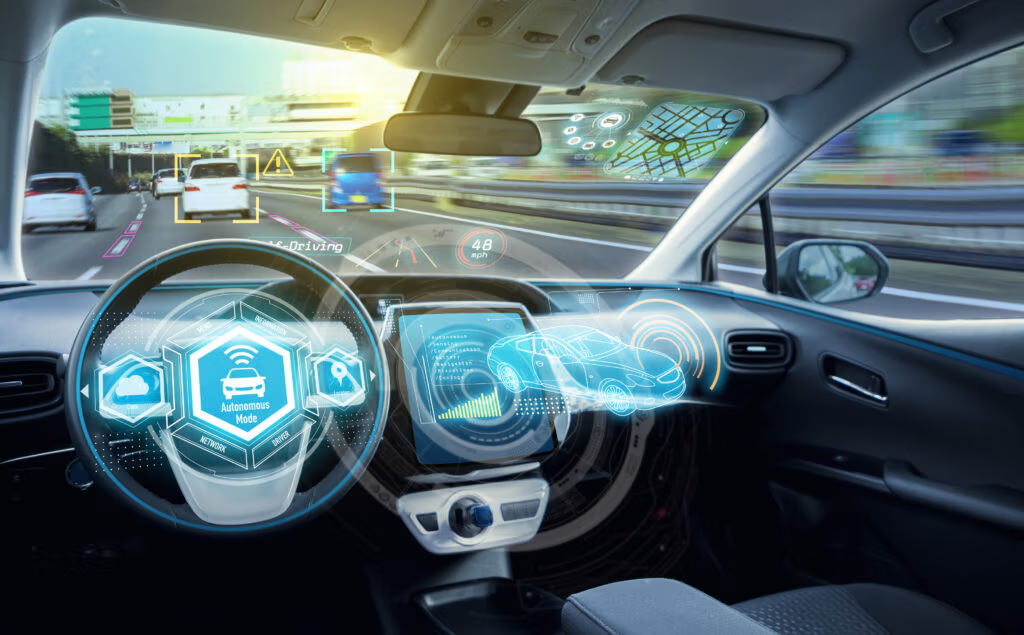
Empty cockpit of autonomous car, HUD(Head Up Display) and digital speedometer. self-driving vehicle.
The government wants to lead the way in developing autonomous driving technology. The transport ministry estimates that by 2035, around 40% of new cars in the UK could have self-driving capabilities, creating up to 38,000 new skilled jobs. While the auto industry welcomes the move, insurance companies are cautious and warn that self-driving cars could have unintended consequences.
The UK government has invested PS100 million to speed up the development of the technology and ensure the safety of road users. The new legislation will allow the UK to take advantage of the burgeoning industry and create thousands of new jobs. The government also plans to invest PS34 million in research and development to ensure the safest self-driving cars possible.
Self-driving cars could increase efficiency, improve safety, and make transport systems more cost-efficient. The UK government has recognized the importance of this technology and aims to make the country the world’s premier autonomous vehicle testing site. With widespread adoption, technology could be a catalyst for change that affects our everyday lives.
The government plans to introduce new laws for self-driving cars in the UK by 2025. The new legislation will focus on road safety and build on existing motoring legislation. It will be the manufacturer’s responsibility to ensure that self-driving cars are safe, while human drivers would not be held accountable for accidents that occurred while the vehicle was driving itself.
Battery manufacturing capacity
A UK battery factory would be able to meet the demand for batteries and help the country to reduce carbon emissions. It would also boost the UK chemical industry, as batteries could be assembled locally and sold throughout Europe. The decision comes at a time when many countries are pushing for more local production and supply chains. However, localization cannot happen without state support.
There are already several UK battery manufacturing projects in the pipeline. One such facility is the Nissan plant in Sunderland, which will produce batteries for 50,000 40kWh Nissan Leaf models every year. Another battery plant, Britishvolt, is planning to build a 38GWh battery plant in Blyth, which could eventually produce more than 25GWh of lithium-ion batteries a year.
Developing UK battery manufacturing capacity is vital to the UK car industry’s future. In the coming decades, electric vehicles are likely to dominate the car market, and the UK must scale up its battery manufacturing capacity to be competitive. In order to do this, the UK must establish gigafactories. These factories would provide skilled labor and help the UK attract inward investment. They would also demonstrate to global battery manufacturers that the UK is serious about battery manufacturing.
In the near future, the UK will be a world leader in battery manufacturing capacity, despite its relatively small size. With the right investment, battery manufacturing in the UK could be a major driver of the UK car’s future. By the year 2025, Britain could become the second largest lithium producer, after the US.
Currently, the UK government is in talks with several companies to set up gigafactories, which would ensure there’s sufficient capacity to meet the demand for UK electric vehicles. The UK government has already promised to phase out petrol and diesel cars by 2030, so it’s crucial to create gigafactories now to ensure there will be enough power to meet the demand for electric vehicles.
The British government recently announced PS1 billion in funding for the construction of an electric vehicle battery factory in Northumberland. The project will create thousands of jobs in the local area and more than 5,000 jobs in the wider supply chain. Construction of the plant will begin in September 2021. With the new investment, Britishvolt is on track to build Britain’s first large-scale gigafactory near Blyth.
To provide the best experiences, we use technologies like cookies to store and/or access device information. Consenting to these technologies will allow us to process data such as browsing behavior or unique IDs on this site. Not consenting or withdrawing consent, may adversely affect certain features and functions.
Functional
Always active
The technical storage or access is strictly necessary for the legitimate purpose of enabling the use of a specific service explicitly requested by the subscriber or user, or for the sole purpose of carrying out the transmission of a communication over an electronic communications network.
Preferences
The technical storage or access is necessary for the legitimate purpose of storing preferences that are not requested by the subscriber or user.
Statistics
The technical storage or access that is used exclusively for statistical purposes.The technical storage or access that is used exclusively for anonymous statistical purposes. Without a subpoena, voluntary compliance on the part of your Internet Service Provider, or additional records from a third party, information stored or retrieved for this purpose alone cannot usually be used to identify you.
Marketing
The technical storage or access is required to create user profiles to send advertising, or to track the user on a website or across several websites for similar marketing purposes.