
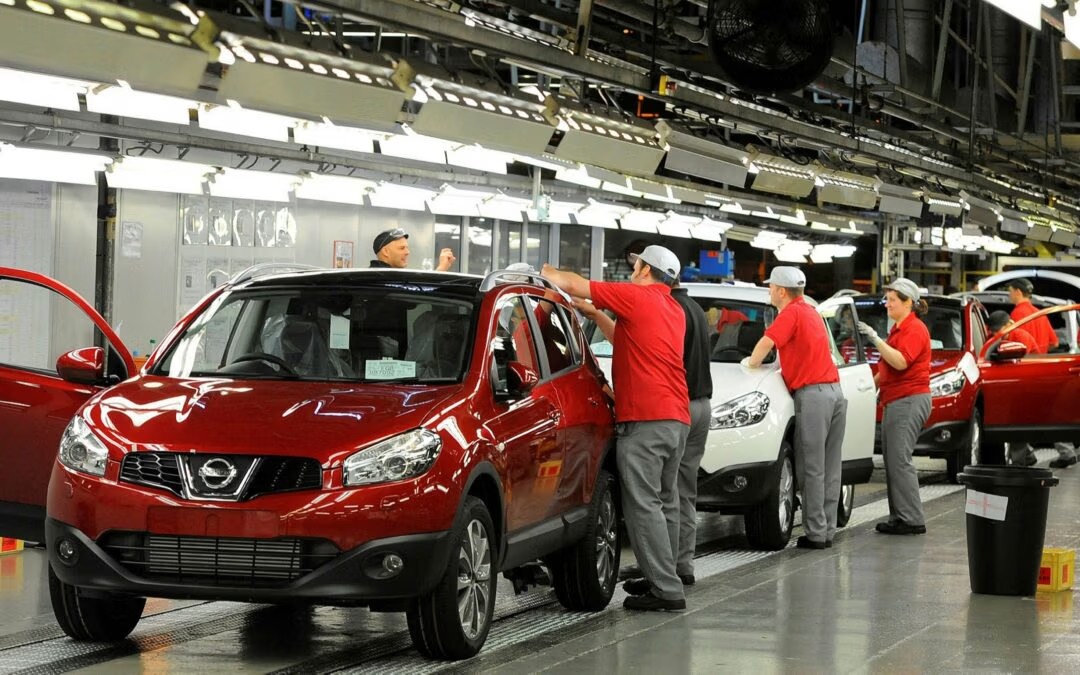
The UK car industry is experiencing some of the most profound changes in its history. Its peak production was over 1.7 million cars in 2016, but it is projected that by 2024, production could fall to 1.2 million. In recent years, global markets, Brexit uncertainty and COVID-related supply chain problems have all put the industry under pressure. A major change in the automotive industry is the government’s 2030 target to phase out petrol cars.
Nissan’s gigafactory
Nissan’s gigafactory will initially produce 1.7 gigawatt hours of electricity per year and will be able to produce enough batteries for 100,000 electric vehicles per year. The gigafactory is expected to create 750 new jobs and secure 300 current roles. The facility is also expected to help the UK car industry meet its net-zero goals.
The gigafactory will also boost the cost-competitiveness of battery cells for electric vehicles in the UK. This is due to the fact that it will produce the Gen5 battery cell with 30% more energy density. It will also contribute to the continued localisation of car parts and components. That will lead to lower prices for batteries and make EVs more affordable to many people.
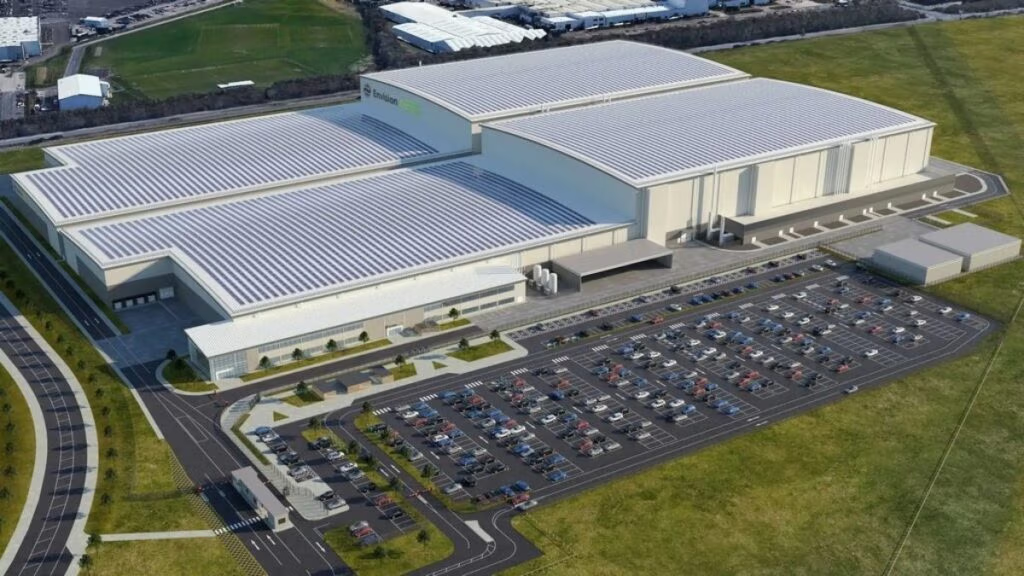
The new plant will also help Nissan produce a new all-electric crossover SUV in Sunderland. As part of the project, Nissan will invest up to PS1 billion in the plant. In addition to Nissan itself, the company will also work with Chinese battery producer Envision AESC to build a new gigafactory in Sunderland. This investment will help Nissan build the next generation of batteries for its EVs.
The new gigafactory will create around nine hundred new jobs in the UK and will support over 4,500 jobs in the supply chain. There will also be other production locations in the UK. It is expected to launch by 2024, and will be able to manufacture batteries for up to 100,000 electric cars each year.
Stellantis’ battery production facility
The UK automotive industry is facing a new challenge with the rise of electric vehicles. Governments are implementing policies that will encourage the development of greener vehicles. This includes developing more efficient methods of production and reducing emissions. Stellantis plans to invest PS100 million ($138 million) in converting the Ellesmere Port plant into a battery electric vehicle manufacturing facility. The company plans to upgrade the existing assembly line and body shop, expand the site’s production capacity and install an on-site battery pack assembly unit. The company has also committed to employ local renewable energy sources, such as wind and solar farms.

The investment will make the Vauxhall plant fit for the future and put the company on a path to carbon neutrality by the mid-decade. The new factory will be 100% self-sufficient in electricity, and construction will soon begin on a solar farm and wind turbines. Stellantis’ investment in the Vauxhall plant will also ensure that the city’s long-standing history in the car industry continues.
The company plans to build five battery production facilities across the US and Europe. The new facility will have the capacity to produce more than three million batteries a year. Stellantis’ plans to expand into Europe are ambitious, with plans to build as many as 25 battery-electric vehicles. The company’s plan includes a hybrid and an all-electric model.
Honda’s Swindon factory
The Swindon Advertiser recently reported on the first step in the redevelopment of the Honda factory site. The new owners, Panattoni, have applied for an environmental impact assessment scoping opinion. They plan to create 672,000 square feet of warehousing and industrial premises.
Since the 1990s, Honda has been a fantastic partner for the local economy. The company has a dual-plant complex in the town, including a car and engine plant. In 2001, the Swindon factory’s capacity was increased to 250k units a year. It now exports to 70 countries worldwide.
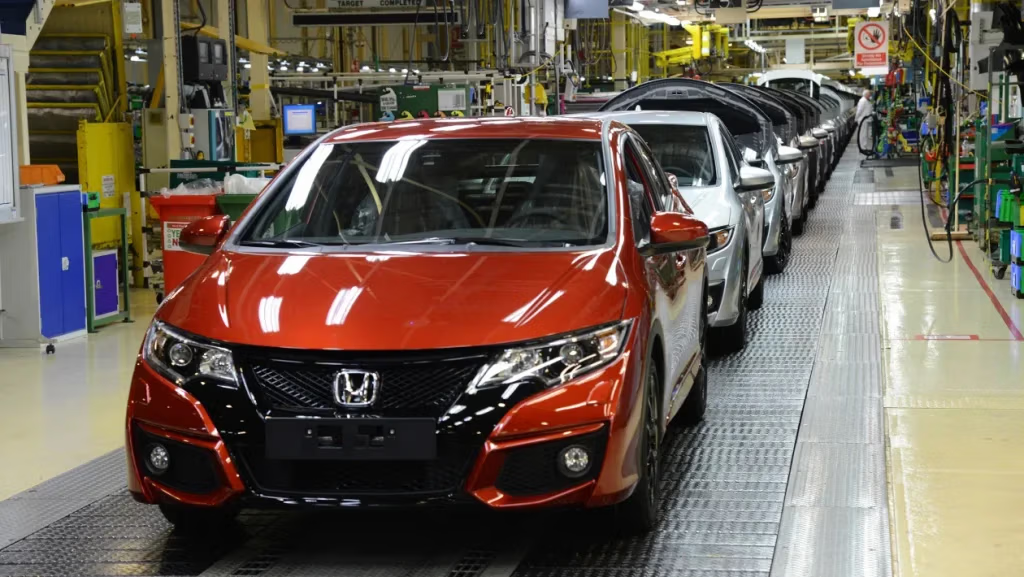
The new owner of Honda’s Swindon factory has promised thousands of jobs in the area. The new owner will take over Honda’s last remaining UK car factory. The closure will end the production cycle of the current Civic model. According to Honda, the decision to close the Swindon plant is not related to Brexit but because the company needs to focus on the markets where it sells the most cars.
The closure of the Honda Swindon factory will be a devastating blow to the local economy and the lives of its 3,500 employees. It will also affect suppliers and the town of Swindon. And the impact of such a massive job loss is not just felt locally but globally as well.
General Motors’ Coventry factory
The decline of British car manufacturing has affected Coventry in the past few decades. The city centre was bombed heavily during the Second World War, but by the end of the war many factories had relocated to outskirts. The boom years of Coventry’s car industry were driven by a large influx of workers. By the 1960s, the UK had become the leading exporter of cars. In those years, workers in Coventry earned more than their counterparts in the rest of the UK.
The closure of General Motors’ Coventry factory was not the only reason for the slump in the UK car industry. GM also owns factories in Luton and Ellesmere Port, which employ around 4,500 people. However, the closure of the Coventry factory has prompted concerns about the future of the UK car industry. A meeting between Unite’s general secretary and business minister Greg Clark is expected to be held on Wednesday to discuss the issue. The Department of Business is closely monitoring the situation and has said it is in contact with GM.

The UK government has also promised to phase out petrol and diesel cars from the UK market by 2040. This will give the UK car industry time to adapt. Until then, the UK will need to import key components, but it has the talent and the technology to produce the cars of the future.
Nissan’s gigafactory in Sunderland
Nissan is set to invest more than PS1 billion in a gigafactory in the north-east, in the city of Sunderland. The project is part of the company’s long-term strategy to become carbon-neutral. Once fully operational, the gigafactory will be capable of producing batteries for up to 100,000 electric vehicles a year. It will also produce batteries for energy storage systems.
The plant will be used to produce lithium-ion batteries for Nissan’s EV models. The company has said the plant will create about 750 new jobs and protect hundreds of existing jobs in the city. It will also add up to 4,500 new jobs in the area’s supply chain.
The new facility will be located directly next to the existing Nissan plant in Sunderland. It will produce batteries for the Nissan LEAF electric vehicle. The new plant is expected to create an additional PS1.8 billion in local jobs. Nissan has also committed to using locally produced materials for vehicle parts. In the long term, this commitment will make EV batteries and other parts cheaper. The gigafactory will also use 100% renewable energy generated by a local microgrid.
The company’s new plant will also create around 3,000 new jobs and will supply batteries for more than 300,000 vehicles a year. The gigafactory is expected to be operational by 2024.
Nissan’s plans for growth in electric car production
The Japanese automaker has announced plans for a massive investment in battery technology and electrified vehicles. The company has committed to invest $17 billion over the next five years and aims to sell 15 new all-electric models by 2030. The company also aims to make battery packs less expensive, with the cost of battery packs falling to $75 per kWh by 2028. By 2030, the company hopes to sell 50 percent electrified cars in the US and Europe.
The company has also promised to recycle the lead batteries that are used in its electric cars. This can help the company cut costs, especially in the long run, because batteries can retain up to 80% of their energy storage capacity. It is also planning to reuse the batteries in energy grids and utility storage. In addition, it wants to recycle the rare-earth metals found in EV batteries.
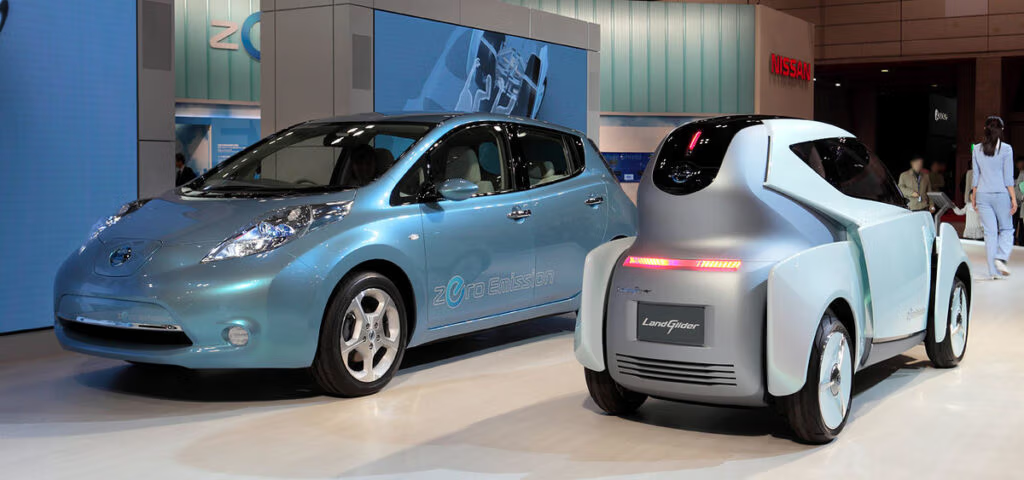
The company is also investing in battery technology and electric car production, including the CMFB EV platform. This investment will make it possible for Nissan to produce a new generation of all-electric crossover cars. The company also plans to build an all-electric version of its popular Micra compact car. The Micra EV is expected to be available in the mid-2020s.
The investment in Canton is part of a larger project called “Ambition 2030.” This plan will have the Canton plant build up to 15 all-electric models by 2030. The company is also partnering with Accelerate Mississippi to develop new jobs for the plant.
