
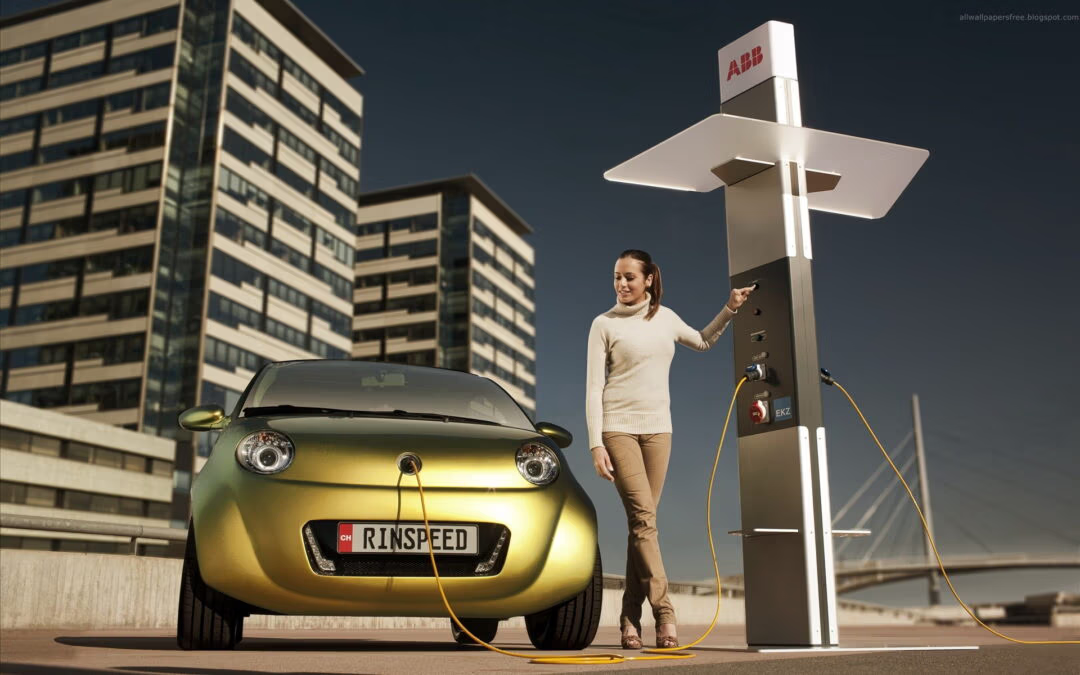
The question “Do electric vehicles have a future?” has long been debated. There are several reasons why people should consider switching to an electric vehicle. For starters, EVs will be more efficient at converting energy into power. In fact, they will be capable of catering to 99% of drivers’ needs.
EVs will cater for 99% of owners’ needs
EVs have many benefits and are becoming more affordable, and they are already cheaper to run than petrol-powered cars. The cost of electricity can be as low as 2p per mile and servicing costs are minimal. In addition, incentives are available to make EVs even more affordable. For instance, the US Inflation Reduction Act provides incentives for new owners of electric vehicles, and EV owners can even claim tax credits.
By 2050, President Biden and his team believe that half of the cars on the road will be electric. They also believe that EVs will satisfy 99% of the needs of owners and will be capable of meeting 50 percent of commercial needs. In the meantime, automakers are ramping up their EV production. And many new models are expected to hit the market in the coming years. However, it will take a few years for 99% of adults to seriously consider EV ownership.
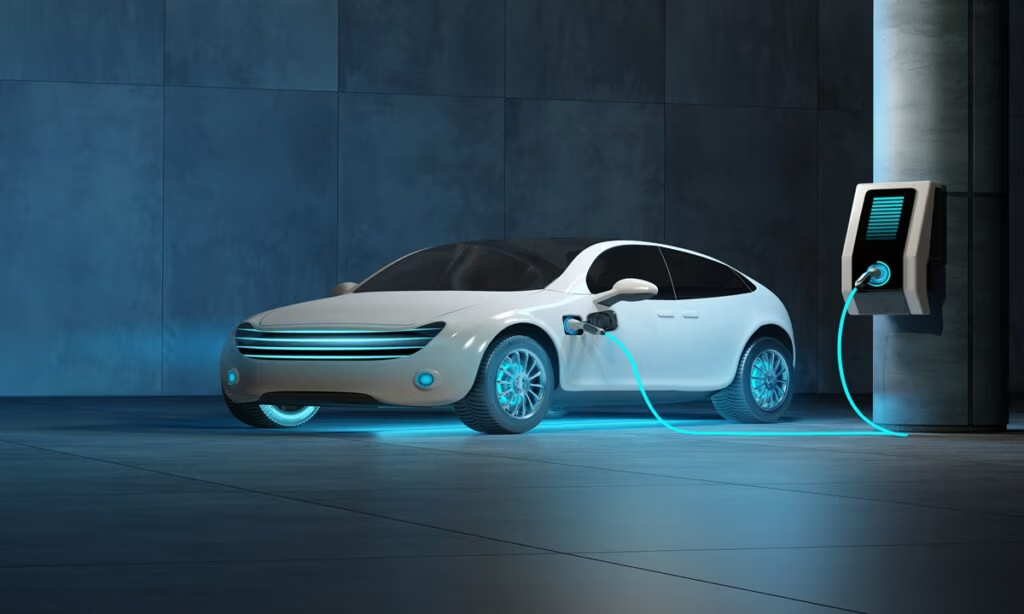
Electric car charging, illustration.
As batteries improve, EVs will be more affordable and more appealing. This will increase demand. Meanwhile, production and infrastructure will improve, making EVs more accessible to the public. By 2022, EV sales in emerging markets will nearly double. Meanwhile, the market for EVs will reach 630 000 units, which is a significant number.
However, EVs aren’t without their challenges. Charging stations will be critical to the functioning of an electric grid. By that time, half of the cars on the road will be powered by electricity. That means 5.4 gigawatts of energy storage will be needed for this demand. Moreover, charging stations in offices will need an additional 4.2 gigawatt.
EVs will make up 50% of the market by 2030
Currently, the EV market is growing rapidly thanks to numerous factors. This growth will take shape over the next decade and will present both challenges and opportunities for OEMs. This report will provide valuable insight for traditional OEMs to re-prioritize customers and strategies to take advantage of the potential of EVs.
The goal for 2030 is to see at least 50 percent of new car sales be EVs. But the percentage will vary between markets. By 2030, China is expected to account for almost 48 per cent of the domestic market – nearly double that of the United States. In Europe, growth is projected to be a little more modest. However, Northern and Western Europe is expected to grow at a faster pace than Southern and Eastern Europe. This is due in part to richer countries investing in the necessary infrastructure and offering greater cash incentives to encourage EV ownership.
While the overall EV market is growing steadily, some segments are more interested in EVs than others. Automakers may focus their marketing efforts on these segments, which have higher interest in EVs. For example, the UK’s segment G is the most likely to consider an EV.
Deloitte says that the world is on track to sell 31.1 million all-electric vehicles in 2030. This growth is driven by declining adoption barriers and changing consumer sentiment. The company also cites recent tax credits as key factors in fueling the EV market.
These recent developments are encouraging signs that EVs are on the verge of revolutionizing the auto industry. However, additional action is needed to capitalize on the momentum and accelerate adoption. The next decade must be filled with investments in research and development and infrastructure for EVs.
EVs will be more efficient in converting energy to power cars and trucks
EVs are expected to become more efficient in converting energy to power cars, trucks, and other vehicles in the future. Electric vehicles use much less energy to move and are much simpler to maintain. For example, a typical Tesla has 17 moving parts compared to around 200 for a conventional internal combustion engine. This simplicity means fewer parts to maintain, which is good news for EV owners.
EVs will also reduce the emission of noxious gases.
Compared to the emissions from conventional vehicles, an electric car produces no pollutants. While critics of EVs argue that some pollutants are still produced during the production process, EVs are a much cleaner option than fossil fuel cars. Plus, EVs allow drivers to recharge at night, which allows them to use the excess power that would otherwise be discarded.
There are several key factors that drive the electric vehicle movement. One of these is lithium-ion battery technology, which is the main ingredient of EVs. Lithium-ion batteries are highly energy-intensive and are the biggest source of carbon emissions from EVs today. The production of batteries is also highly resource-intensive. For example, lithium-ion battery production requires large-scale facilities that operate on fossil fuels.
Another key factor to success is public charging
infrastructure. Charging stations for EVs can be installed in public spaces like parking lots. These charging stations are usually in front of stores and businesses, making them more attractive to EV owners. EV drivers may even get better parking spots, since they can recharge their batteries while out shopping.
EVs also have the advantage of being more fuel-efficient. In addition to having higher mileage, EVs also produce less carbon dioxide than the average gasoline car. The average EV emits less than a fifth of the emissions of the average new car. When operating on renewable energy sources, EV emissions are significantly reduced.
EVs do emit carbon dioxide
The fact is, EVs do emit carbon dioxide. The majority of emissions, as a result of their operation, are attributed to the fuel cycle. There are exceptions, however, such as France and Norway, where the use of electricity is reduced. The difference in EV emissions between these two countries and the US is relatively small. Even then, the impact of EVs on the climate depends on the country and region in which they are used.
In Europe, EVs have lower lifetime emissions than conventional cars. As countries begin to decarbonize their electricity generation, these emissions will decline even further. The Nissan Leaf EV, for example, has emissions that are three times lower than a conventional vehicle.
While electric vehicles are more expensive than conventional vehicles, their prices will continue to fall as production scale increases and range increases. This increases the demand for lithium, which is used in batteries to store electricity. Other metals that are needed for electric vehicles include copper, silver and rare earths.
Ev Car Servicing In Reading
The automotive industry contributes about 15 to 25 percent of polluting emissions, primarily carbon dioxide. These gases are linked to climate change and can affect health. In addition, they pollute the air in major cities. Even local pollution from the automobile industry can clog the air.
While EVs are great for the environment, we need to do more to reduce our carbon footprint. Taking steps to make our cities more public transit-friendly will help reduce travel demand and reduce GHG emissions. We will have to work with governments and the private sector to reduce the emissions from our transportation sector.
Conclusion
The future of electric vehicles (EVs) is not just bright—it is inevitable. With continuous advancements in battery technology that expand range and drastically reduce charging times, EVs are rapidly becoming the go-to choice for consumers.
The urgent push for sustainability and the need to cut carbon emissions are driving strong demand and solid government backing for electric vehicles.
As innovations surge, charging infrastructure expands, and renewable energy becomes more integrated, electric vehicles will dominate the automotive landscape. The real question is not if electric vehicles have a future; it is how quickly they will reshape our world.
