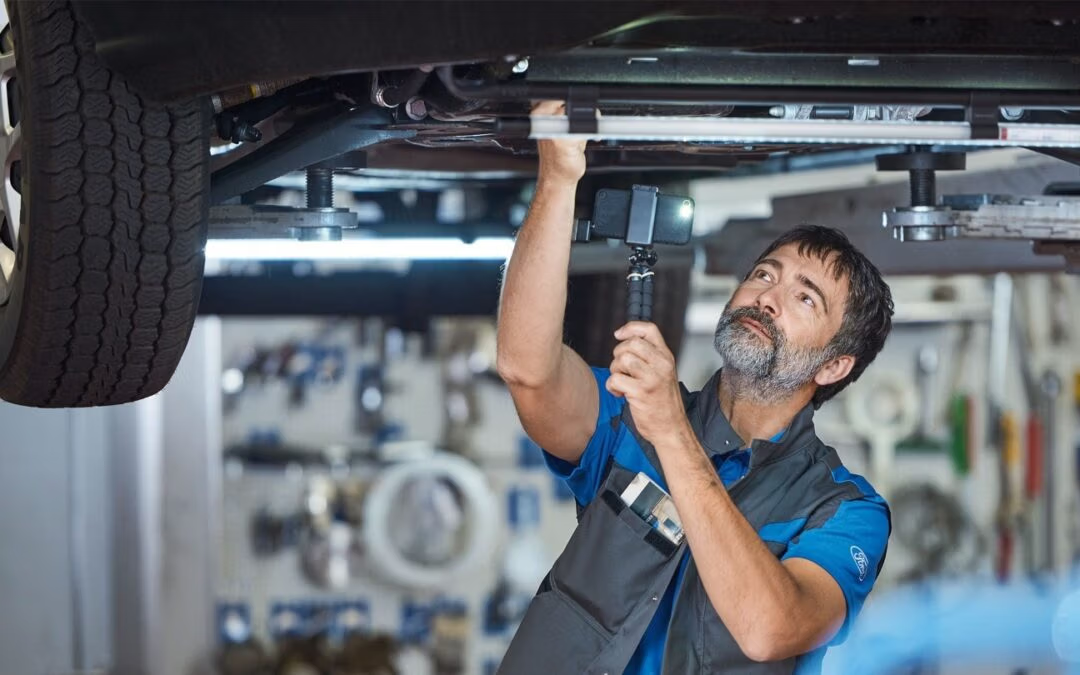
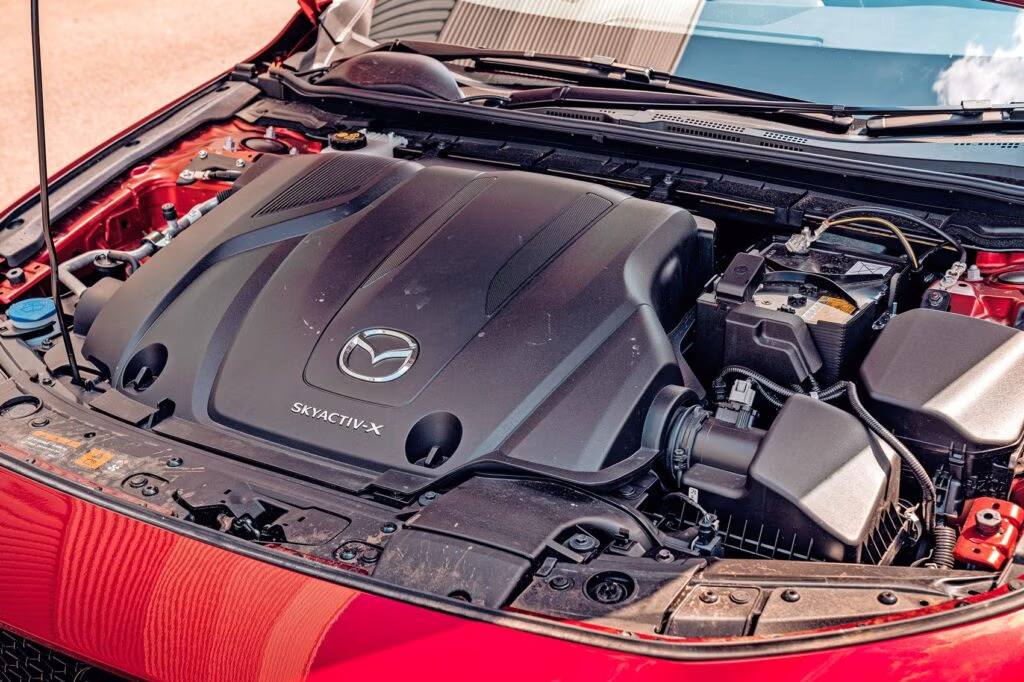
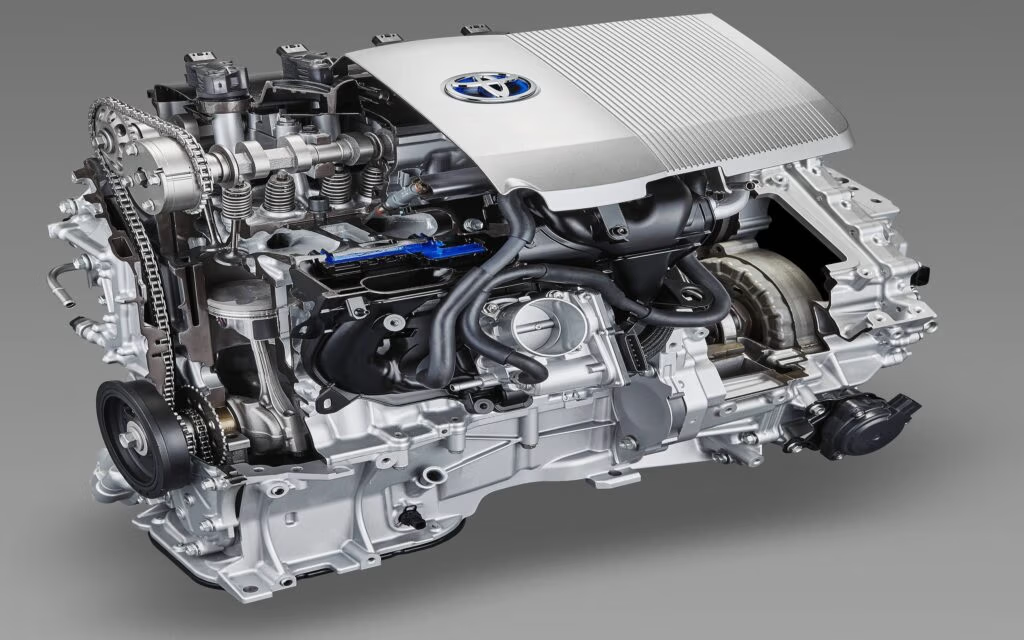
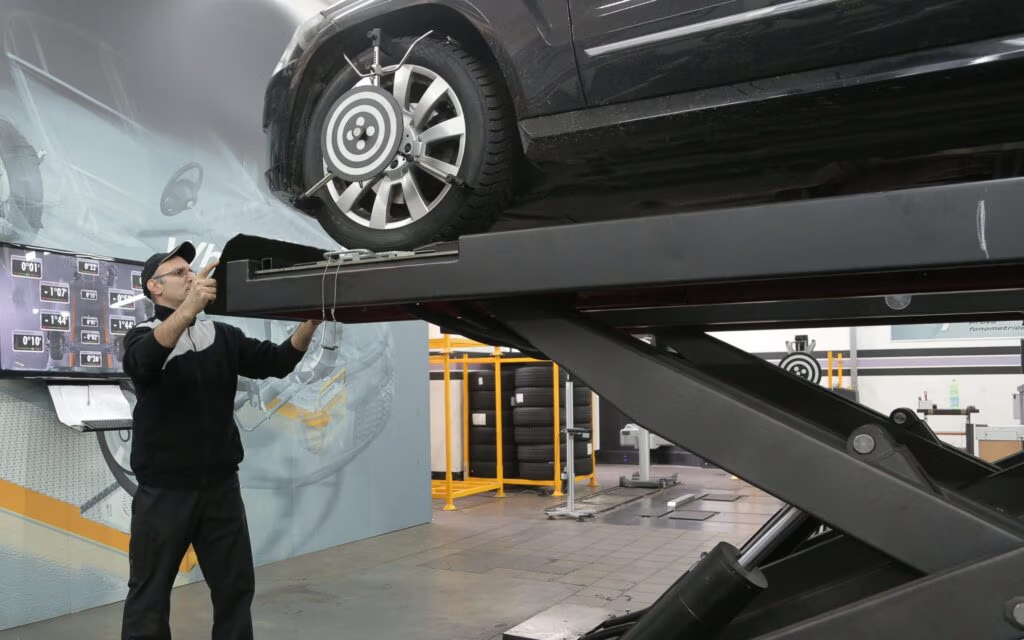
Poor vehicle maintenance can cause a variety of issues. These may include leaks under the car, poor steering, and even faulty parts. Having your tires checked often, maintaining your engine oil, and having your steering checked can help avoid these problems.
Tires are an important part of your car. They affect how well your vehicle handles, brakes, and accelerates. They also contribute to fuel costs and emissions. If they are damaged or underinflated, they can cause various problems, including uneven tread wear, understeering, and blowouts.
While most drivers don’t have an expert’s trained eye for troubleshooting, regular tire inspections are necessary for safety and protection. These are quick and easy; you can diagnose most problems by looking at your tires.
During a tire inspection, you should look for bulges and indentations in the sidewalls. These can be warning signs of internal or external damage. Indentations can be caused by a number of different factors, but they can be avoided if you find and fix them before they become dangerous.
Tires are usually built to withstand a certain amount of wear and tear before they are considered unsafe. When this wear and tear occurs, the tire loses its grip on the pavement. Consequently, it becomes more difficult to stop in cold or snowy weather.
Over time, tire manufacturers have begun to improve the quality of their products. However, sometimes, they fail to catch defects before they are released. Therefore, it is a good idea to check your tires’ condition monthly.
Besides preventing a blowout, keeping your tires properly inflated is essential to your safety and the safety of others on the road. Checking your tire pressure and tread depth can help determine if your tires are underinflated, overinflated, or overloaded.
Whether on the highway or in the city, a tire inspection is the key to keeping your car in top condition. Performing a quick and simple inspection can protect your safety and your car’s investment.
The steering system in your car can be one of the most complex systems, yet it can be extremely dangerous for drivers and passengers if it fails. A failure in the steering system can lead to a serious crash or even death.
Steering problems are often the result of damage to one of the major components of your steering system. If you suspect that you have a problem, contact an automotive technician. They may be able to diagnose and correct the issue for you.
While some steering problems are easy to fix, others require professional repair. These problems may be due to poor vehicle maintenance or a symptom of a more serious issue.
Some of the most common causes of steering problems are low power steering fluid, improper wheel alignment, or uneven tire pressure. All of these issues can make steering feel stiff and unresponsive.
Excessive play in the steering wheel is also an indicator of a problem. Excessive steering wheel play can reduce steering accuracy, increase the risk of accidents, and make defensive driving difficult.
A loose or worn steering rack can also cause steering issues, such as the steering wheel shimmying, shaking, or turning too quickly.
Another common cause of steering problems is a loose or worn drive belt. A blown fuse or a worn-out serpentine belt can cause this.
Squeaky noises while riding over bumps indicate suspension or shock absorber problems. Old shocks should be replaced.
The California Lemon Law allows you to get free replacements if you believe your vehicle is defective, and you can have your vehicle repaired for free if you are not satisfied with the results.
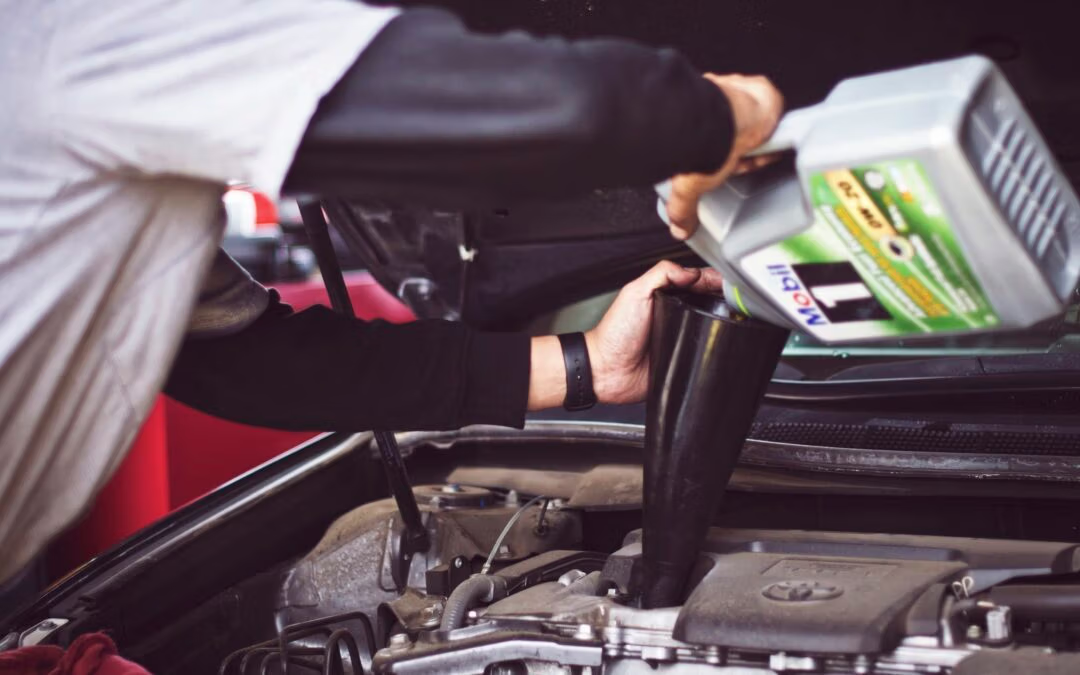
Engine oil is one of the most important components of your vehicle. It not only lubricates your engine but also protects it from wear and tear. The oil helps prevent metal-to-metal brushing and friction from causing serious damage.
Most car manufacturers recommend changing your vehicle’s oil at least once a year. Newer cars often have a built-in service reminder that signals when the time has come for an oil change.
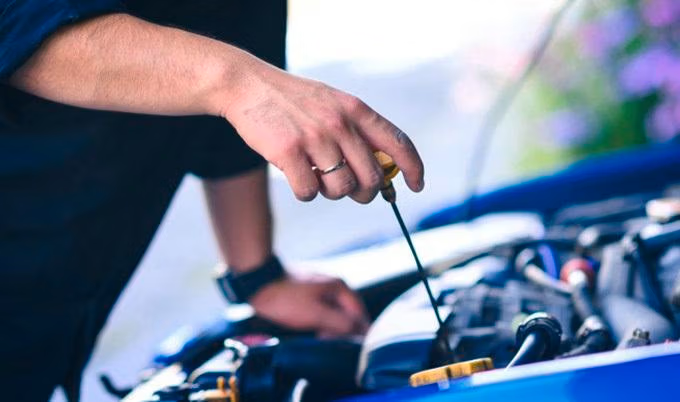
Some vehicles even have an onboard computer that can help keep your engine running smoothly. It is a good idea to check the oil level on the dipstick at least once a month.
If you notice a drop in the pressure on the gauge, it is best to act immediately. Low oil pressure can cause your engine to overheat, which can lead to expensive repairs.
Another problem is an overfilled crankcase. This can be caused by either adding too much oil or not properly draining out old engine oil.
Internal leaks can also be an issue. Damaged or worn valve stems and seals can allow oil to leak into the cylinders, and a faulty oil filter can also be a source of internal leaks.
A few common signs that you need an oil change include blue-grey smoke from the engine. You might also hear a knocking sound from your vehicle.
Older engines typically require more oil than newer engines. If you are unsure how much oil your vehicle has, a good rule of thumb is to change the oil every three to six months.
Oil’s color depends on its thickness and weight. As it ages, the color will darken, and the oil’s lubricating properties will decrease.
Liquids are leaking from under the car
The presence of a liquid or fluid under a car can indicate a number of different problems. Some are harmless, while others can indicate an issue that may require a professional diagnosis.
One of the most common types of leaks under a car is engine oil. This fluid is generally brown or black and has a slightly burnt odor.
Another type of car leak is transmission fluid. Transmission fluid is red or reddish in color, but it can be difficult to distinguish from oil. A loose pan or a malfunctioning engine may cause a leak.
If you are unsure what is leaking, it is best to take your car to a mechanic. They can pinpoint the source of the leak and make repairs. Depending on the size of the leak, the cost can be as little as $10 or as high as $100.
Many owners assume a car leak is caused by oil. However, it is important to remember that vehicles use many different fluids.
The most common car leak is engine oil. An oil leak usually appears as a driveway or garage floor puddle. There are several different ways to spot an oil leak, including by smell, color, consistency, and texture.
Coolant, or antifreeze, is another common liquid. It is a greenish-yellow or pinkish fluid with a sticky, viscous feel. Sometimes, it is bright orange.
Power steering fluid can also leak, especially if the car has been driven for a long period of time. A power steering leak makes it difficult to turn the wheel and can even cause transmission failure.
Faulty parts
If you own a motor vehicle, you know routine maintenance is necessary to keep it running smoothly. However, if you neglect to do so, your vehicle may be at risk for serious damage and even a crash. In fact, the National Highway Traffic Safety Administration (NHTSA) estimates that 45,000 traffic accidents are caused by a malfunctioning auto. Fortunately, many of these accidents can be prevented by keeping your automobile in top shape. Here are a few tips to help you stay safe and out of harm’s way.
The best way to tell if you are doing your part is to look at your vehicle’s owner’s manual. If you do not understand the mechanics of maintaining your car, your chances of keeping it in tip-top condition are slim to none. Keeping your vehicle in good shape will also save you money in the long run.
While you are at it, remember to keep the tires on your vehicle in check. A poorly maintained tire can lose its grip and cause you to veer off the road or, worse, crash. Also, be sure to inspect your brake lines for any signs of wear and tear. If you’re unsure, take your vehicle in for a service.
Finally, be sure to check your car’s battery. This is a common problem with many vehicles and can be fatal. Luckily, most vehicles today come with a battery backup. Of course, if your car’s battery is dead, you could be stranded on the side of the road with no backup. For the most part, however, batteries are a snap to replace.
Hopefully, this article has armed you with the information you need to ensure your vehicle is in top shape for years.
You might have noticed that you can get a lot of different kinds of car servicing. Some of these services include major, full, and other types of minor services. Before you choose one, knowing what each type offers and whether it is worth the price is important.
Major car service involves a comprehensive check of all vehicle parts. It is a necessary step for maintaining a safe and reliable car. Car manufacturers publish a service schedule to ensure vehicles are in top shape.
The service plan will depend on how many components need to be replaced and the type of car you own. Some cars require a minor service every 10,000 miles, while others may be due for a major service after a certain number of years. This information can be found in the owner’s manual.
A basic service usually involves a visual inspection of key systems. It is also important to replace your oil. Oil changes help prevent friction and improve engine performance.
A major service can include replacing air filters, spark plugs, and other wearable parts. It also includes brakes, transmission fluid, battery, and cooling system checks.
Depending on your manufacturer, you might need to get a new set of brake pads or wheel bearings. However, a good service should be able to identify any small problems before they turn into large ones. You can save money by combining services.
When it comes to vehicle maintenance, you must adhere to the manufacturer’s recommended service schedule. This will minimize the chances of your vehicle breaking down or having a serious accident.
You will also notice improved handling and reduced fuel consumption. Your car may even have an increased market value. But there are other benefits, too, including improved braking.
Once your vehicle reaches about 24,000 miles, a major service is recommended. However, this number can vary depending on your mileage and car model. If you don’t have an exact number, it’s always a good idea to ask your mechanic to perform a full inspection of your car before recommending a particular service.
Another way to save on maintenance is to purchase a service plan. These plans allow you to schedule your servicing and monitor your costs. Each package includes basic services such as an oil change, plus a few extras.
Basic service
If you have a car that needs some maintenance, you should consider taking it to a car service centre. This is the quickest and easiest way to keep your vehicle in good condition. It also saves you money. Getting your car serviced regularly will help you avoid expensive repairs.
Depending on the make and model of your vehicle, it should be serviced every 6,000, 10,000, or even 12,000 miles. You should also have it checked out by a qualified mechanic at least once a year.
A basic car service includes an engine oil and oil filter change. The garage will also check Tires, brakes, fluids, and other key components. Typically, they will visually inspect these components and make sure the vehicle is working properly.
Other checks included in a basic service are antifreeze concentration, oil and water levels, and the overall structure of your vehicle. Brake pads and discs are also checked for wear, as are the steering rack gaiters.
You should also be careful about the pressure in your tires. When the Tyres are not inflated properly, your car can be unstable and cause poor performance. Be sure to use a proper 20p piece to increase the safety of your tires.
Most modern cars are well-engineered and have few breakdowns. However, if you own an older vehicle, you may need to get it serviced at regular intervals. Car servicing can help maintain your car’s roadworthiness, which can extend its life.
Usually, you will be required to leave your vehicle at the service Centre for an entire day. This will give your mechanic ample time to perform the necessary checks.
Besides maintaining your vehicle, car servicing will also increase its resale value. In fact, potential buyers often ask for a logbook. Having a clean and accurate logbook will help you negotiate for the best price possible.
A full service is a comprehensive service that includes everything you’ll find in a basic or major service. While getting your vehicle serviced once a year is recommended, it’s important to remember that it’s a matter of preference.
A good old-fashioned maintenance checkup isn’t cheap. However, with the plethora of free and low-cost services vying for your attention, it’s hard to know who’s in charge.
So, what are the best ways to keep your ride in tip-top shape? Luckily, the good folks at Audi are up to the task. To boot, the lucky one in town has a shiny new showroom for you to peruse. Alternatively, you can head over to their HQ to pick their brains. With a little forethought, the car-obsessed driver will have your back for years to come.
If he’s as nice as he is, he’ll even tell you a thing or two about your beloved Audi. Just be sure to ask questions. After all, nothing is worse than dealing with a naysayer. Plus, your dealer will weed out the riff-raff from the riff-raff. Audi’s staff is friendly and genuinely knowledgeable, unlike many competitors.
Full service
Full-service car servicing is one of the best ways to keep your car in tip-top shape. It catches problems before they become big, saving you a lot of money in the long run.
A full service includes several checks and tests. These include an engine oil change, brake check, and fluid check. The mechanic will also evaluate the condition of the seat belts, air filter, and number plate. If you notice any issues, he’ll recommend repairs.
The cost of a full service is around PS140. Although it’s not mandatory, many insurance companies require it every year. In addition to the service, your mechanic may also perform an MOT, which is a yearly legal requirement for cars over three years old. This can lower the overall cost and increase the chances of passing your MOT.
A full service schedule is usually included in your car’s owner’s manual. Every manufacturer recommends a different interval for service, but most recommend that you have your car serviced once a year.
The mechanic will perform over 50 checks on your car during a full service. These include wheel bearings, brakes, and the air filter. They will also check the level of transmission fluid, clutch fluid, and brake pads.
Your full service will take two to three hours. You can expect to have it done by a certified mechanic, who will also need your permission to make any changes.
You can find out what your insurance policy covers. Most plans include brakes, air filters, a windshield wiper, and fluids. However, adding additional items will cost extra.
If you plan to sell your car, a service history can greatly increase its value. The history will help your insurer estimate the pre-accident value. Also, a full-service record can be used as evidence if you have an accident, and you’ll be able to ask for a better price if you sell your car after a full service.
Why It’s Important To Keep Up With Regular Car Servicing. Regular car servicing is very important, as it can help you avoid small problems from becoming major ones and prolong the life of your car. It can also improve your fuel efficiency, making driving more fun and saving money.
Whether you drive a new or older vehicle, maintaining it properly will help you achieve better fuel efficiency. Proper maintenance is the key to your car’s longevity, and keeping up with routine car servicing can help you improve your fuel efficiency by up to 40%.
A poorly maintained engine can develop sludge or corrosion, making operating difficult. Regular maintenance can detect these problems and ensure they do not become expensive. It also protects you from breakdowns, which can damage your vehicle. This can also extend the life of your vehicle.
Another important part of your vehicle is the tires. You should check them regularly for wear and keep them inflated to the recommended PSI. Properly inflated tires improve your vehicle’s performance and safety and save on fuel.
Changing the oil is an important aspect of regular car servicing. When you change the oil, you help prevent the buildup of sludge and other contaminants, which can cause your engine to function improperly. Also, using the right kind of motor oil can increase your fuel efficiency by up to 3%
This is one of the easiest and most inexpensive ways to improve gas mileage. Clogged air filters can decrease the performance of your engine, so replacing them is a great way to boost your fuel efficiency. Using a high-performance engine oil can also help. If you use the manufacturer’s recommended grade of oil, you can expect to see an improvement in your fuel efficiency of up to 2%.
The next step is to take your vehicle in for a tune-up. Most vehicles have a factory-recommended servicing schedule. By following this schedule, you can ensure that your vehicle is in good condition and will continue to get the best fuel efficiency.
Having a smooth engine and transmission will also help your vehicle get the most out of its fuel. In addition, changing your driving habits can improve your fuel efficiency. For example, shifting to higher gears can reduce the gas your vehicle uses. Avoiding heavy traffic and idling your car in the garage can also improve fuel economy.
Other common car services that can improve your fuel efficiency are wheel alignment and tire rotation. These services will not only improve the overall performance of your car, but they will also extend the life of your tires. Furthermore, you can boost your fuel efficiency by up to 3% by inflating your tires correctly.
While many different factors can impact fuel efficiency, keeping up with regular car servicing is the most effective way to maximize your vehicle’s potential. A good maintenance schedule is also the best way to ensure your car is safe and will run efficiently for years to come.
Taking care of your car can help it last longer. Using the correct oil and taking care of other components can greatly affect how long your vehicle lasts. If you take these steps, you can avoid the headache of an expensive repair bill.
Follow the manufacturer’s recommended maintenance schedule to extend the life of your car. This includes routine maintenance such as oil changes and tire rotations. Follow the car’s owner’s manual to ensure you’re doing the right thing. Performing the most important maintenance tasks on time will help your car remain in tip-top shape.
Another useful advice for extending your car’s life is to drive it smart. Avoiding potholes and curbs can help reduce wear and tear on the vehicle. Also, avoid taking sharp turns or using the gas pedal for an extended period of time.
Purchasing a new vehicle is a big commitment
So it’s important to know how to keep it running for as long as possible. A car is valuable, and it can be a money pit if you don’t keep it in good condition. Luckily, there are many ways to extend the life of your vehicle. In fact, a well-maintained car can last up to 15 years or 300,000 miles.
The most obvious way to increase your car’s lifespan is to avoid accidents. Accidents can shorten your vehicle’s life, so wear a seat belt and maintain a safe distance between you and the road. Getting hit by another vehicle can also be a costly mistake, so do your part to prevent the unfortunate scenario from happening. However, an accident will not only damage your car but can also affect its value
Other ways to prolong the life of your vehicle include taking care of its interior and paint job. Having a fresh coat of paint will protect the car’s body and prevent chips and faded colors. Additionally, make sure to use the right kind of fuel to ensure the engine and other components stay in tip-top shape.
Extending your car’s life is much easier than you may think. All it takes is maintenance and simple tips to keep your ride running smoothly. Follow these tips, and your car will last for many more years. Whether you’re a commuter or a proud owner of a brand-new car, a little extra effort can go a long way in keeping your vehicle in top shape. For more information, check out Grange Insurance’s handy tips on how to get the most out of your automobile.
Conclusion
Keeping up with regular car servicing is essential for several reasons. It not only ensures the vehicle’s and its occupants’ safety by identifying potential issues before they become serious problems,
But also enhances the vehicle’s performance and efficiency.
Regular maintenance helps extend the car’s lifespan, ultimately saving money on costly repairs and protecting the investment made in the vehicle. Furthermore, a well-serviced car retains its resale value better and contributes to environmental sustainability by operating more efficiently and producing fewer emissions. Drivers can enjoy a safer, more reliable, and cost-effective driving experience by prioritizing regular servicing.
Professional car servicing and maintenance can improve your vehicle’s performance, eliminate vibrations, and avoid costly repairs. If you have not checked your vehicle in a while, consider having a professional mechanic perform a checkup.
If you have experienced car vibrations, it is best to get them fixed by a professional auto service technician. Vibrations can indicate major problems with your vehicle. The mechanic will inspect all components that may be causing the problem.
One of the most common causes of vibrations is bad tires or wheels. These can be caused by a number of factors, including poor tire balance, uneven tire wear, and even a manufacturing defect.
Rough idling is another common cause of vibrations, which can make starting your vehicle difficult and lead to poor fuel economy. While vibrations in your car can occur at any speed, they usually occur at a low frequency and can be felt in the steering wheel or on the dashboard.
Rough idling is abnormal and can be a sign of major engine problems. It is important to diagnose rough idling early to avoid costly repairs.
A bad motor mount can also cause vibrations at idle and while applying the brakes. In addition, loose suspension components can cause vibrations at certain speeds.
If your vehicle’s radiator fan is broken, you will likely experience vibrations. Your mechanic can check your cooling system and the fan. If the radiator fan is not working, it is most likely due to timing issues.
Other possible causes include loose suspension parts, a faulty steering system, or an improper driveline U-joint. Tires, as they are the only part of the vehicle that makes contact with the road, can also be a culprit.
Using an NVH app can help you pinpoint the source of vibrations. Several are available on the market. However, you should verify that your device is compatible before downloading and using it. Several of the apps require complex calibrations and setup.
Car vibration is a common problem that can indicate serious engine issues. Taking your vehicle in for a tune-up and maintenance is a good way to catch these problems before they become severe.
Using a good car service can save you money in the long run. Even if you do not notice any signs of a problem, you should have your vehicle checked out by a qualified automotive service professional.
A well-maintained car is a safe driver, so why not give it a little TLC? Fortunately, there are many simple tricks you can do to ensure your vehicle will outperform its rivals on the road and in the parking lot. These include regular oil changes, tire rotations, and replacing worn-out parts like your brakes and suspension. The right maintenance can also improve your gas mileage. It’s a no-brainer to ensure your wheels are properly aligned and your tires are filled to the appropriate pressure.
Stick to the manufacturer’s recommended maintenance schedule to improve your car’s performance. You may have to visit a trusted mechanic to get the job done, but this will save you money and headaches in the long run.
Another way to improve your vehicle’s performance is to take advantage of its features. For example, your car’s braking system is the engine’s best friend, so ensuring it works at peak efficiency makes sense. If your brakes are worn out or your suspension needs repair, a quick trip to the auto repair shop might be in order. Keeping your car in top shape will not only increase its longevity but also keep your family safe.
To determine which parts matter most, check out your vehicle’s owner’s manual. In addition to this, you should learn about your car’s unique specifications, such as the type of fuel it uses and the type of oil it has. Once you have a handle on all this information, you can decide how to best maintain your vehicle. Remember, the secret to getting the longest life out of your automobile is to do it right the first time. Luckily, there are plenty of professionals to turn to. Taking care of your car is the smartest thing you can do, and it’s a great way to keep your car on the road for years to come.
Avoid costly repairs
A well-maintained vehicle will fetch you top dollar when it is time to sell it. As such, maintaining it may be the best way to ensure you don’t have to shell out for a ton of cash down the road. Following a few simple maintenance tips, you’ll be well on your way to a trouble-free vehicle.
If you’re in the market for a new ride, be sure to check out the new car showroom at your local Nissan dealership. From there, you can decide well on the best vehicle to suit your needs. The service staff at the dealership will be more than happy to provide you with all the information you’ll need.
In a nutshell, your first car purchase is one of the most important investments you will make. This is why it pays to shop around for the best deal. Your mechanic will likely have some recommendations of their own, so be sure to speak with them directly. Also, if you are looking for the best way to get your hands on a used car, consider buying used vehicles from the pros. They can offer various options, including a fully financed buy-and-drive program.
Having an expert auto mechanic for car servicing and maintenance is crucial if you want to enjoy worry-free driving. You should hire an experienced, qualified professional who can handle even the most complex car issues.
Your car is a machine you trust with your life. When an untrained person repairs your vehicle, the result could be disastrous. A certified expert will guarantee your safety and make sure the repairs are done right.
An expert will also ensure that you know how to care for your vehicle. This will save you time and money. They will recommend the most effective ways to maintain your vehicle.
Choosing a mechanic can be a trial-and-error process. Look for mechanics with years of experience and a good reputation. Find out if the company offers warranties. These warranties can cover accidental damage to your vehicle.
Using a reputable auto mechanic will also protect your reputation. A mechanic with good customer service and automobile knowledge will do their best to solve your problem.
It is important to choose a shop with the necessary tools and equipment for repairs. Without the right tools, you risk creating other problems with your vehicle. Highly skilled mechanics can find and fix problems quickly and efficiently.
Most people who own cars need to have their vehicles repaired at some point. The cost of repair can be high. Therefore, it is best to avoid DIY repairs. Instead, you should take your car to a certified auto mechanic for servicing and maintenance.
When choosing a mechanic, remember that a good mechanic should be able to explain the problem to you in plain English. If the mechanic fails to do this, it is a sign of poor customer service.
Hiring an auto mechanic for car servicing and maintenance is the best way to protect your investment and ensure the proper functioning of your car. A professional mechanic will use the latest technology to provide you with reliable and safe services.
Conclusion
Professional car servicing and maintenance offer numerous benefits essential for any vehicle’s longevity and performance. Regular servicing helps identify and resolve potential issues before they escalate, ensuring your car runs smoothly and efficiently.
It also contributes to improved safety on the road by ensuring all critical components are in working order. Additionally, professional maintenance can enhance fuel efficiency and ultimately save you money on repairs in the long run. Furthermore, staying on top of scheduled maintenance can help maintain your vehicle’s resale value, making it a smart investment in the long term. Overall, prioritizing professional car servicing and maintenance is key to ensuring a reliable and safe driving experience.
If you own a car, you may be experiencing some common problems. These include leaning or pulling, smoke from the engine, vibrations, damage to the tail or headlights, rattling suspension, overheating engine, and steering wheel shakes. Regardless of what type of car you own, there are many things you can do to fix these issues.
Leaning or pulling
If you’ve noticed that your car is pulling to one side or another, you should check it out immediately. This is because it could cause more damage to your vehicle. Fortunately, it is easy to find the causes of your vehicle’s leaning or pulling problems.
Cars that pull to one side can be caused by several different things, such as a worn suspension part, a faulty brake or a bent chassis. If you’re not sure, it’s best to get a professional mechanic to inspect your car.
The first step is to determine whether your car’s lean is a result of a faulty wheel alignment. A good way to check is by having a certified mobile mechanic inspect your vehicle. They will use state-of-the-art diagnostic equipment to find the cause of your car’s leaning.
Another problem that can lead to a leaning or pulling car is a low tire pressure. Tires should be inflated to the manufacturer’s recommended amount. Underinflated tires have more rolling resistance, which can amplify the steering pull.
Having uneven tread wear and/or a misaligned wheel can also cause your car to lean. If your tires aren’t rotated regularly, they can become unaligned.
Vibrations
Vibrations in your car may not seem like a major concern at first, but they can become a real problem. If you notice vibrations, you should immediately bring your car to a trusted mechanic. There are several common causes of vibrations. These include improperly mounted wheels, uneven tire wear, and a malfunctioning steering wheel.
The best way to tell if you have a vibration is to watch for its signs. One sign is a shaking steering wheel while accelerating. This is a sign of a bigger problem, and one that is very dangerous.
You can also look for a vibration when the engine is idling. Rough idling can cause problems with your fuel economy, as well as performance. Luckily, you can avoid these issues by letting an experienced mechanic diagnose your car.
Another sign is a vibrating seat or steering wheel. Your vehicle usually shakes during acceleration, but if you notice this more often, it could be an indicator of something more serious.
Finally, a vibration can also be caused by a loose lug nut. If this is the case, it can cause the wheel to wobble and possibly damage the vehicle. Having the lug nuts tightened is one way to prevent this.
Steering wheel shakes
If you notice that your steering wheel is shaking while driving, you may be dealing with an issue that requires a professional repair. You can identify the problem by recording when and where the vibration occurs.
A steering wheel can shake at any speed, but if it shakes at high speeds, it can be a sign of a serious problem. To keep your car safe, you should address the problem as soon as possible.
Several problems can cause your vehicle to shake, including damaged tires. Wheel bearings can be a source of vibration, and it’s important to check them regularly. When the bearings loosen, your steering wheel can start to shake. Using a torque wrench to tighten the wheel nuts can help.
Other common causes of shake include a brake system problem or suspension issues. Sticky brake calipers can cause vibrations, so it’s best to have the calipers and brakes cleaned regularly.
Steering wheel vibration can occur at low or high speeds, and it can also be worse at the beginning of the drive. At the same time, it can get better with high speeds.
The best way to prevent your car from shaking is to have a wheel alignment performed on a regular basis. You should also have your wheels and tires rotated every 5,000 miles. This will ensure that your tires wear evenly and prevent premature wear.
Rattling suspension
When you hear a rattle in the suspension of your vehicle, you should check out the underlying cause. You may need to get your car checked by a professional mechanic to find out what the problem is.
There are several different causes of rattling in the suspension of a vehicle. Some of them include a worn shock, a broken heat shield, and a faulty exhaust component.
Shock absorbers are devices that transfer energy from a stored kinetic to a heat source. Wearing out the shocks in the front or rear of the car can cause a car to bounce more on bumpy roads. A worn shock may also make it difficult to steer or accelerate.
Rattling in the suspension can also be caused by loose engine mounts. Tightening the bolts is usually a good fix for this issue. If the problem continues, you may need to replace the entire suspension system.
In addition to a rattling sound, the suspension can also create clunking noises. This can be a warning sign of a problem with the struts, control arm, or ball joint.
The suspension of your vehicle is a complicated system that has many components. It can be hard to know which components are causing the clatter. Take the car for a test drive to determine if it’s a problem with the suspension.
Overheating engine
Overheating can be a very serious problem that may need a professional to repair. However, there are a few things you can do to help prevent overheating in the first place.
One of the simplest things to do is to ensure your vehicle’s cooling system is working properly. This means checking the coolant levels and making sure there are no clogs. You can also check the radiator and hoses for leaks.
If you are experiencing an overheating problem, the first thing you need to do is pull over. Next, you should shut down your engine, but not start it. It is important to avoid further damage to the engine.
While the radiator and heater hoses are easy DIY fixes, the water pump and head gasket may need a professional’s touch. Also, it is possible that you could have a broken thermostat, which could lead to a leaky radiator.
Another thing to look for is the temperature gauge. It can be hard to determine whether the problem is overheating or something else. A good way to test for this is to run the temperature gauge through a few different settings.
If your car is overheating, the quickest and most effective solution is to pull off at a safe location and turn off the engine. Afterward, you should allow the engine to cool down for 15 minutes.
Smoke from under the hood
If you are wondering how to fix smoke from under the hood, you should know that it can be a sign of many different issues. Some of these include oil leaks, faulty fuel injectors, and an exhaust system problem. You should be prepared to take your car to a mechanic as soon as possible if you notice smoke coming from under the hood.
Motor oil leaks are the most common cause of smoke from under the hood. Leaks can happen as a result of worn piston rings or valve seals. This can cause an engine to overheat, which can result in the car to smoke.
Other fluids can also cause smoke from under the hood. These fluids include transmission, brake, and power steering fluid. Luckily, these issues will not cause serious damage. Depending on the amount of liquid, however, you may see a white or blue smoke cloud. The color of the smoke will depend on the problem, but if you are unsure, you should check with a professional.
Another possibility is an oil spill from the outside of the engine. While this won’t do much damage, it can cause a nasty smell and smoke from the tailpipe.
Damaged tail or headlights
When your tail or headlights are damaged, it can be a frustrating experience. But, it is not the end of the world. If you’re willing to put in a little effort, it’s possible to repair the damage. You may even want to upgrade your tail lights.
Repairing your tail or headlights is a cheap and easy task. Although you will need some DIY knowledge, it is not difficult. It is important that you do not prolong the process because doing so can result in extensive damage to your car.
First, you need to make sure that you can safely access your tail light or headlight. For many cars, this can be done with the help of a tool called a fuse puller. Usually, the fuse box is located under the hood or in the cabin.
Next, you must inspect the tail light socket for visual damage. This could include cracks, corrosion, or damaged pins. Check for loose connections, and replace the fuse if you notice any of these problems.
Once you have examined the fuse, you can now work on the tail light or headlight itself. You can choose between replacing the tail light or headlight assembly, depending on how badly the tail light or headlight is broken.
To provide the best experiences, we use technologies like cookies to store and/or access device information. Consenting to these technologies will allow us to process data such as browsing behavior or unique IDs on this site. Not consenting or withdrawing consent, may adversely affect certain features and functions.
Functional
Always active
The technical storage or access is strictly necessary for the legitimate purpose of enabling the use of a specific service explicitly requested by the subscriber or user, or for the sole purpose of carrying out the transmission of a communication over an electronic communications network.
Preferences
The technical storage or access is necessary for the legitimate purpose of storing preferences that are not requested by the subscriber or user.
Statistics
The technical storage or access that is used exclusively for statistical purposes.The technical storage or access that is used exclusively for anonymous statistical purposes. Without a subpoena, voluntary compliance on the part of your Internet Service Provider, or additional records from a third party, information stored or retrieved for this purpose alone cannot usually be used to identify you.
Marketing
The technical storage or access is required to create user profiles to send advertising, or to track the user on a website or across several websites for similar marketing purposes.