

If you own a car, you may be experiencing some common problems. These include leaning or pulling, smoke from the engine, vibrations, damage to the tail or headlights, rattling suspension, overheating engine, and steering wheel shakes. Regardless of what type of car you own, there are many things you can do to fix these issues.
Leaning or pulling
If you’ve noticed that your car is pulling to one side or another, you should check it out immediately. This is because it could cause more damage to your vehicle. Fortunately, it is easy to find the causes of your vehicle’s leaning or pulling problems.
Cars that pull to one side can be caused by several different things, such as a worn suspension part, a faulty brake or a bent chassis. If you’re not sure, it’s best to get a professional mechanic to inspect your car.
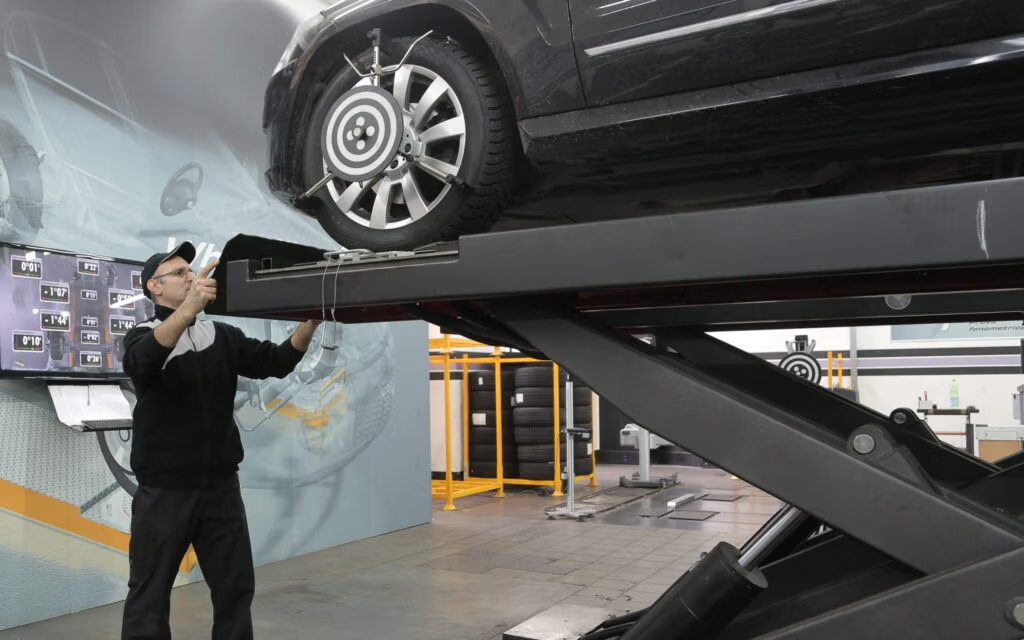
The first step is to determine whether your car’s lean is a result of a faulty wheel alignment. A good way to check is by having a certified mobile mechanic inspect your vehicle. They will use state-of-the-art diagnostic equipment to find the cause of your car’s leaning.
Another problem that can lead to a leaning or pulling car is a low tire pressure. Tires should be inflated to the manufacturer’s recommended amount. Underinflated tires have more rolling resistance, which can amplify the steering pull.
Having uneven tread wear and/or a misaligned wheel can also cause your car to lean. If your tires aren’t rotated regularly, they can become unaligned.
Vibrations
Vibrations in your car may not seem like a major concern at first, but they can become a real problem. If you notice vibrations, you should immediately bring your car to a trusted mechanic. There are several common causes of vibrations. These include improperly mounted wheels, uneven tire wear, and a malfunctioning steering wheel.
The best way to tell if you have a vibration is to watch for its signs. One sign is a shaking steering wheel while accelerating. This is a sign of a bigger problem, and one that is very dangerous.
You can also look for a vibration when the engine is idling. Rough idling can cause problems with your fuel economy, as well as performance. Luckily, you can avoid these issues by letting an experienced mechanic diagnose your car.
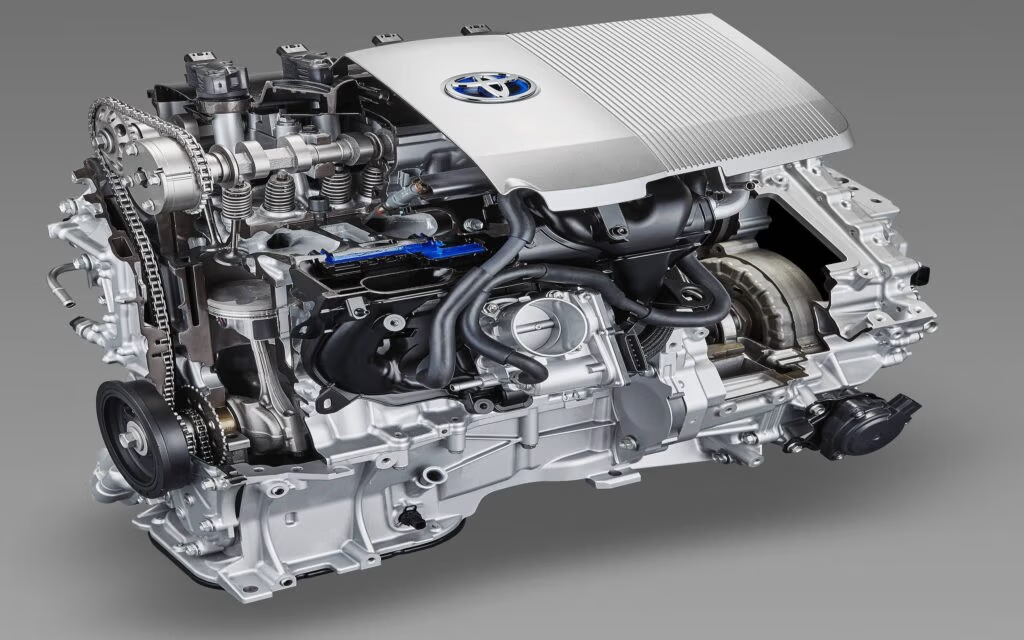
Another sign is a vibrating seat or steering wheel. Your vehicle usually shakes during acceleration, but if you notice this more often, it could be an indicator of something more serious.
Finally, a vibration can also be caused by a loose lug nut. If this is the case, it can cause the wheel to wobble and possibly damage the vehicle. Having the lug nuts tightened is one way to prevent this.
Steering wheel shakes
If you notice that your steering wheel is shaking while driving, you may be dealing with an issue that requires a professional repair. You can identify the problem by recording when and where the vibration occurs.
A steering wheel can shake at any speed, but if it shakes at high speeds, it can be a sign of a serious problem. To keep your car safe, you should address the problem as soon as possible.
Several problems can cause your vehicle to shake, including damaged tires. Wheel bearings can be a source of vibration, and it’s important to check them regularly. When the bearings loosen, your steering wheel can start to shake. Using a torque wrench to tighten the wheel nuts can help.
Other common causes of shake include a brake system problem or suspension issues. Sticky brake calipers can cause vibrations, so it’s best to have the calipers and brakes cleaned regularly.
Steering wheel vibration can occur at low or high speeds, and it can also be worse at the beginning of the drive. At the same time, it can get better with high speeds.
The best way to prevent your car from shaking is to have a wheel alignment performed on a regular basis. You should also have your wheels and tires rotated every 5,000 miles. This will ensure that your tires wear evenly and prevent premature wear.
Rattling suspension
When you hear a rattle in the suspension of your vehicle, you should check out the underlying cause. You may need to get your car checked by a professional mechanic to find out what the problem is.
There are several different causes of rattling in the suspension of a vehicle. Some of them include a worn shock, a broken heat shield, and a faulty exhaust component.
Shock absorbers are devices that transfer energy from a stored kinetic to a heat source. Wearing out the shocks in the front or rear of the car can cause a car to bounce more on bumpy roads. A worn shock may also make it difficult to steer or accelerate.
Rattling in the suspension can also be caused by loose engine mounts. Tightening the bolts is usually a good fix for this issue. If the problem continues, you may need to replace the entire suspension system.
In addition to a rattling sound, the suspension can also create clunking noises. This can be a warning sign of a problem with the struts, control arm, or ball joint.
The suspension of your vehicle is a complicated system that has many components. It can be hard to know which components are causing the clatter. Take the car for a test drive to determine if it’s a problem with the suspension.
Overheating engine
Overheating can be a very serious problem that may need a professional to repair. However, there are a few things you can do to help prevent overheating in the first place.
One of the simplest things to do is to ensure your vehicle’s cooling system is working properly. This means checking the coolant levels and making sure there are no clogs. You can also check the radiator and hoses for leaks.
If you are experiencing an overheating problem, the first thing you need to do is pull over. Next, you should shut down your engine, but not start it. It is important to avoid further damage to the engine.
While the radiator and heater hoses are easy DIY fixes, the water pump and head gasket may need a professional’s touch. Also, it is possible that you could have a broken thermostat, which could lead to a leaky radiator.
Another thing to look for is the temperature gauge. It can be hard to determine whether the problem is overheating or something else. A good way to test for this is to run the temperature gauge through a few different settings.
If your car is overheating, the quickest and most effective solution is to pull off at a safe location and turn off the engine. Afterward, you should allow the engine to cool down for 15 minutes.
Smoke from under the hood
If you are wondering how to fix smoke from under the hood, you should know that it can be a sign of many different issues. Some of these include oil leaks, faulty fuel injectors, and an exhaust system problem. You should be prepared to take your car to a mechanic as soon as possible if you notice smoke coming from under the hood.
Motor oil leaks are the most common cause of smoke from under the hood. Leaks can happen as a result of worn piston rings or valve seals. This can cause an engine to overheat, which can result in the car to smoke.
Other fluids can also cause smoke from under the hood. These fluids include transmission, brake, and power steering fluid. Luckily, these issues will not cause serious damage. Depending on the amount of liquid, however, you may see a white or blue smoke cloud. The color of the smoke will depend on the problem, but if you are unsure, you should check with a professional.
Another possibility is an oil spill from the outside of the engine. While this won’t do much damage, it can cause a nasty smell and smoke from the tailpipe.
Damaged tail or headlights
When your tail or headlights are damaged, it can be a frustrating experience. But, it is not the end of the world. If you’re willing to put in a little effort, it’s possible to repair the damage. You may even want to upgrade your tail lights.
Repairing your tail or headlights is a cheap and easy task. Although you will need some DIY knowledge, it is not difficult. It is important that you do not prolong the process because doing so can result in extensive damage to your car.
First, you need to make sure that you can safely access your tail light or headlight. For many cars, this can be done with the help of a tool called a fuse puller. Usually, the fuse box is located under the hood or in the cabin.
Next, you must inspect the tail light socket for visual damage. This could include cracks, corrosion, or damaged pins. Check for loose connections, and replace the fuse if you notice any of these problems.
Once you have examined the fuse, you can now work on the tail light or headlight itself. You can choose between replacing the tail light or headlight assembly, depending on how badly the tail light or headlight is broken.
