
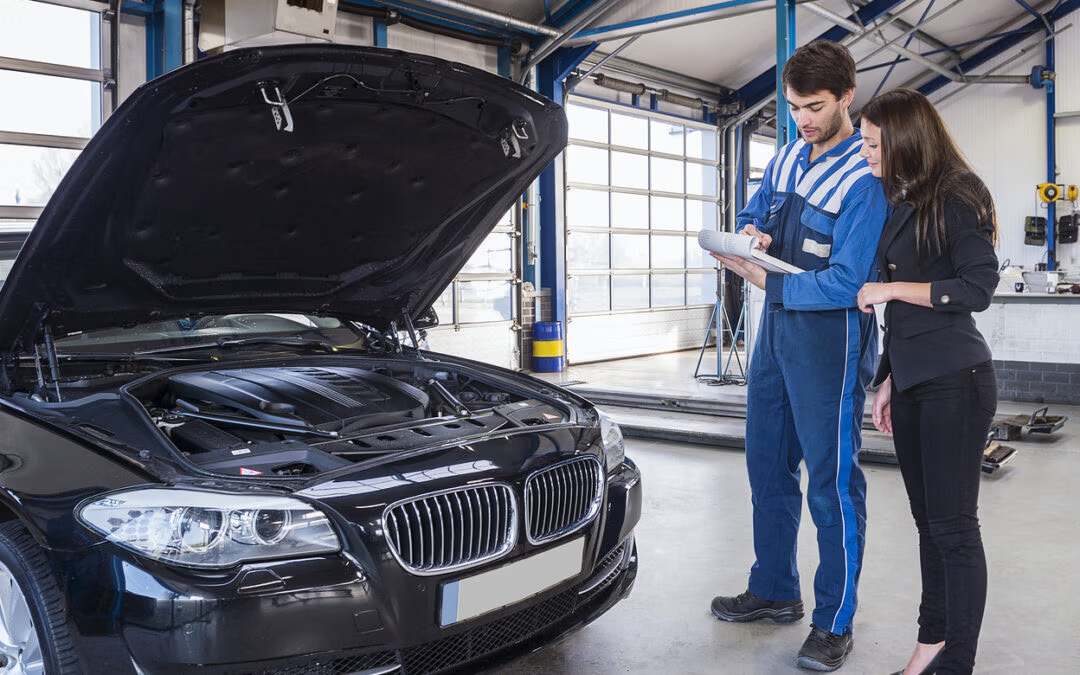
Whether you own a new car or a used vehicle, having a checklist of essential maintenance tasks will help you to keep your car in a good condition. Having your car serviced by an expert can also prevent expensive repairs down the road. Listed below are some of the best tips to follow to keep your vehicle in a good condition.
Check the lights on your vehicle
If you’re getting expert car servicing, you should know what each light means. If you don’t, you could end up in a sticky situation. Not only is that dangerous, but it can also cost you more money in the long run.
There are many different dashboard lights, but some are more important than others. One of the most important is the Check Engine Light (CEL), which is a warning system for your vehicle. It’s designed to alert you to a problem with your vehicle’s emissions.
The light will display a code that is stored in the car’s computer. This code will help you figure out the best way to repair the problem. Several factors can cause the light to flash, such as low gas cap, a faulty ignition timing system, and an overdue oil change. When you see the warning light, you should pull over immediately and call AAA Emergency Roadside Assistance.
You should also check your brakes and turn signals. These are easy to spot if they’re not working. Also, check your engine bay for obvious oil leaks. For a more comprehensive view, try checking your OBD (On Board Diagnostics). This is your vehicle’s “brain” and will tell you more about the specific issue.
Some vehicles may even have multiple warning lights. For example, you might get a separate CEL for Maintenance Due, Service Engine, and an Oil Change.
Check the balance of the tires and wheels
If you’re getting expert car servicing in your vehicle, you may want to check the balance of the tires and wheels. This is important because imbalanced tires and wheels can lead to problems with handling, suspension, and fuel economy.
The most common cause of imbalance is uneven tire wear. Wheels also have varying weights that can lead to imbalance. Getting the tires and wheels balanced will reduce wear, improve the comfort of your vehicle, and increase fuel efficiency.
You can easily test the balance of your tires and wheels. Usually, you will need to have a technician spin the wheels on a balancing machine. Your technician will then be able to tell if the weight is spread evenly or not.
Tires and wheels should be checked every 4,000 to 6,000 miles. It is especially important to have them checked during poor road conditions. In some European vehicles, all four tires must be tested.
Wheels that are not balanced can lead to damage to shocks and wheel bearings. Vibration from unbalanced tires also affects the gas mileage of your vehicle.
Checking the balance of the tires and wheels on your vehicle will also save you money on repairs. A professional can check for uneven tire wear, steering wheel vibration, and other issues. These services can be very inexpensive, and some even offer lifetime service.
Tires should always be balanced to avoid early tire failure. The process requires spinning the wheels and removing some of the wheel weights.
Check the fluids in your car
There are a variety of fluids that keep your car running and functioning well. Keeping them in proper levels is important for longevity. Some of these include oil, coolant, and brake fluid. Each of these can help prevent costly repairs.
Fortunately, it isn’t too difficult to check the fluids in your car. You may need to make a few adjustments to your schedule to ensure that these essentials are taken care of.
One of the most important fluids to check is the transmission. This keeps the gears lubricated and allows your vehicle to run smoothly. Checking the level of this fluid is a good idea at least once a year. If the transmission fluid is low, it could indicate a leak. It’s best to take your car to an automotive professional for a diagnosis.
If you’re unsure about checking the transmission, it’s best to call a mechanic. Depending on the age of your car, you may need to consult a service manual.
The power steering is another fluid that should be checked periodically. Having enough of it can improve your steering. Typically, this fluid is located near the windshield base.
While many vehicles have a dipstick for checking the transmission, other cars might not. In these cases, you might need to use a flashlight to check the coolant.
Another great way to get a sense of how much your car’s fluids are depleted is by checking the tire pressure. Most car owners know that they need to change the oil every few months. However, it’s also a good idea to look at the tread of your tires.
Check the brakes on your car
Brakes are a critical part of any car. If they don’t work correctly, it can lead to a crash, putting the driver and other passengers at risk. It can also put unnecessary stress on wheel bearings and steering racks. That is why it is essential to get professional car service to check them out.
During the inspection, technicians will look at brake pads, calipers, and wheels. They will make notes of any abnormal noises or smells. Also, they will test the system to see if there are leaks or damage. The brake self-adjusting mechanism will be checked.
Some cars have built-in wear indicators. These sensors scrape the brake disc, creating a slight squeal when pressed. However, they do not work on all vehicles.
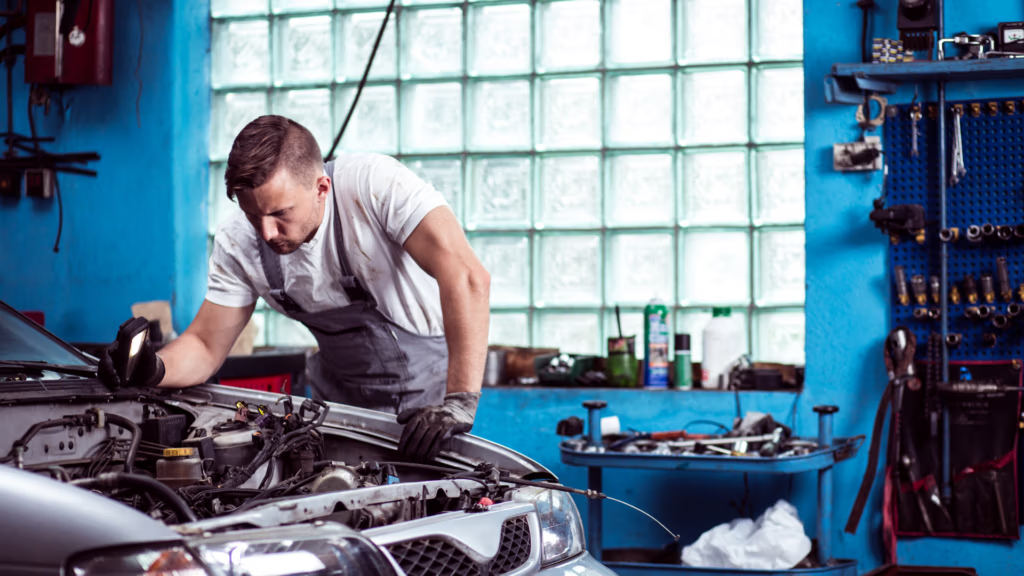
Depending on the vehicle, experts should also check the caliper assemblies for leaks and damage. In addition, the master cylinder and brake lines should be inspected for signs of cracks or leaks.
In addition, drivers should listen for squealing, grinding, and shaking when applying the brakes. This noise can indicate worn brake pads or rotors. Moreover, it can also mean that the braking surface is uneven. An uneven braking surface can cause the steering wheel to shake and the car to pull to the left or right.
If the brakes continue to be noisy, drivers should get professional car service to replace the pads. The material on the pads should be at least seven millimeters thick.
Check the air pressure in your tires
If you want to keep your car safe, it’s important to check the air pressure in your tires periodically. This helps to reduce the risk of flat tires, tire blowouts, and other problems. Aside from that, a well-maintained tire can increase the fuel economy of your vehicle. It also improves the handling of your vehicle.
In order to properly inflate your tires, you should always follow the manufacturer’s recommended pressure. Most car manufacturers put a sticker on the doorjamb that tells you what the recommended air pressure is for your tire.
To check the air pressure in your tires, you can use an air pressure gauge. This device is available at gas stations, auto supply stores, or even for your own home.
When checking the air pressure in your tires, you’ll need to park your car on a level surface in the shade. Also, your car will need to cool off for a few hours so that the air will be easier to read.
The best time to test the pressure in your tires is first thing in the morning, or right after you have driven your car for an extended period. You’ll need to leave your car parked for 30 minutes to three hours to ensure that the air in your tire can be accurately measured.
You can purchase an air pressure gauge for a couple of dollars or less. Some people opt for digital gauges, which are also inexpensive.
Check the suspension on your car
The vehicle suspension system helps protect your ride and make for a comfortable driving experience. It is designed to absorb the shock of bumps on the road and keep your wheels safely positioned on the roadway. However, the parts can wear out over time, and your suspension system needs to be regularly inspected.
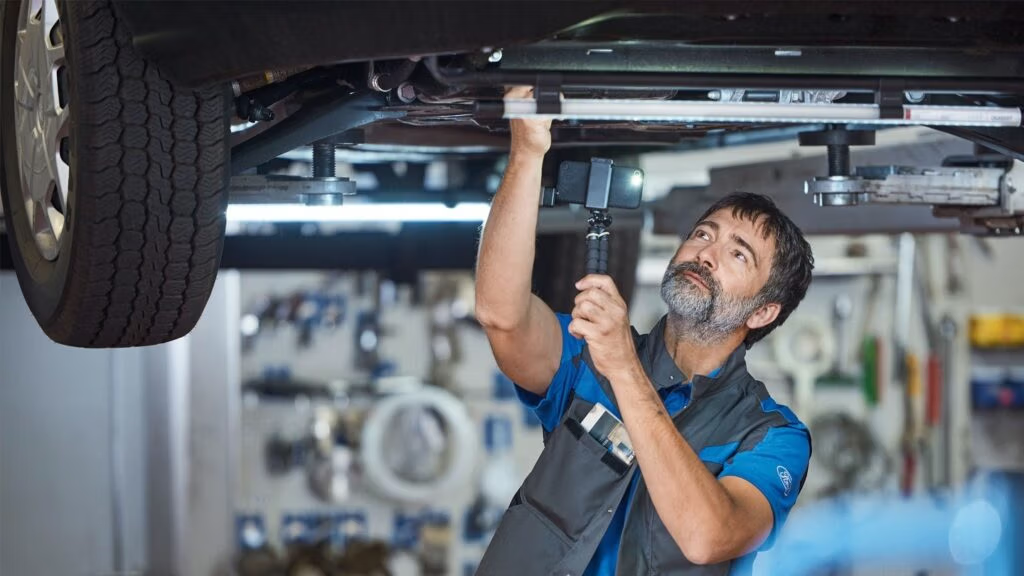
There are a few different ways you can check the suspension on your car when getting expert car servicing. One of the most obvious ways is to jack the vehicle up. If you do this properly, it will be a lot easier to inspect the rear end of the vehicle.
You can also inspect the front end of the vehicle. This is much easier than the rear, but you will need a friend to help. When examining the front end of the vehicle, you should be looking for the signs of a broken suspension spring or worn out shock absorbers.
Other signs of a faulty suspension system include a swaying vehicle or a car that leans slightly when turning. Also, if you notice uneven tread on the tires, that is a definite sign of a suspension failure.
While a faulty suspension is not necessarily a danger to the driver, it can be quite a nuisance. Suspension components can also be noisy. In addition to clunking, you may hear grinding and squeaking.
Another squeaky wheel is the vehicle’s anti-sway bar. Ball joints are used to connect the control arm of the front suspension to the steering knuckle. A good ball joint should provide a smooth ride. If you detect any noises, consider having it lubricated by a mechanic.
