

Keep Your Vehicle Running Smoothly With Regular Car Maintenance Car Servicing Can Extend the Life of Your Vehicle and Keep it Running Smoothly To keep your car in good shape, it’s essential to have regular car servicing. This can add many extra years to your vehicle’s life and save you a significant amount of money on repairs in the long run.
Owning a vehicle requires investment.
Owning a vehicle represents a significant investment, and like any investment, it requires proper care and maintenance to ensure longevity and optimal performance.
Regular car servicing is one of the most effective ways to extend the life of your vehicle and maintain a smooth driving experience. In this article, we will examine the benefits of routine maintenance, the types of services available, and how these practices contribute to the overall health of your vehicle.
Change your spark plugs every 30,000 or 40,000 miles
How Regular Car Servicing Can Extend the Life of Your Vehicle and Keep it Running Smoothly If you want to keep your car running for as long as possible, then you need to know when and how to replace your spark plugs. Whether you drive your vehicle on the road or off, spark plugs play a crucial role in igniting the fuel mixture, preventing carbon fouling, and reducing air pollution.
Different Types of Spark Plugs: Long Life And Standard
There are different types of spark plugs, including those with platinum-tipped and iridium-tipped electrodes. The life expectancy of the plugs is determined by the kind of plug and the frequency of use. Spark plugs should be replaced every 30,000 to 40,000 miles for a conventional plug or every 80,000 to 100,000 miles for a high-performance, long-life spark plug.
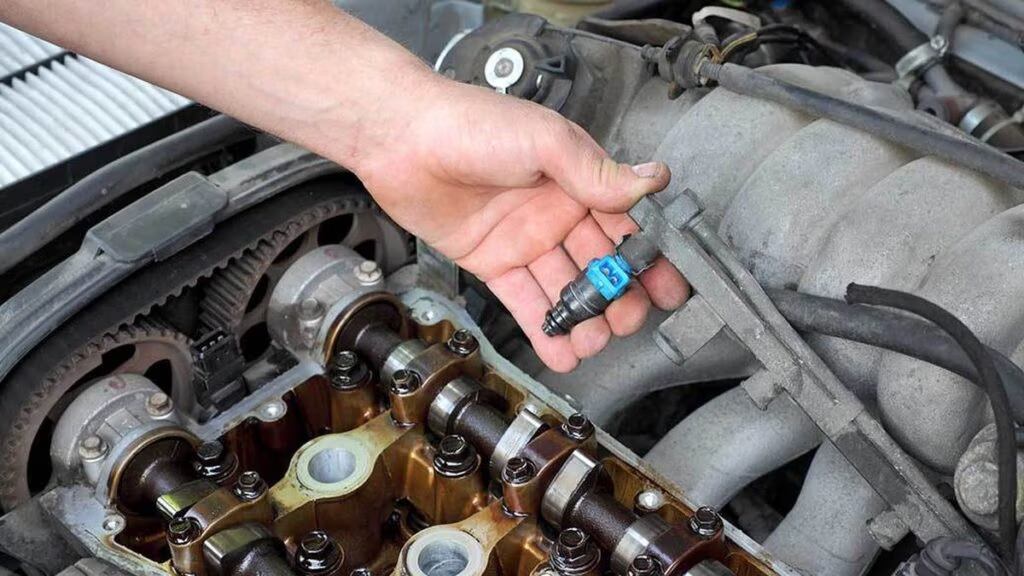
How Regular Car Servicing Can Extend the Life of Your Vehicle and Keep it Running Smoothly?
Engine Misfires and fault codes developed caused by faulty spark plugs or coil packs
You should also change your spark plugs if you notice that they are cracked or that the insulators are broken. This is a sign that the cylinder is getting hot. Moreover, if your spark plug is not functioning correctly, it can cause your engine to misfire, resulting in stalls, rough idling, and poor fuel efficiency.
Besides replacing your spark plugs, you should also check and replace your coil packs if required . Soot is a common culprit that clogs up the electrodes of your spark plugs and coil packs. As a result, it becomes hard to generate a spark. also Performing regular oil changes helps prevent this problem from happening
How Important is it to Replace Your Spark Plugs on a Major Service Booking
Changing your spark plugs regularly will also improve your car’s performance. They reduce emissions by up to 30%. Additionally, they will ensure the combustion process in your cylinders is correct.
If you have an older car or truck, it is recommended that you replace your spark plugs at least once every 20,000 to 30,000 miles. If you have a newer vehicle, you may need to change your plugs more frequently.
Long Life Spark Plugs
If you’re unsure whether you need to change your spark plugs, it’s best to consult your owner’s manual for guidance. It will provide you with specifications for optimal performance and help you decide whether to change your plugs.
You can also get the help of an auto service centre if you are not confident about replacing your spark plugs on your own. When you bring your vehicle to Sun Devil Auto, you can have the spark plugs installed quickly and efficiently.
Inspect shocks and struts
The importance of regular car servicing cannot be understated. Not only can it keep your vehicle running smoothly, but it can also help you get more mileage out of it. However, many service contracts do not include items such as shock absorbers and struts.
Shocks and struts are a vital part of your vehicle. They help you absorb impact and bounce, and they also provide structural support for your suspension.
If your shocks or struts are not working properly, you may experience a bumpy ride. Having a properly functioning suspension system will improve your overall driving experience.
The Importance of having your Tyre Checked for legality
In addition, your tyres will last longer if you regularly rotate them. Changing them at the recommended intervals will not only help you keep your tyres in good shape, but it can also prevent vibrations from taking place.
Other parts of your car should be inspected periodically. Spark plugs and antifreeze are examples of things that should be replaced frequently. Additionally, your exhaust system should be repaired if it makes a noise. Depending on the age of your car, you might want to take it to a professional for a more comprehensive assessment.
Suspension Checks
Another part of your car that you should check regularly is the top strut mount. Top strut mounts are crucial for your steering system and handling, as they serve as a pivot point for the steering wheel. Wear on this part can lead to problems with the rest of your steering and suspension systems.
Struts and shock absorbers are important to your vehicle’s performance, and they should be inspected periodically. However, the best way to ensure they are in tip-top shape is to schedule an appointment with an ASE-certified mechanic.
A car with worn shocks will feel shaky and even dangerous in inclement weather. Typically, you’ll notice wear on your vehicle after approximately 75,000 miles.
Maintain your air-conditioning system
Maintaining your air conditioning system with regular car servicing can save you time and money, and prevent future problems. A working AC unit will boost your performance and comfort. Plus, a properly maintained HVAC system can last a decade or more without major component replacement.
The most important part of an air conditioning system is the compressor. It is a crucial part of the system, and a failure can lead to expensive repairs. You can keep your compressor in good shape by having it tuned up every two years.
Condensor issues need to be checked
Another part of the system that needs attention is the condenser. This component can be found in most cases, sits in front of the cooling system radiator, and this component is susceptible to being damaged by stones and debris from the highway
Other components to check are the hoses and the belts. If the belt is frayed or a hose is loose, it is a sign that something is wrong. Additionally, the refrigerant levels in the system should be checked, as low levels can cause premature compressor failure.
As with any vehicle, it is wise to understand how an air conditioning system works. You can check out your owner’s manual for a quick reference. Additionally, it is advisable to seek the assistance of a professional mechanic. They can help determine if there are any leaks and offer suggestions on how to fix them.
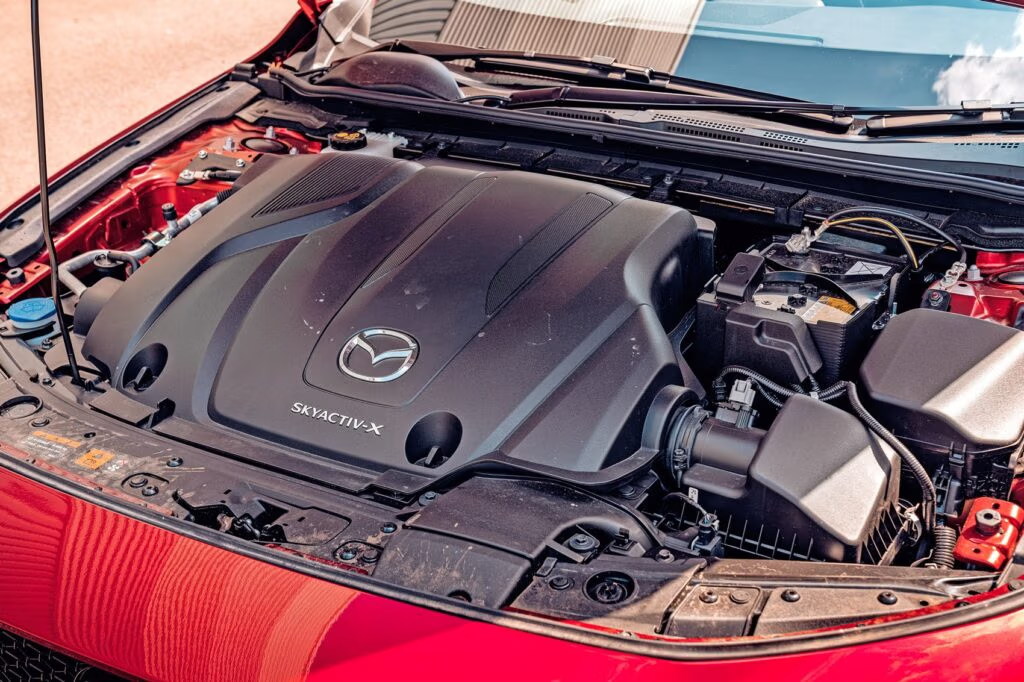
Checking the Car Air Conditioning Compressor
Checking The Condensate drain is also a good idea. If it becomes clogged, the moisture will get trapped and can form slime. To remedy this, you will need to either unclog the obstruction or contact your local AC company.
Maintaining a checklist of items like these can help ensure that your HVAC system operates smoothly. It can also help you estimate the cost of repairing your system.
While you might not be able to change the filters yourself, a quick cleaning and replacement of the air filter is a good way to maintain the system.
How Regular Car Servicing Can Extend the Life of Your Vehicle and Keep it Running Smoothly.
Conclusion
Regular car servicing is essential for maintaining the health and longevity of your vehicle.
By staying on top of routine maintenance, such as oil changes, fluid checks, and brake inspections, you can identify potential issues before they become major problems.
This proactive approach not only saves you money on costly repairs but also enhances the overall performance and safety of your car. Investing time and resources into regular servicing ensures that your vehicle remains reliable and efficient, allowing you to enjoy a smooth driving experience for years to come.
Ultimately, taking care of your car is an investment in both your safety and the vehicle’s lifespan.
