
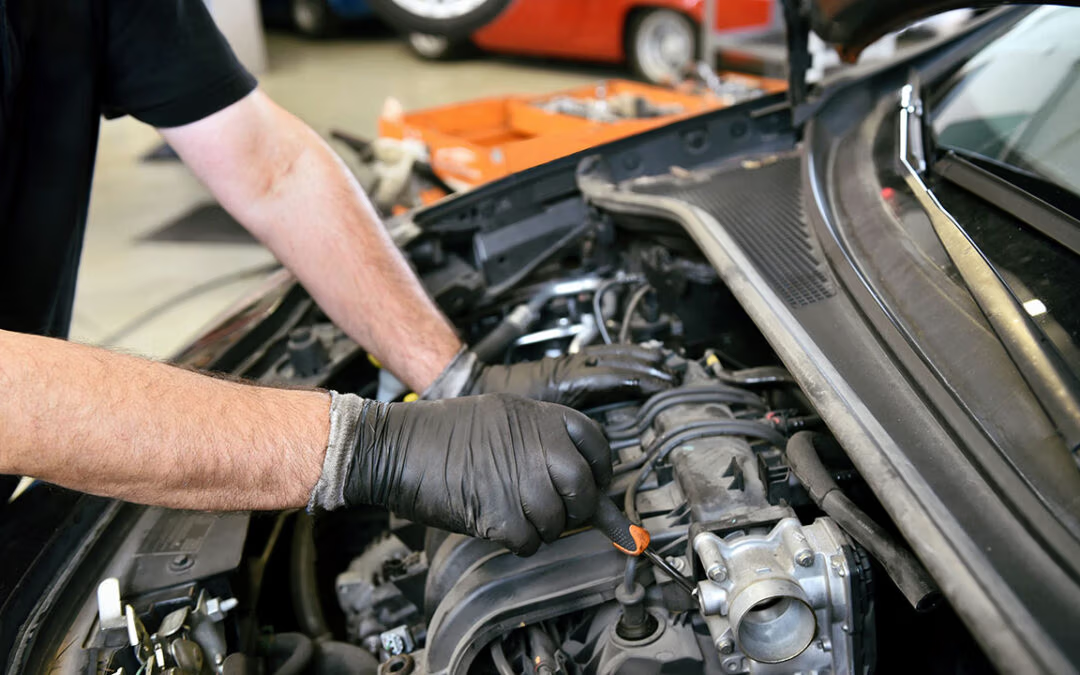
The Automotive Repair Industry UK If you look at the picture of a small auto garage, you may see it cluttered and dirty with workers and a loud radio blasting out a loud song. Before the Second World War, these jobs were often carried out by blacksmiths and chauffeurs, but as automobile production increased, so did the need for automobile maintenance. Now, auto mechanics are the key to keeping vehicles in good working order, and this industry has many career opportunities.
Growth of the MVR industry
In 2001, over 170,000 people were employed in the MVR industry, encompassing over 44,000 businesses. Most businesses were small and medium-sized, and over half employed fewer than 10 people. These
businesses have higher accident rates than the manufacturing sector as a whole. These figures do not include roadside recovery, which is not covered under RIDDOR regulations. and As a result, fatal accidents to workers in the MVR industry are likely to be higher than average.

The Automotive Repair Industry in the UK
A Lower amount of Bodyshop Repair Centres
In recent years, the number of body shops in the UK has fallen by around 20%, which is predicted to fall even further in the next five years. In addition, new technologies in vehicle design have pushed up repair costs. For example, adaptive features in modern cars require highly qualified staff to calibrate them after an accident. This has led to a skills shortage in the body shop industry, which is already under pressure.
The growth of the MVR industry in the UK automobile repair market is expected to decline by 1.1% over the next five years. In the meantime, the industry’s revenue is expected to increase by a few billion in five years. The rise in vehicle usage and household income will drive the demand for automotive services.
Employment opportunities in the automotive repair industry
The UK automotive repair industry is a growing field. The number of vehicles on the road and the income of households will increase the demand for automotive repairs. The industry is expected to grow by a compound annual rate of X.X% over the next five years. However, the growth will not be as rapid as that projected.
The automotive repair industry is an excellent career choice because it offers many opportunities. The UK has a huge shortage of skilled workers, and there is a high demand for people to fill these positions. The industry pays well and offers job satisfaction. Whether you are a technician or a non-technical employee, the industry offers many benefits and great job satisfaction.
The automotive repair industry is high-volume, with some large repairers processing more than 100 vehicles every week. Many of these vehicles are prestige cars, such as Rolls-Royce, Audi, and Mercedes-Benz. The industry is also hugely technological, and workers must understand software and technology well.
Jobs in the automotive repair industry range from being a roadside recovery mechanic to managing a team. A good understanding of vehicles and great communication skills are essential in any job. Sales positions in the industry are also common and can require an excellent understanding of all aspects of the business.
This industry also offers many opportunities for management, sales, and development.
Impact of technology on the automotive repair industry
The automotive repair industry in the United Kingdom comprises companies specializing in automotive repairs. This industry also includes car washes (but not petrol stations). The sector is expected to generate more than £14 billion in revenue by 2022-23. The majority of revenue is generated from mechanical and electrical repairs. Demand for such services depends on the number of vehicles on the road, fuel prices, and wider economic conditions.
However, the automotive industry isn’t immune to technological advances. The UK automotive industry has suffered several setbacks over the past few years. In fact, only a few new players have entered the top 15 automotive OEMs in the last 15 years. This has led to a significant increase in inventories, high debt levels, and uncertain demand.
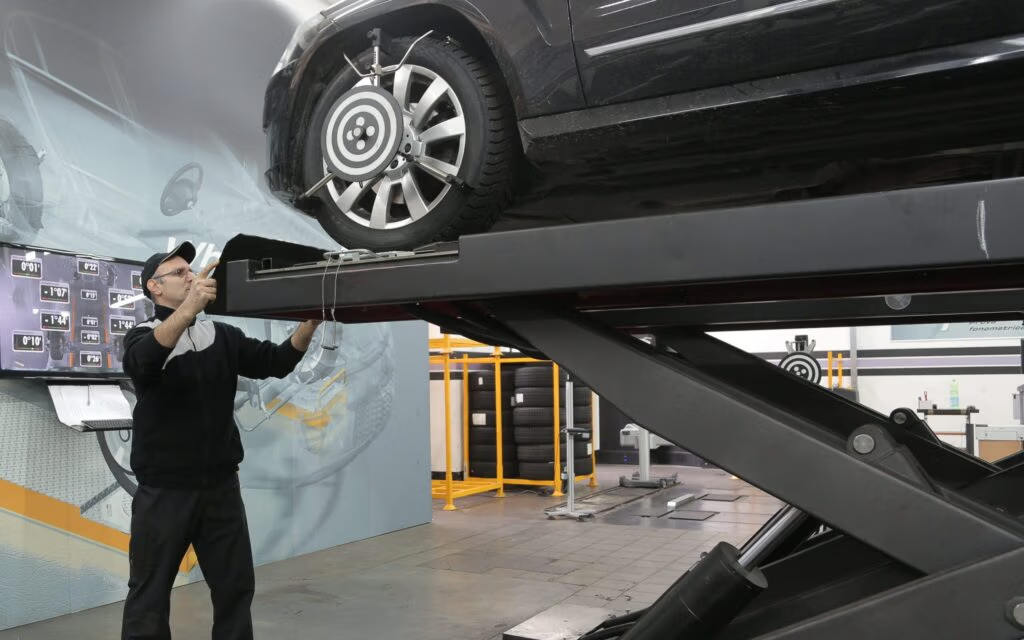
The automotive industry has been working with leading technology companies to develop advanced vehicles. By using autonomous vehicles and electric motors, the industry is helping to cut down on carbon emissions and improve fuel efficiency. AI and big data are helping manufacturers customize their vehicles. Furthermore, self-driving cars will reduce consumer expenses and increase safety.
Autonomous vehicles are also impacting M&R demand. Autonomous vehicles are undergoing electrification, meaning certain vehicle parts may require replacements. These technological changes also change how M&R services are delivered. A recent McKinsey & Company study notes that autonomous driving will have a significant impact on the M&R sector.
The automotive industry is facing many challenges and risks related to digital transformation. Consumers, OEMs, and retailers are all affected. To remain competitive, the industry will need to adapt and change its value proposition.
Remanufacturing in the automotive repair industry
The UK automotive repair industry is undergoing a major transformation. New technologies and demographics are driving the industry to become more digital. The industry is also proving to be resilient, with growth predicted to be between 3 and 4 percent annually. With the number of vehicles on the road increasing, new technologies are making it easier for service professionals to diagnose maintenance issues and receive technical support from suppliers. In addition, connected vehicles and mobile phones are making it easier for technicians to communicate their work with customers.
Remanufacturing is becoming an important industry trend. It offers multiple benefits for manufacturers, consumers, and the environment. It is becoming increasingly popular and will continue to influence the automotive industry. There is also increasing public acceptance of recycling and remanufacturing, which is good news for the automotive industry.
What The Public Are Saying About The UK automotive repair industry
It has a strong urban transport network and a highly developed infrastructure for remanufacturing automotive parts. The country has one of the highest per capita expenditures in Europe. Moreover, it is the second-largest market in Europe for remanufactured parts. As a result, the market offers lucrative potential for companies in the remanufacturing business.
Remanufacturing is an important industry trend in Europe. This trend is an effective alternative to producing new goods, as it saves energy and raw materials. In the UK, over 550 million tonnes of materials are consumed annually, making remanufacturing essential.
Remanufacturing has a long history in the UK, stemming from the need to protect the environment and rebuild the economy. Essentially, the process involves restoring used products to an almost new standard. This involves testing, disassembly, and machining before they are ready for re-use. The restored product must also meet the original design specifications.
Future of the automotive repair industry
The automotive repair industry is facing major disruption from various factors. Modern cars’ adaptive features require highly trained staff, while parts and labor costs have increased by 40% in the last five years. In addition, the growth of in-dash telematics and hybrid powertrains means more electrical systems must be repaired.
The aftermarket in the UK is a growing industry. Its revenue is expected to grow at a compound annual rate of X percent over the next five years. Increasing car usage and household disposable income are driving this growth. In addition, more complex vehicles are becoming more expensive to repair.
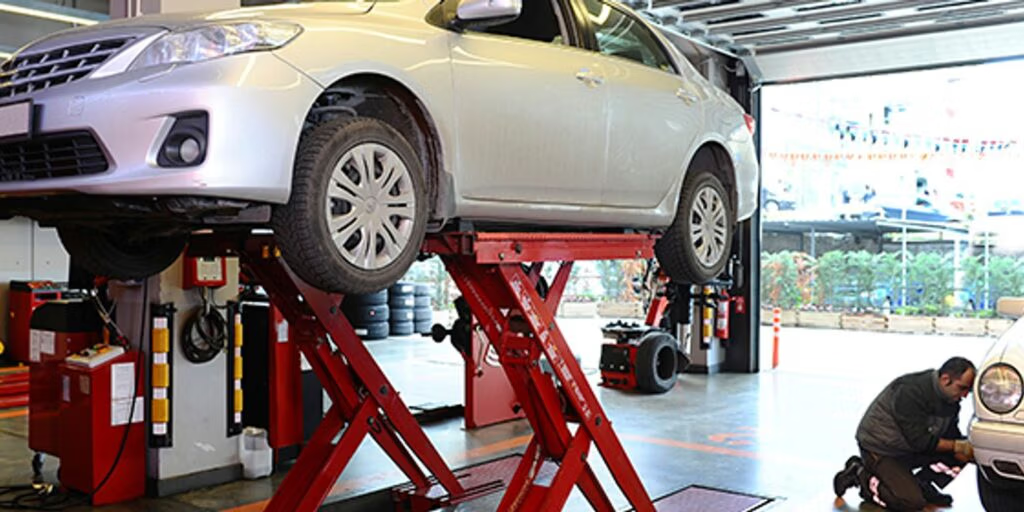
Technology, demographics, and new mobility solutions are transforming the industry.
The UK automotive repair industry has strong Internet penetration, which helps it participate in the digital ecosystem. New stakeholder groups like parts sellers, mechanics, and customers are partnering to offer new services. In addition, mobile and connected vehicle technologies will make it easier for service professionals to buy parts and services online. Furthermore, they can communicate their work and receive technical support from their suppliers.
Moreover, deferred maintenance is increasing the demand for repair services. Some automotive repair dealerships have implemented free vehicle pick-up and drop-off services to attract new customers.
These initiatives will boost the automotive repair industry by 3.2% CAGR by 2031. According to a new report by FMI, the global automotive repair industry is expected to grow at a CAGR of 3.2% between 2016 and 2031.

Nice Blog very informative
thanks so much